Industrial Thermal Transfer Labels support traceability, safety, and dependable identification across demanding production environments. They appear on cartons, pallets, cables, machinery, laboratory containers, and finished goods. Each application places different pressure on the label. Heat, abrasion, moisture, chemicals, sunlight, and cold storage can quickly expose a weak material choice.
Mike Fairley, a respected label-industry analyst, captures the principle clearly: “A label is not decoration; it is part of the product’s information system.” That view matters on a busy factory floor. A barcode must scan after handling. A serial number must remain readable beneath dust. A warning label should stay attached near an oily machine surface. Small failures can create large delays.
This guide examines the top 10 Industrial Thermal Transfer Labels and the situations they serve best. It considers face stocks, ribbons, adhesives, durability, print clarity, and environmental exposure. Some labels favor flexibility, while others prioritize chemical resistance or long-term outdoor performance. There is no universal winner.
That part is easy to overlook.
In practice, label selection is often less perfect than technical charts suggest. A material may perform well in testing but fail after rushed application, poor surface cleaning, or incorrect ribbon settings. Experienced teams therefore evaluate the complete process, not only the label itself. Samples, real handling trials, and regular inspection remain valuable. The right choice should protect information from the printer to the final point of use.
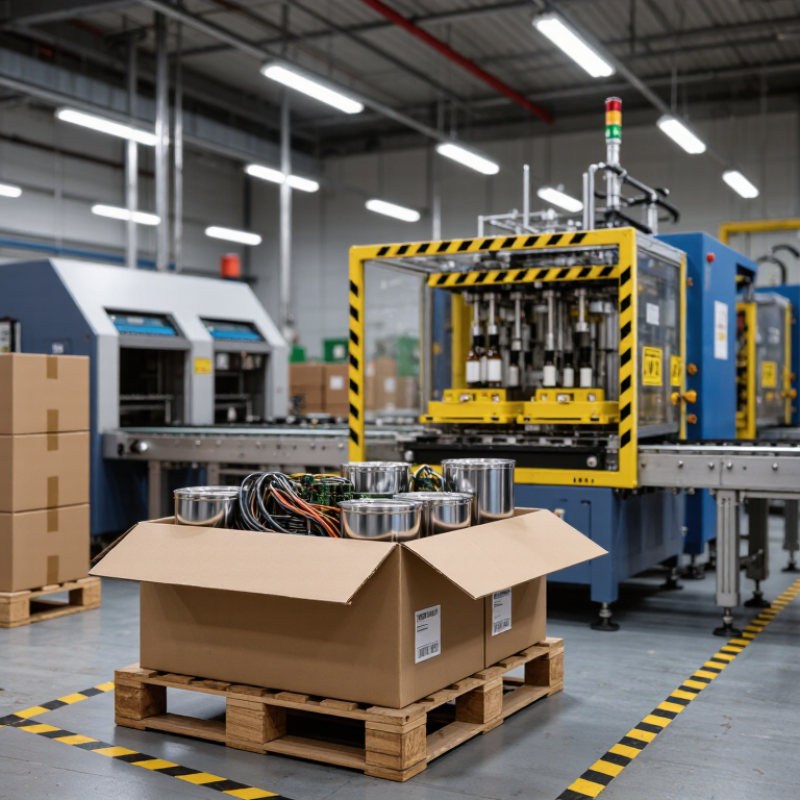
Top 10 Industrial Thermal Transfer Label Types
Industrial thermal transfer labels combine a coated face material, permanent adhesive, and an ink ribbon. A heated printhead transfers resin, wax, or hybrid ink onto the label surface. The result is a sharp, durable image that usually resists abrasion, moisture, chemicals, and temperature changes.
The operating principle is simple, but material selection is not. Resin ribbons suit steel parts, chemical containers, and outdoor equipment. Wax ribbons work better on ordinary cartons and short-term logistics labels. Hybrid ribbons balance print quality and cost. Smithers’ The Future of Printed Labels to 2028 reports that variable information remains a major growth driver across industrial labeling. Its analysis also identifies durability as a key purchasing factor. That matches practical production experience: a barcode that fades after one wash is not a saving.
Thermal transfer printing supports serial numbers, batch codes, warning symbols, and 2D data codes. ISO/IEC 15415 testing evaluates the quality of printed two-dimensional symbols, including contrast and defects. Poor ribbon pressure can create weak edges. Dust can produce missing dots. Small mistakes matter. A 2023 industrial labeling study by VDC Research reported that manufacturing companies continue investing in traceability and automated identification systems. However, reports often assume controlled conditions. Real factories are messier. Operators should test labels on the actual surface, at the actual temperature, before approving a material combination.
Thermal transfer printing uses a heated printhead to melt ink from a ribbon onto the label face stock. The chart compares representative upper continuous-use temperatures for common industrial label materials.
Values are approximate engineering references for the label face stock only. Actual performance depends on adhesive chemistry, ribbon formulation, exposure time, humidity, chemicals, and the specific label construction.
Label Materials, Adhesives, and Printing Technologies
Industrial thermal transfer labels perform reliably only when their materials match the working environment. Paper labels suit dry indoor cartons and short-term identification. Polyester resists moisture, abrasion, and many cleaning agents. Polypropylene offers flexibility for curved containers. Polyimide handles high temperatures near circuit boards and processing equipment. For outdoor exposure, synthetic films usually outperform ordinary paper.
Adhesive selection deserves equal attention. Permanent acrylic adhesives provide strong bonding on metal, glass, and coated plastics. Rubber-based adhesives often grip quickly, even on textured surfaces. Removable adhesives help with temporary bins and reusable containers. Low-temperature formulas can bond to chilled surfaces, while high-temperature grades resist heat cycling. Surface contamination remains a problem. Dust, oil, and condensation can defeat an excellent adhesive.
Printing technology also changes label performance. Wax ribbons work well on economical paper labels. Wax-resin blends produce sharper images and better smudge resistance. Full-resin ribbons are preferred for synthetic materials exposed to solvents, friction, or heat. Print speed, pressure, and darkness need careful adjustment. Too much heat can distort thin films. Too little creates unreadable barcodes. In one production trial, a technically suitable label failed because the applicator pressed unevenly. That result was inconvenient, but useful: laboratory testing cannot fully replace observing labels on the actual line.
Industrial thermal transfer labels support identification where ordinary stickers often fail. The main types include coated paper, polyester, polypropylene, polyimide, vinyl, textile, freezer-grade, chemical-resistant, tamper-evident, and high-temperature labels. Each type matches a different working condition.
Coated paper labels suit dry warehouses and short-term carton tracking. Polyester handles moisture, abrasion, and outdoor exposure more effectively. Polypropylene offers flexibility for curved containers. Polyimide performs well near heat, especially on circuit boards and electrical components. Vinyl labels remain useful on uneven surfaces.
Textile labels support garment and fabric identification. Freezer-grade materials retain adhesion in cold storage. Chemical-resistant labels protect printed data near oils, solvents, and cleaning agents. Tamper-evident labels reveal interference. High-temperature labels survive demanding production stages.
Material selection should follow the actual environment, not only the lowest purchase price. Check surface energy, temperature range, humidity, rubbing, and expected label life. A label may print sharply yet fail after repeated washing. Test the adhesive on the real container. Small trials expose problems early.
I have seen teams choose durable film for every task. That can waste money and reduce flexibility. Paper is sometimes the better engineering decision. Ink darkness, ribbon compatibility, and storage conditions also affect readability.
No label is perfect. Review failed samples, record the cause, and adjust the specification before full production.
Top 10 Industrial Thermal Transfer Label Types
Industrial thermal transfer labels perform differently because each application creates different stresses. Paper labels suit dry warehouses, carton identification, and short-term shipping. They print sharply, but moisture quickly weakens them. Polyester handles abrasion, oils, and outdoor exposure better. Polypropylene offers useful flexibility for curved containers, although it may shrink under intense heat.
Vinyl labels conform well to uneven surfaces and resist weathering. Polyimide labels tolerate high temperatures near circuit boards, ovens, and production equipment. Metalized polyester adds visibility and moderate durability where a reflective surface helps inspection. Freezer-grade labels retain adhesion on cold packaging, but surface frost can still cause failures. Chemical-resistant labels protect printed information around solvents and cleaning agents. Removable labels support temporary tracking without leaving heavy adhesive residue. High-temperature constructions work near heated tools, yet their performance depends on dwell time and surface preparation.
In field testing, adhesive choice often matters as much as the face material. A strong label can still fail on dusty steel. Clean, dry surfaces improve first-day adhesion. Print darkness, ribbon compatibility, and abrasion testing also affect scan reliability. I have seen a supposedly durable label fade because operators selected the wrong ribbon. That mistake is easy to overlook. No material wins everywhere. Humidity, friction, temperature cycles, and handling frequency should guide the selection. Some applications need a compromise, not the most expensive construction.
| No. | Label Type | Typical Facestock | Recommended Ribbon | Typical Service Temperature | Abrasion & Environmental Durability | Chemical & Moisture Resistance | Typical Industrial Applications |
|---|---|---|---|---|---|---|---|
| 1 | Polyester Equipment Labels | White, silver, or clear polyester film | Resin or resin-enhanced hybrid | Approximately −40°C to 150°C, adhesive dependent | Excellent High tear, scuff, UV, and weather resistance | Very good Resists water, oils, mild solvents, and cleaning agents | Electrical panels, control cabinets, machinery identification, safety and rating plates |
| 2 | Polypropylene Logistics Labels | White or clear polypropylene film | Wax-resin or resin | Approximately −20°C to 100°C, adhesive dependent | Very good Good moisture and tear resistance for handling environments | Good Suitable for water, condensation, and limited chemical exposure | Pallet labels, reusable containers, warehouse bins, distribution and transport identification |
| 3 | Polyethylene Flexible Labels | Flexible polyethylene film | Resin or resin-enhanced hybrid | Approximately −40°C to 80°C, adhesive dependent | Very good Flexible, impact resistant, and suitable for curved surfaces | Very good Good resistance to moisture and many industrial chemicals | Flexible hoses, curved containers, industrial packaging, cables, and formed components |
| 4 | Vinyl Outdoor Labels | Flexible calendared or cast vinyl | Resin | Approximately −40°C to 90°C, adhesive dependent | Excellent Strong outdoor performance, conformability, and UV resistance | Very good Resists rain, humidity, salt spray, and many mild chemicals | Outdoor assets, utility equipment, construction machinery, pipes, and field-service identification |
| 5 | Polyimide High-Temperature Labels | Polyimide film | High-temperature resin | Approximately −40°C to 260°C, process and adhesive dependent | Excellent Maintains legibility during thermal cycling and soldering processes | Excellent Strong resistance to fluxes, solvents, oils, and process chemicals | Printed circuit boards, electronic components, reflow soldering, wave soldering, and high-temperature processing |
| 6 | Metalized Polyester Labels | Silver metalized polyester film | Resin | Approximately −40°C to 150°C, adhesive dependent | Excellent High resistance to abrasion, tearing, and outdoor exposure | Very good Good resistance to moisture, oils, and cleaning chemicals | Asset tracking, electrical identification, serialized equipment labels, and durable barcode applications |
| 7 | Tamper-Evident Film Labels | Destructible polyester, vinyl, or multilayer film | Resin or resin-enhanced hybrid | Approximately −20°C to 100°C, adhesive and construction dependent | Very good Designed to fracture, delaminate, or leave evidence when removed | Good Performance varies with film construction and adhesive selection | Warranty seals, access panels, medical devices, high-value equipment, and product authentication |
| 8 | Freezer and Cryogenic Labels | Polyester or specially coated paper film | Resin or resin-enhanced hybrid | Approximately −196°C to 80°C, construction dependent | Very good Designed to remain attached through freezing, thawing, and condensation | Good Suitable for moisture and common laboratory or cold-chain exposure | Laboratory vials, specimen containers, frozen food, pharmaceuticals, and cold-chain logistics |
| 9 | Chemical-Resistant Polyester Labels | Top-coated polyester film | Resin with chemical-resistant formulation | Approximately −40°C to 150°C, adhesive dependent | Excellent High resistance to rubbing, solvents, and repeated handling | Excellent Designed for exposure to solvents, fuels, acids, alkalis, and disinfectants; validate for the specific chemical | Chemical containers, laboratory equipment, automotive components, industrial fluids, and regulated identification |
| 10 | Synthetic Paper Industrial Labels | Polyolefin-based synthetic paper | Wax-resin or resin | Approximately −20°C to 80°C, adhesive dependent | Good More tear and water resistant than ordinary paper, but less durable than film labels | Moderate to good Suitable for moisture and limited chemical exposure | Short- to medium-life work-in-process labels, warehouse identification, cartons, and indoor production tracking |
Note: Temperature ranges are typical engineering guidelines rather than universal specifications. Actual performance depends on the adhesive, ribbon formulation, printer settings, substrate, exposure duration, and the specific chemical or environmental conditions.
Industrial thermal transfer labels must match the work environment, not only the printer. Selection begins with exposure: heat, moisture, oils, solvents, abrasion, and sunlight can shorten label life. A warehouse carton may need a different construction from a steel component stored outdoors. Review the surface, temperature range, application speed, and expected service period. From practical testing, adhesion often fails at corners before the printed image fades.
Choose the label type according to the identification task. Paper labels suit controlled indoor storage and short cycles. Polyester, polyimide, and other synthetic films support demanding conditions. Common options include high-temperature, chemical-resistant, freezer-grade, tamper-evident, removable, cable, asset, metalized, and colored inspection labels. Check ribbon compatibility, print resolution, barcode contrast, and label flexibility. A strong material can still fail with poor pressure or an unsuitable ribbon.
Tips: Test samples on the actual substrate. Expose them to heat, condensation, rubbing, and cleaning fluids. Measure barcode readability afterward. Keep records. Do not trust a short bench test alone. I have seen labels pass a one-day trial yet lift after repeated temperature changes. That result deserves reflection. Ask whether the label must remain legible, attached, or both. Define acceptance limits before purchasing, and recheck them when surfaces or production settings change.

.avif)