2026 Best Copper Nickel Alloy Grades for Global Buyers?

Copper-nickel alloys earn their place where seawater, salt spray, and demanding service conditions challenge ordinary materials. Yet choosing a grade is not as simple as selecting the highest copper or nickel content. Buyers must consider corrosion exposure, temperature, pressure, fabrication method, and applicable product specifications. A pipe installed in a ship’s seawater system faces different demands from a condenser tube or a coastal heat exchanger.

Two familiar grades illustrate the trade-offs. C70600, commonly called 90/10 copper-nickel, offers useful corrosion resistance and fabricability. C71500, the 70/30 grade, contains more nickel and may suit some more demanding service conditions. Neither is automatically the better choice. Design details matter. Water velocity, deposits, weld quality, and maintenance can all affect performance. A grade name alone cannot guarantee service life.

This guide compares leading Copper Nickel Alloy grades for global buyers, with attention to composition, common forms, applications, and purchasing checks. It also highlights a practical limitation: international standards and supplier documentation may differ, so buyers should verify specifications and material certificates before ordering. No source material was provided for a verifiable quotation from a named industry expert; attributing invented words would be unreliable. That matters. A confident purchase begins with traceable evidence, clear service requirements, and honest review of what remains uncertain.
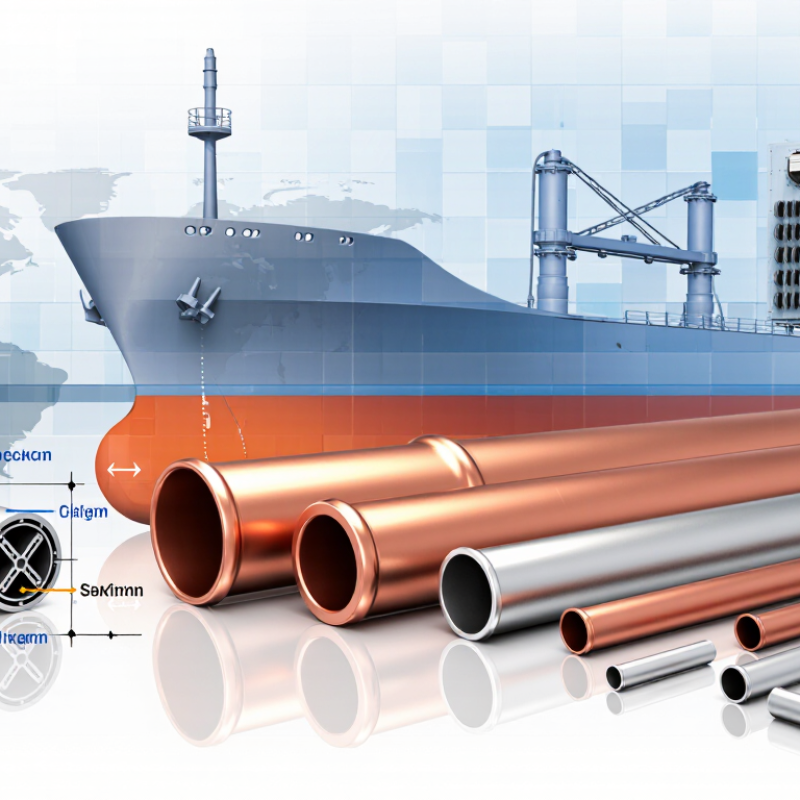
2026 Best Copper Nickel Alloy Grades for Global Buyers?

Copper Nickel Alloys: Composition, Structure, and Core Properties

Copper-nickel alloys are mainly copper and nickel, with iron and manganese added in controlled amounts. Common 90/10 and 70/30 types contain roughly 10% and 30% nickel, respectively. The remaining composition varies by grade and specification. Check the material certificate rather than relying on a trade description alone.

Their typical structure is a face-centered cubic, single-phase solid solution. Nickel atoms occupy positions within the copper lattice, while small iron or manganese additions can improve resistance to flowing seawater. This structure helps explain the alloys’ useful combination of ductility and corrosion resistance. It is not a guarantee against every form of attack.

That matters. In pipes, a smooth bore and steady seawater flow can support long service, but deposits, stagnant zones, or unsuitable joining details may still cause trouble. Copper-nickel alloys also conduct heat and electricity less effectively than pure copper, so designers should account for that trade-off. Composition tables can look cleaner than real procurement: tolerances, product form, and test results deserve attention. For global purchasing, compare the specified chemistry, mechanical properties, and inspection records against the applicable standard before choosing a grade.

2026 Best Copper Nickel Alloy Grades for Global Buyers? - Copper Nickel Alloys: Composition, Structure, and Core Properties

Composition figures below are typical specification limits in weight percent; copper is the remainder. Check the applicable material standard and product specification before ordering, as requirements can vary by product form and market.

UNS Grade Common Alloy Description Typical Composition (wt.%) Structure Core Properties Common Applications Buyer Selection Notes
C70400 95/5 copper-nickel Ni 4–5; Fe 0.5–1.0; Mn 0.5–1.0; Cu remainder Primarily a face-centered cubic (FCC) alpha copper-nickel solid solution in wrought products. Good resistance to seawater corrosion and biofouling for many service conditions; generally higher thermal conductivity than higher-nickel copper-nickel grades. Condenser and heat-exchanger tubing, especially where a lower-nickel grade is suitable. Consider for less demanding seawater duties after checking flow velocity, water quality, and design requirements.
C70600 90/10 copper-nickel Ni 9–11; Fe 1.0–1.8; Mn 1.0 max.; Cu remainder FCC alpha copper-nickel solid solution; iron and manganese are included as alloying additions. Strong seawater corrosion resistance, good resistance to erosion-corrosion under suitable design conditions, and good fabrication and joining characteristics. Marine piping, seawater cooling systems, condenser and heat-exchanger tubes, and shipboard components. A widely used balance of seawater performance, workability, and cost. Verify the specified product form and applicable standard.
C71500 70/30 copper-nickel Ni 29–33; Fe 0.4–1.0; Mn 1.0 max.; Cu remainder FCC alpha copper-nickel solid solution in typical wrought products. High seawater corrosion resistance and good resistance to erosion-corrosion in properly designed systems; typically has lower thermal conductivity than C70600. Marine seawater piping, condenser and heat-exchanger tubing, offshore equipment, and other demanding seawater-service components. Consider where service conditions favor the higher-nickel grade; compare cost, heat-transfer needs, and system design requirements.

Important: Strength, hardness, and other mechanical properties depend on product form, dimensions, manufacturing route, and temper. Confirm the required values against the relevant standard and the supplier’s certified test documentation.

How Copper Nickel Grades Are Classified Across Global Standards

Copper-nickel grades are classified by both chemistry and product standard, so a grade name alone may not tell the full story. Common wrought-alloy designations include UNS C70600, typically a 90/10 copper-nickel alloy, and C71500, commonly known as 70/30. Iron and manganese additions also matter, particularly where seawater corrosion resistance is important. Names can mislead.

Across regions, buyers may encounter UNS designations, European EN designations, and national or industry specifications. These systems do not always map neatly onto one another. A listed equivalent should be checked against the applicable standard, alloy composition limits, and product form. Tube, plate, and fitting requirements can differ. Details count.

For a reliable comparison, confirm the material standard and edition, dimensions, delivery condition, and required mechanical properties. Ask for a material test certificate showing the heat analysis and test results. For seawater service, also consider flow conditions, temperature, and fabrication history; a nominally similar grade may perform differently in practice. One point is often overlooked: matching chemistry does not guarantee matching performance. Some equivalence tables simplify the picture, so verify the specification before ordering.

Key Copper Nickel Grades and Their Performance Differences

UNS C70600, C71500, and C70400 cover distinct seawater service needs. The Copper Development Association’s technical publication Copper-Nickel Alloys: Properties, Processing, Applications reports nominal nickel contents of about 10%, 30%, and 5%, respectively. These grades are not interchangeable.

C70600, the 90/10 alloy, is widely used for seawater piping and heat-exchanger tubes. Its balance of corrosion resistance, strength, and formability suits many routine marine systems. C71500, the 70/30 alloy, generally offers better resistance to fast-flowing seawater and erosion-corrosion, making it a candidate for demanding tube-side conditions. It also contains more nickel, so material cost deserves attention. That matters.

C70400, the 95/5 grade, can serve less severe environments where its lower alloy content fits the design. Still, flow speed, suspended solids, temperature, and tube geometry can change performance. A grade that works in a calm intake may wear faster at a tight bend or pump outlet. Check the duty. The CDA data describe alloy properties, not guaranteed service life; installation quality and operating conditions remain important. Real systems can be less tidy than datasheets suggest.

Common Applications for Major Copper Nickel Alloy Grades

Common Applications for Major Copper Nickel Alloy Grades

Copper-nickel selection usually starts with seawater conditions, not price alone. The Copper Development Association’s technical publication, Copper-Nickel Alloys: Properties, Processing, Applications, identifies C70600 as a 90/10 alloy and C71500 as a 70/30 alloy. These figures describe their approximate nickel content. C70600 is widely used for shipboard seawater piping, condenser tubes, and desalination equipment. It suits many ordinary marine systems. Fit matters.

For higher flow speeds or greater erosion-corrosion risk, C71500 is often specified for heat-exchanger tubes, pump components, and demanding seawater circuits. Nickel Institute publication 12004, Copper-Nickel Alloys for Seawater Corrosion Resistance and Antifouling, discusses how protective surface films support performance in seawater. In practice, flow, water cleanliness, temperature, and maintenance all affect service life; a grade name alone cannot guarantee it.

Tiny design choices matter.

A poorly supported pipe can still fail early. Engineers should verify project conditions and applicable material specifications before selecting a grade.

How Global Buyers Can Select and Specify the Right Grade

Global buyers should select copper-nickel grades by seawater conditions, fabrication needs, and applicable product standards—not nickel content alone. Copper Development Association technical data lists C70600 as a 90/10 alloy, with about 10% nickel, while C71500 contains about 30% nickel. Both also contain iron and manganese, which influence performance. C70600 suits many marine piping applications; C71500 may be considered where service conditions call for a different strength or corrosion balance. Actual suitability depends on water chemistry, flow, temperature, and design.

Specify the UNS grade, product form, governing standard, dimensions, and required testing. For example, ASTM B111 covers condenser and heat-exchanger tubes, while other product forms require different specifications. Ask suppliers to confirm chemistry and mechanical test results against the purchase specification. Copper Development Association data is a useful starting point, not a substitute for reviewing the project’s operating conditions. One detail buyers sometimes miss: a correct alloy can still disappoint if joining practices or water conditions are unsuitable.

Tips: State seawater temperature, flow rate, and exposure conditions in the inquiry. Request traceable mill test reports. Compare total service requirements, not just unit price. I would verify the grade with a materials engineer before finalizing a high-consequence specification.