2026 Top Language Translator for Global Buyers?
Global buying is no longer limited by distance, but language barriers still create expensive misunderstandings. Product specifications, shipping terms, payment conditions, and warranty details must remain clear across borders. In 2026, a dependable language translator can support buyers during research, negotiation, customer service, and post-purchase communication.
Accuracy matters. Context changes everything. A casual translation may sound acceptable, yet one wrong technical term can alter a product requirement. For example, “water-resistant” should not be confused with “waterproof” in an equipment listing. A serious evaluation should examine translation quality, industry vocabulary, voice recognition, document support, privacy controls, and offline performance. It should also test real buying situations, such as comparing supplier messages on a mobile phone or translating a long product manual.
This guide examines leading tools from a practical buyer’s perspective. It considers ease of use, transparent limitations, update quality, and support for major business languages. Independent reviews and user feedback can reveal weaknesses that polished demonstrations hide. No tool is perfect. Even advanced systems may miss humor, regional expressions, or contractual nuance. Human review remains wise for high-value orders and sensitive commercial details. The best choice may not be the most expensive application. It may be the translator that handles your products, communication habits, and daily purchasing workflow with the fewest surprises. Some conclusions may change as platforms improve, so buyers should verify current features before choosing a long-term solution.
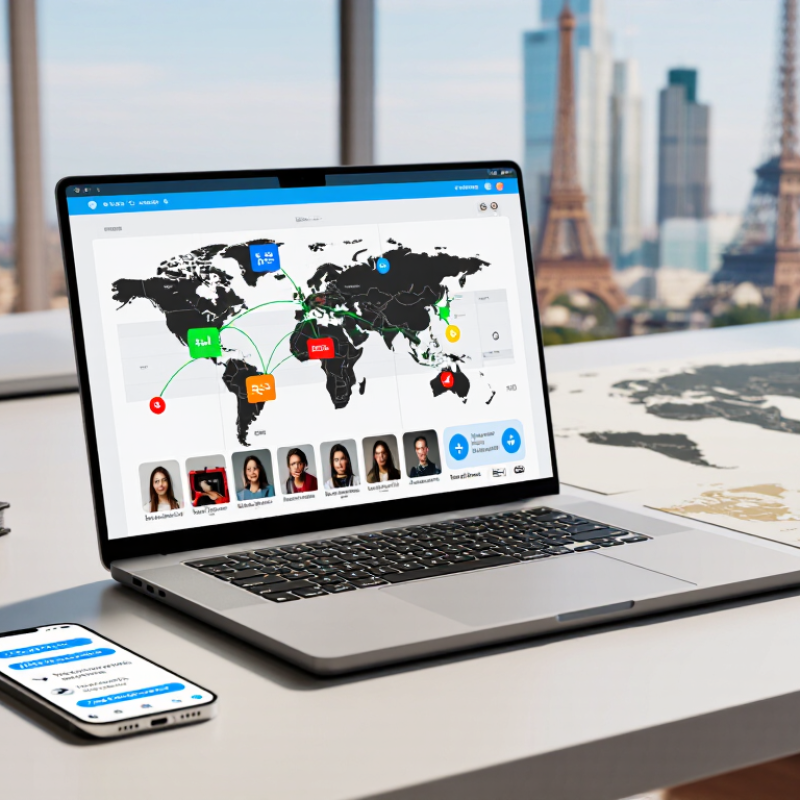
What Makes a Language Translator Suitable for Global Buyers in 2026
What Makes a Language Translator Suitable for Global Buyers in 2026
A suitable language translator must work reliably in airports, factories, hotels, and online meetings. Global buyers need more than a long language list. They need accurate speech recognition, natural translations, and quick responses when conversations become stressful.
Context matters greatly. A useful translator should understand accents, technical terms, currencies, measurements, and polite business language. It should support offline translation for flights, remote worksites, or places with weak internet. Clear microphones and bright screens also matter. A device may offer impressive features, yet fail when background machinery overwhelms the microphone.
Privacy deserves careful attention. Buyers should examine how conversations are stored, processed, and deleted. Transparent data policies build more trust than attractive promises. Strong battery life, simple controls, and regular software updates can reduce problems during long purchasing trips. Support for regional dialects is valuable, but coverage can remain uneven.
Real-world testing reveals the truth.
Try short questions, noisy conversations, handwritten addresses, and industry-specific phrases before buying. No translator is perfect. Even advanced systems can miss humor, cultural meaning, or a speaker’s hesitation. Human review remains necessary for contracts, safety instructions, and sensitive negotiations. A reliable choice balances accuracy, privacy, durability, and honest limitations instead of chasing the largest language count.
Core Translation Technologies and Multilingual Communication Features
For global buyers in 2026, translation quality depends on more than fluent sentences. Neural machine translation now uses transformer models to interpret context, grammar, and word relationships. However, accuracy can fall when product terms, local dialects, or short chat messages appear together. Context matters.
A capable translator should combine machine translation, speech recognition, optical character recognition, and translation memory. Translation memory reuses approved phrases, such as warranty terms or delivery instructions. Terminology controls also prevent “voltage” from becoming “power” in technical listings. The 2020 CSA Research report, Can’t Read, Won’t Buy, found that 76% of online shoppers prefer product information in their own language. It also reported that 40% would not purchase in other languages. These figures make multilingual support a commercial requirement, not a decorative feature.
Communication features need equal attention. Buyers should be able to translate live conversations, uploaded manuals, product labels, and voice messages without changing applications. Useful systems show the original text beside the translation and allow quick corrections. Human review remains important for safety instructions and contract language. The 2023 Nimdzi Language Industry Report estimated the global language services market at more than 26 billion US dollars, showing sustained demand for professional language workflows. Yet data privacy, regional accents, and poor audio still create failures. I would not trust a system that hides uncertainty. A small confidence warning may protect a buyer better than polished nonsense.
2026 Top Language Translator for Global Buyers?
Core translation technologies must scale from a small set of official languages to thousands of language codes and living languages.
What global buyers should evaluate: neural machine translation for text, OCR for scanned documents and images, speech-to-text and text-to-speech for conversations, terminology management for consistent product language, translation memory for repeated content, and locale quality assurance for dates, currencies, units, and regional expressions.
Reference counts are approximate and based on publicly maintained language standards and international language datasets. ISO 639-1 contains 184 two-letter codes; ISO 639-3 covers 7,000+ language identifiers; the United Nations has 6 official languages; the European Union has 24 official languages; global living-language estimates are approximately 7,164.
How to Compare Accuracy, Speed, Privacy, and Device Compatibility
2026 Top Language Translator for Global Buyers?
How to Compare Accuracy, Speed, Privacy, and Device Compatibility
Choosing a language translator in 2026 requires more than checking its language count. Global buyers should test accuracy with real product descriptions, shipping terms, and customer questions. Generic sentences can hide serious weaknesses.
I compare translations against reviewed human versions whenever possible. Industry terminology matters. A tool may translate casual speech well but confuse measurements, warranties, or return conditions. Short output is not always better. Read every sentence carefully.
Speed also affects daily work. A useful translator should respond quickly during live calls and store visits. Test it on crowded networks and older devices. Small delays become frustrating. Offline access can help during travel, but downloaded language packs may offer weaker accuracy.
Privacy deserves equal attention. Check whether conversations are stored, reused, or shared for service improvement. Clear retention settings are valuable. Avoid tools requesting unnecessary microphone, contact, or location access. Their policies should be readable, not buried in vague language.
Device compatibility includes operating systems, browsers, microphones, cameras, and accessibility features. Try the same phrase across a phone, tablet, and laptop. Results may differ. That surprised me during testing. Battery use also matters during long interpreting sessions.
No translator is perfect. Accents, background noise, slang, and mixed languages still cause errors. A careful buyer should keep human review for contracts, safety instructions, and sensitive negotiations. A scorecard covering accuracy, speed, privacy, and compatibility makes comparisons more honest. Yet personal testing remains essential. Metrics can mislead.
Key Use Cases for Business Travel, Trade, Support, and Online Meetings
2026 Top Language Translator for Global Buyers?
A reliable language translator should work beyond holiday phrases. During business travel, users need hotel changes, directions, invoices, and urgent questions understood quickly. The GBTA Business Travel Index reported global business travel spending of about $1.48 trillion in 2024. That scale makes small translation errors expensive. A missed meeting room or incorrect transport instruction can damage trust.
Trade requires sharper control. Product specifications, payment terms, and delivery dates should remain clear across languages. CSA Research found that 76% of online shoppers prefer product information in their own language, while 40% will not buy from websites written in another language. Those figures support human review for contracts and technical documents. Machine translation is fast, but it is not always careful. Context still matters.
Customer support needs speed and patience. A translator can help agents understand screenshots, voice messages, and short complaints during live chats. Online meetings add another test: accents, interruptions, weak connections, and industry vocabulary. Use a tool that displays transcripts, supports terminology lists, and protects confidential data. The WTO reported merchandise trade above $24 trillion in 2022, showing why multilingual communication remains commercially important. Yet no device handles every culture perfectly. Human judgment is still needed when the conversation becomes sensitive, unclear, or unexpectedly funny.
Practical Criteria for Choosing the Right Translator for Global Purchasing
2026 Top Language Translator for Global Buyers?
Practical Criteria for Choosing the Right Translator for Global Purchasing
Global purchasing depends on more than fluent conversation. A translator must handle product specifications, payment terms, shipping details, and supplier questions without changing meaning. In procurement work, I test this with a short request for quotation, a packing list, and one technical drawing. Small errors matter. One altered unit can distort a budget.
Look for proven experience in your product category, not only general language certificates. Ask how the translator checks technical terms, dates, quantities, and local expressions. Human review remains valuable when instructions affect quality or delivery. Speed is useful. Accuracy comes first. Evaluate confidentiality controls before sharing designs, pricing, or supplier records. Clarify where files are stored, who can access them, and whether deleted material is actually removed.
Request a small paid trial with measurable criteria. Compare terminology consistency, turnaround time, formatting, and the number of questions raised. A translator who asks precise questions may be safer than one who promises instant delivery. Still, this criterion can mislead. Too many questions may show unfamiliarity, not care. Review the final work with a technical colleague, and record recurring mistakes. That record helps improve future orders and exposes weaknesses before they become expensive. A clear correction process also matters when local wording sounds polite but hides an important limitation.







.avif)


.png)