What is an audio language translator and how does it work?
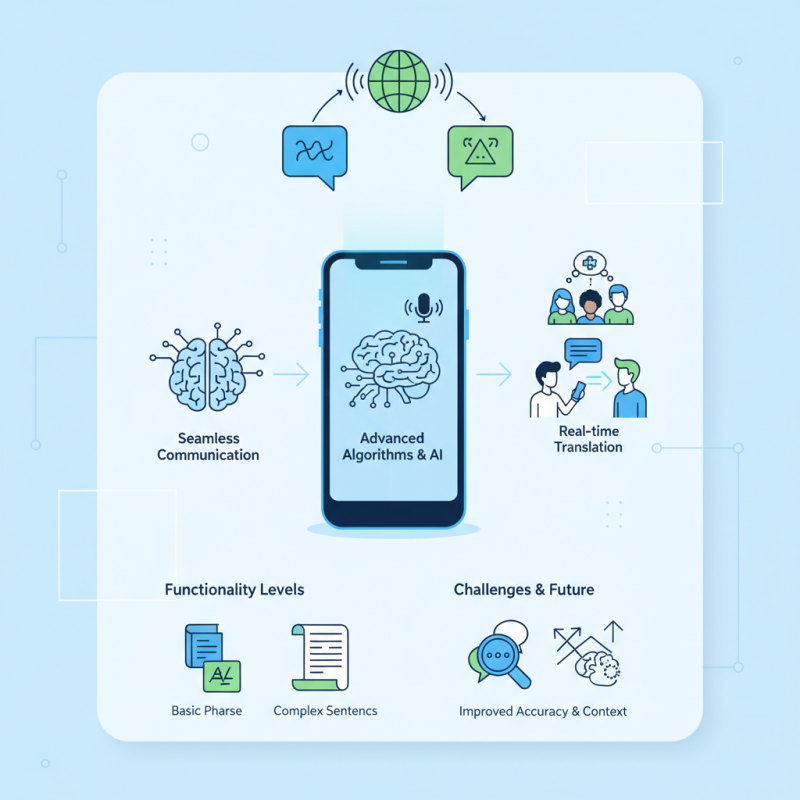
An audio language translator is a powerful tool in today’s globalized world. It enables seamless communication across language barriers. This technology is increasingly essential for travelers, businesses, and educators. The audio language translator interprets spoken words in real-time. It provides quick translations that help users understand foreign languages.
The functionality of an audio language translator can vary greatly. Some devices focus on basic phrases, while others offer complex sentence translation. This technology uses advanced algorithms and artificial intelligence to improve accuracy. However, it is not perfect. Misinterpretations can occur, especially in nuanced conversations.
Despite its limitations, the audio language translator remains invaluable. It fosters connections among diverse cultures. Ensuring clear communication in various scenarios is crucial. Focusing on improving accuracy and context awareness can enhance its reliability even further. As technology evolves, so will the capabilities of audio language translators.
What is an Audio Language Translator?
An audio language translator is a technological solution that facilitates real-time voice translation. This device or software captures spoken language and transforms it into another language instantly. Its main goal is to bridge communication gaps between speakers of different languages.
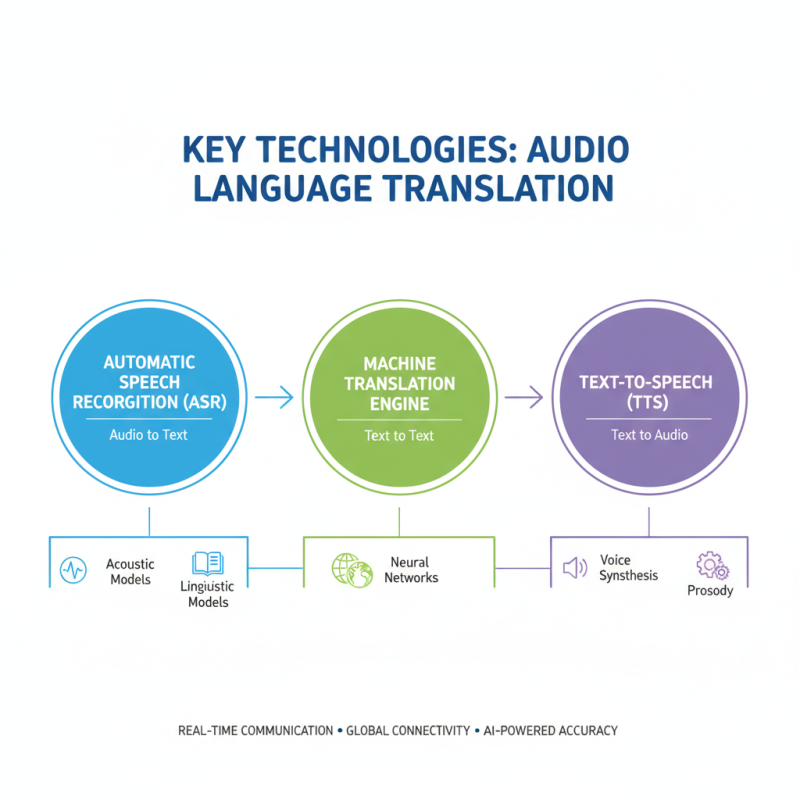
These translators typically utilize advanced algorithms and machine learning techniques. They analyze audio input, identify the spoken words, and translate them into text. The system then converts the text back into speech in the target language. This process may seem seamless, yet it often struggles with accents and dialects. Accuracy can vary depending on the clarity of the audio.
While many users enjoy the convenience of audio translators, they can lead to misunderstandings. Cultural nuances and context may be lost in translation. Users should remain aware of these limitations. Digital translators may struggle with idiomatic phrases, leading to awkward translations. Continued development and user feedback are essential for enhancing these devices' reliability and effectiveness.
Key Technologies Behind Audio Language Translation
Audio language translators are transformative tools for communication. They utilize several key technologies to convert spoken language in real time. One of the most critical components is automatic speech recognition (ASR). ASR converts audio input into text. This process involves breaking down sound waves into recognizable phonetic units. The accuracy of this technology relies heavily on extensive linguistic models.
Natural language processing (NLP) plays a significant role as well. NLP helps the system understand the context and nuances of languages. It enables the translator to generate coherent sentences in the target language. However, challenges remain, especially with idiomatic expressions. Sometimes, the meaning can get lost in translation. Additionally, different accents or dialects can affect accuracy.
Machine learning algorithms enhance the performance of these systems. They allow the translator to learn from user interactions over time. Despite these advances, errors and misinterpretations occur. Users may encounter situations where translations don't capture the intended meaning. This inconsistency calls for ongoing improvements and refinements in technology. The quest for smoother and more accurate translations continues to be a work in progress.
How Audio Language Translators Process Speech in Real-Time
Audio language translators are transforming communication by converting spoken words in real-time. They utilize advanced speech recognition technology to process audio inputs. This technology is not just about simple translation; it captures tone, context, and emotion. A report by the International Data Corporation (IDC) predicts that the global market for speech recognition will reach $26.8 billion by 2024, reflecting its growing relevance.
These translators often use machine learning algorithms. They analyze speech patterns and accents, enhancing accuracy over time. During live conversations, a near-instantaneous translation occurs. This may lead to occasional inaccuracies. For instance, idiomatic expressions might not translate perfectly. According to a study by Gartner, as much as 30% of translation accuracy can vary based on context. It emphasizes the need for continual improvement.
Real-time processing presents its challenges. Background noise can hinder performance. Moreover, differentiating overlapping speech remains complex. Despite advancements, there's still room for growth. These issues highlight the importance of ongoing development in audio language translation technology. Continuous feedback is essential for refining algorithms and improving user experience.
Audio Language Translator Usage Statistics
This chart represents the monthly usage statistics of audio language translators over a seven-month period. As seen, the number of users has shown a significant increase, indicating a growing reliance on real-time speech translation technology.
Applications of Audio Language Translators in Daily Life
Audio language translators are becoming indispensable in our daily lives. In a world where communication spans across cultures, these tools facilitate understanding. According to a report by MarketsandMarkets, the global market for language translation technology is expected to reach $56.18 billion by 2027. This growth indicates a rising demand for effective communication.
In professional settings, audio translators assist in multilingual conferences. They allow participants from different backgrounds to engage fully. Additionally, in educational environments, they provide support for students learning new languages. Studies show that over 70% of educators see enhanced learning outcomes due to these technologies.
In healthcare, audio translators are critical during patient consultations. They help bridge the communication gap between doctors and patients who speak different languages. A survey by the National Institutes of Health found that 30% of patients faced difficulties understanding medical advice due to language barriers. Audio translators are paving the way for clearer communication in such sensitive settings, significantly enhancing patient care.
Challenges and Limitations of Audio Language Translation Technology
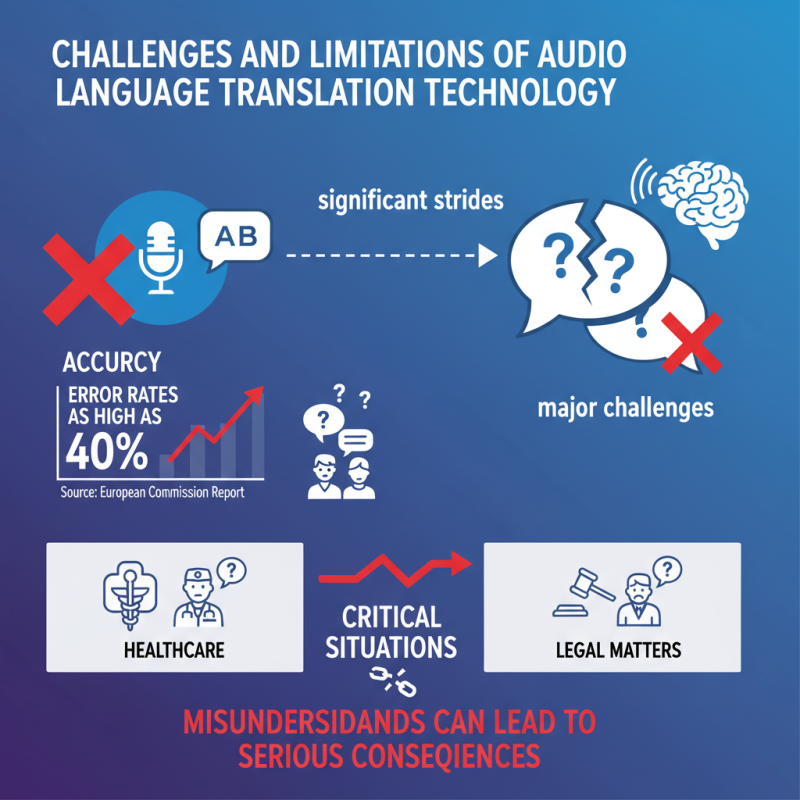
Audio language translation technology has made significant strides in recent years. Yet, it still faces major challenges and limitations. One key area of concern is accuracy. According to a report by the European Commission, machine translation can have error rates as high as 40% in conversational contexts. This can lead to misunderstandings in critical situations, such as healthcare or legal matters.
Another challenge is the nuance of human speech. Translation algorithms often struggle with idioms, humor, and cultural references. Research from the Association for Computational Linguistics reveals that only about 30% of humor translates effectively across languages. Additionally, variances in accents and dialects complicate these translations further. Users may find themselves receiving translations that miss the original intent.
Finally, processing speed is a significant factor. While some systems boast real-time translation, delays can undermine effective communication. A survey by the International Telecommunication Union found that 25% of users experienced frustrating lags. These delays highlight the technology's need for improvements. As the industry evolves, addressing these issues will be crucial for the future of audio translation.





.avif)


.png)