Who Are the Best Wrist Watch Manufacturers in China?
Choosing the best Wrist Watch manufacturers in China depends on what you plan to make, how many you need, and the quality standards you expect. Some factories focus on custom designs, while others offer ready-made models that can be adjusted with different dials, straps, or case finishes. A polished product photo tells only part of the story. Details matter.
A careful comparison should look beyond price. Ask about movement options, material specifications, sample fees, minimum order quantities, production timelines, and inspection procedures. Request a physical sample and examine the crown, clasp, dial printing, and case edges in good light. These small details can reveal more than a catalogue can. It can be confusing, honestly, because suppliers may describe similar services in different ways.
This guide explores how to assess manufacturers, compare their capabilities, and ask useful questions before placing an order. It does not treat one supplier as the right choice for every buyer. A brand developing a small collection may value flexible customization, while a larger retailer may prioritize consistent production and clear quality controls. Verify claims directly, request relevant documentation, and agree on specifications in writing. Even then, a sample may not represent every item in a full production run. That is worth remembering.
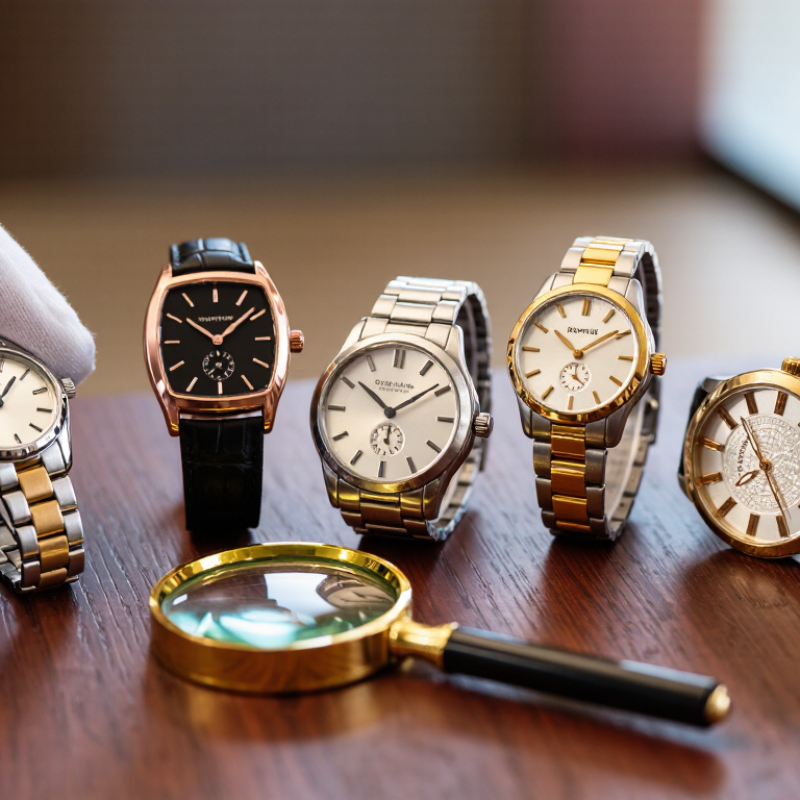
Define “Best” by Movement Expertise, Quality Control, Warranty, and Service
“Best” is not a single technical feature. For a Chinese watch manufacturer, examine movement expertise: Does the team explain the movement’s origin, regulation process, and available repair support? Ask for timing results across several positions, not just a headline accuracy figure. Details matter. Clear answers suggest practical knowledge; vague claims deserve follow-up.
Quality control should be visible in repeatable checks. Look for documented inspections of timekeeping, hand alignment, crown operation, and case sealing. A water-resistance test, for example, should have a stated method and acceptance standard. Ask whether checks cover every watch or only sampled units. That distinction is easy to miss. No process catches everything, and a tidy inspection sheet alone cannot prove long-term reliability.
Warranty and service terms reveal how a manufacturer handles problems after delivery. Confirm the coverage period, exclusions, repair route, and who pays shipping. Ask how replacement parts are sourced and whether service records accompany repaired watches. Response times matter, too. A prompt, specific reply is more useful than a broad promise. I would not judge a maker from one conversation, though; written terms and consistent follow-through are stronger evidence. Some details may still be unclear, so record unanswered questions before comparing suppliers.
Who Are the Best Wrist Watch Manufacturers in China?
Suggested evaluation weights for comparing movement expertise, quality control, warranty, and service.
How to use this chart: Treat these percentages as a proposed evaluation framework, not as measured ratings of specific manufacturers. Ask for verifiable movement specifications, inspection records, written warranty terms, and documented after-sales procedures.
Compare Seagull, Fiyta, Beijing, Shanghai, and Other Chinese Watchmakers
Chinese watchmakers differ more by engineering focus and quality control than by national origin alone. Established factories often offer mechanical movements, accessible servicing, and long production histories. Some specialize in aviation-inspired designs or precise quartz models. Others emphasize restrained dials and traditional finishing. The differences show up in small details.
Compare a watch by its movement, case, and support network. Check whether the movement is made in-house or sourced, and whether the maker publishes service guidance. Inspect the crown action, the alignment of the hands, and the clarity of the dial printing. These are useful clues, not proof of long-term reliability. Ask about warranty coverage and local repair options before buying. A polished case can still hide uneven finishing. It happens.
Regional names can suggest heritage, but they do not guarantee consistent quality across every model. Production methods and component suppliers may vary between product lines. For a daily watch, prioritize legible markers, a comfortable bracelet, and a movement with accessible parts. Collectors may value distinctive case shapes or historical design references instead. The comparison is imperfect: public specifications rarely reveal how a watch performs after years of wear. Try one on, examine its details, and treat sweeping claims with care.
Assess Mechanical and Quartz Calibers, Materials, and Manufacturing Capabilities
Choosing a Chinese watch manufacturer means checking the movement, materials, and production controls—not just the sample on a desk. For mechanical calibers, ask for beat-rate, amplitude, and positional test records. For quartz, check rate accuracy across temperature changes and battery consumption. Request batch-level results, not only a certificate for one finished watch. Details matter.
Materials need equally concrete checks. Ask for the steel grade, crystal specification, coating process, and documented water-resistance test pressure. A supplier should explain how it controls case tolerances and seals, and whether it can trace components by production lot. CNC machining, polishing, assembly, and final inspection may sit under one roof—or be outsourced. Confirm which.
Market figures provide context, not a quality verdict. The Federation of the Swiss Watch Industry reported exports of CHF 25.9 billion in 2024, down 2.8% year over year, showing how established watchmaking remains exposed to demand shifts. Grand View Research estimated the global watch market at USD 75.8 billion in 2023 and forecast 5.1% annual growth through 2030. Definitions vary, so treat forecasts cautiously. One caveat: a polished sample proves little about batch consistency. Ask to inspect production records and repeat-test procedures before comparing quotes.
Verify Diver Watches Against ISO 6425’s 100 m Minimum Water-Resistance Requirement
Who Are the Best Wrist Watch Manufacturers in China? A useful comparison starts with evidence, not polished product photos. For a diver watch, check whether the manufacturer documents testing against ISO 6425 and its 100 m minimum water-resistance requirement. A “100 m” marking alone does not prove that a specific watch passed the standard’s tests. Ask for test records tied to the model, not just a general factory certificate. Small details matter: the caseback, crown, and seals must all hold up under testing.
Tips: Request a dated pressure-test report and confirm the tested model matches the watch you are buying. Check whether testing was performed by a qualified independent laboratory. Keep the report with your purchase records. A brief product-page claim is not enough.
ISO testing involves more than placing a watch in water. Requirements address pressure and other conditions relevant to diver watches. Still, test results describe tested samples; they cannot guarantee every unit will remain watertight after wear or servicing. That distinction is easy to overlook. Ask how the manufacturer checks production watches, and whether it recommends periodic pressure tests. Even careful checks can miss a worn seal or a crown that was not fully secured. Be cautious of vague answers, especially when the seller cannot explain what the 100 m claim actually means.


.avif)


.png)