How to Choose the Best Live Translation App for Your Needs?
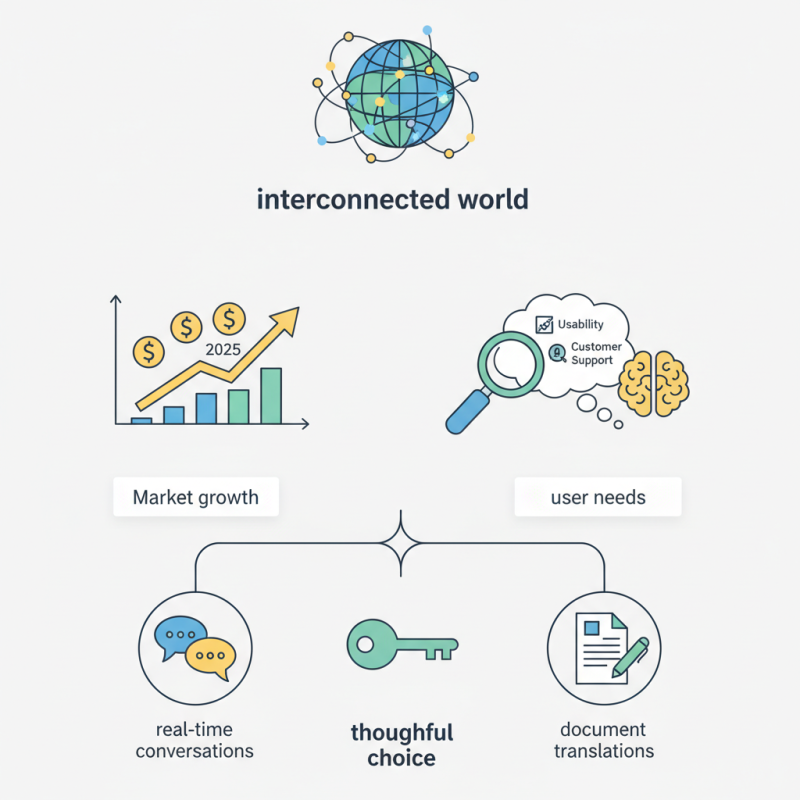
In an increasingly interconnected world, the demand for effective communication across languages is rising. A recent report by Statista shows the live translation app market is expected to grow significantly, with a projected value of over $2 billion by 2025. This growth highlights the importance of choosing the right app for individual needs. However, the vast choices can be overwhelming.
According to Dr. Emily Schwartz, a leader in translation technology, "Selecting a live translation app is not just about features; it involves understanding your specific requirements." When considering a live translation app, one must evaluate usability, accuracy, and customer support. Users often overlook these factors, leading to unsatisfactory experiences.
It's essential to reflect on your goals. Do you need real-time conversations or document translations? Understanding your context can streamline your search. The right app can enhance communication in both personal and professional settings, making it key to approach this choice thoughtfully.
Understanding Your Translation Needs: Different Use Cases and Contexts
Choosing the right live translation app begins with understanding your unique translation needs. Different contexts, such as business meetings, travel, or educational settings, require distinct capabilities. According to industry data, around 80% of professionals consider real-time translation essential for effective communication. This emphasizes the importance of selecting an app that aligns with your specific use case.
For those attending international conferences, a live translation app must handle multiple languages simultaneously. Thorough research shows that over 60% of users prefer apps that support real-time voice translation for seamless interaction. In contrast, travelers may benefit more from applications that offer offline translation features. Consider your environment carefully to ensure you make an informed choice.
Tips: When evaluating an app, assess its user interface. A simple design promotes ease of use, especially during high-pressure situations. Also, consider the app's compatibility with various devices. Flexibility can significantly impact its usability in diverse settings. Remember that no app is flawless; user feedback may reveal areas for improvement in functionality or language support. Reflecting on these potential shortcomings can guide your selection process effectively.
How to Choose the Best Live Translation App for Your Needs?
| Use Case |
Translation Context |
Key Features |
Suggested App Type |
| Travel |
Conversational dialogues |
Voice recognition, Offline mode |
Mobile App |
| Business Meetings |
Formal discussions |
Real-time translation, Integrations with tools |
Desktop Application |
| Education |
Lectures and Tutorials |
Text translation, Multi-language support |
Web-Based App |
| Healthcare |
Doctor-Patient interactions |
Privacy compliance, Medical vocabulary |
Mobile App |
| Customer Support |
User inquiries |
Chat support, Integration with CRM |
Web-Based App |
Key Features to Look for in a Live Translation App: A Comprehensive Guide
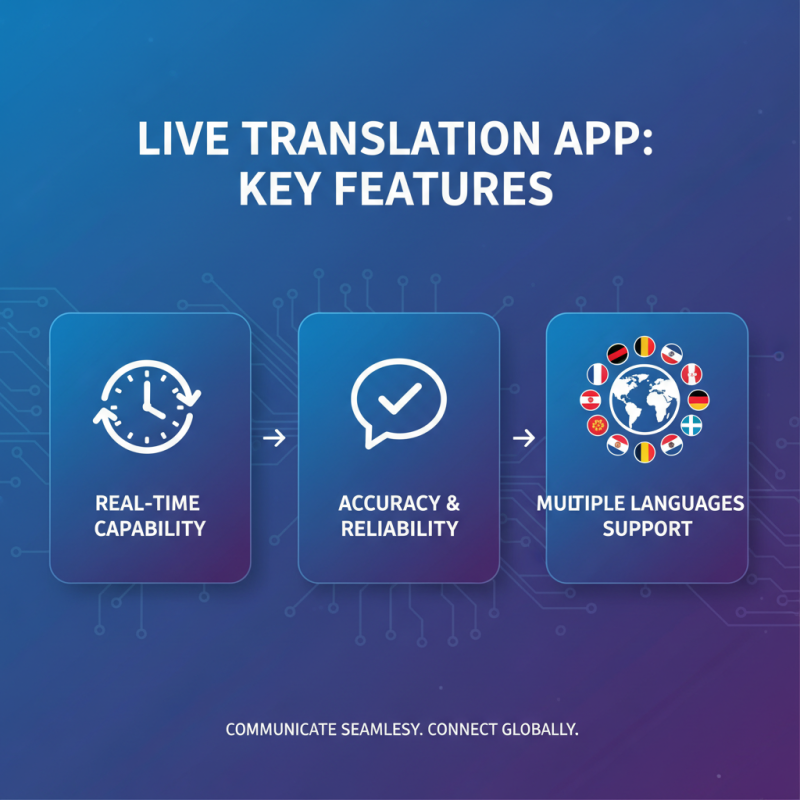
When selecting a live translation app, several key features must be considered. Real-time translation capability is crucial. This allows users to communicate without significant delays. Accuracy is also important. A reliable app should provide translations that maintain the original meaning of conversations. Look for tools that support multiple languages. This inclusivity ensures broader communication options.
User-friendly interfaces enhance the experience. A simple design helps users navigate easily, reducing stress during conversations. Voice recognition capabilities are another essential feature. They make spoken translations smoother and more efficient, especially in dynamic environments.
Integration with other applications can be beneficial. This feature allows users to seamlessly switch between different platforms while communicating. Some apps offer offline modes, which can be useful when internet access is unreliable. However, be aware that not all features work perfectly in every app. Some users may find limitations in specific languages or contexts. Testing multiple options can provide insights into what truly meets your needs.
Comparative Analysis of Popular Live Translation Apps: Success Rates & User Ratings
Choosing a live translation app requires careful consideration of various factors. A comparative analysis of popular apps reveals significant differences in success rates and user ratings. Success rates indicate how often an app provides accurate translations. Some apps excel in specific languages, while others may falter. This disparity can impact communication and understanding in real-time scenarios.
User ratings offer another perspective. They reflect real-world experiences and satisfaction levels. An app with a high user rating doesn’t always guarantee it will meet your needs. User feedback often highlights specific strengths and weaknesses. Some users report issues with context, while others appreciate the app’s speed. This suggests reliability may require further exploration beyond just ratings.
Many users find it challenging to navigate the array of options. Testing various applications might lead to mixed results. Sometimes, what works for one user may disappoint another. It’s essential to identify personal requirements. Consider the languages you need and the situations in which you'll use the app. This approach could lead to more fulfilling experiences with live translation technology.
User Experience and Interface: Importance of Design in Translation Apps
When selecting a live translation app, user experience (UX) and interface design are crucial factors. A well-designed app can significantly improve efficiency and satisfaction. According to a recent UX survey, 88% of users are less likely to return to a site or app after a bad experience. This statistic should not be overlooked when choosing an app.
Intuitive navigation is vital. Users prefer interfaces that are simple and clear. Apps that clutter the screen can cause frustration. A clean design, with well-organized menus, allows users to access features quickly. Think about important functions like text, voice, and image translation. These core features should be prominent and easy to find.
Tip: Try demos or free versions before committing to an app. This helps gauge usability.
Another aspect is accessibility. Design should cater to diverse users, including those with disabilities. Contrast in color, font size adjustment options, and voice commands enhance user experience. Why should this matter? Research shows that inclusive design boosts user reliance and loyalty.
Tip: Evaluate how the app adapts to different devices. Responsiveness can affect your overall experience.
When exploring pitfalls, consider apps that prioritize aesthetics over functionality. A striking design may attract users initially, but if navigating is a hassle, users will likely abandon it. Balance between beauty and usability is essential in the landscape of translation apps.
Key Features to Consider in Live Translation Apps








.avif)


.png)