How to Choose the Best Translation Software for Your Needs?
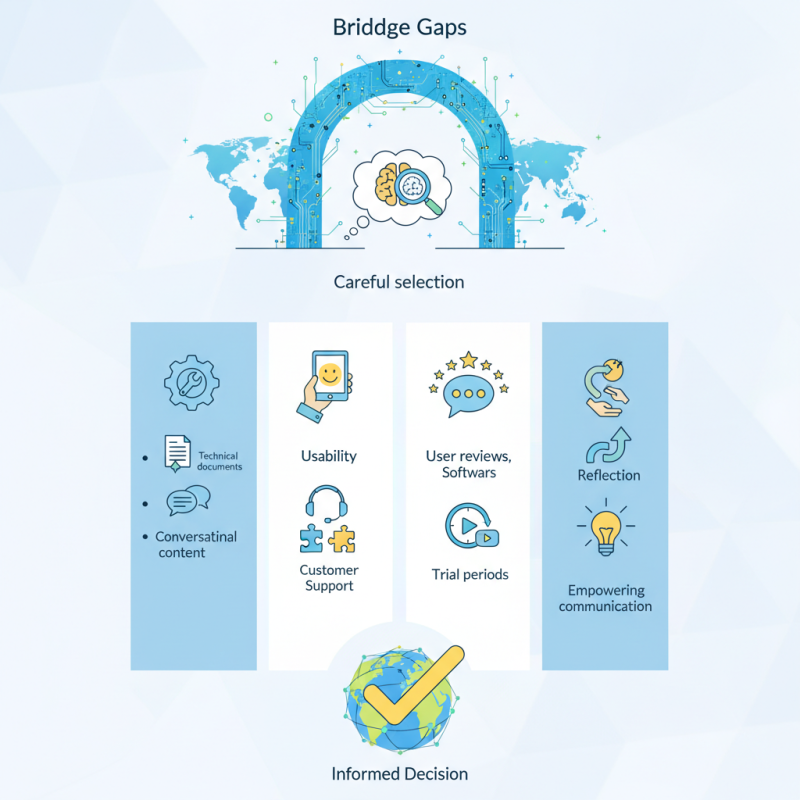
Choosing the right translation software can be a daunting task. Many options exist, each catering to different needs. As Dr. Emily Tran, a renowned expert in language technology, states, “The right translation software can bridge gaps, not just linguistically, but culturally.” Her insight highlights the importance of carefully selecting software that meets your unique demands.
When exploring translation software, consider your specific objectives. Do you need precise translation for technical documents, or more fluid translations for conversational content? Each software excels in different areas. Focus on usability, customer support, and compatibility with your existing tools. These factors can significantly impact your experience.
Many users overlook the importance of user reviews and trial periods. Sometimes, software looks great but lacks real-world performance. Take time to experiment. Switching tools later can be frustrating. Reflection on your choices is key. Translation software should empower your communication, not complicate it. Making an informed decision is vital for achieving effective translation outcomes.
Understanding Your Translation Needs and Goals
When considering translation software, you need to clearly define your translation needs and goals. Are you aiming for high accuracy, speed, or perhaps localization? Different projects demand different approaches. For example, translating a technical manual requires precision, while marketing material may prioritize engaging language. Reflect on what success looks like for your project.
Take some time to analyze your workflow and the types of documents you'll frequently translate. Will you handle files with complex formatting? Do you need collaborative features for your team? Match software capabilities to your specific requirements. Get specific about functionalities you may overlook; real-time translation and integration with other tools might be crucial for your process.
Evaluating your budget is important too. It’s easy to get carried away with advanced features, but do you really need them? Sometimes, simpler tools may provide satisfactory results. You might discover that the software promises more than it delivers. Take note of what doesn't work well. Often, user feedback reveals insights about common pain points. Balancing your expectations and reality will guide you to the right choice.
How to Choose the Best Translation Software for Your Needs?
| Software Type |
Key Features |
Pricing Model |
Best For |
| Machine Translation |
Instant translations, AI-powered suggestions |
Free or Subscription-based |
Casual users, quick translations |
| CAT Tools |
Translation memory, glossaries, collaboration features |
Subscription or one-time purchase |
Professional translators, agencies |
| Cloud-based Translation Platforms |
Accessibility, team collaboration, version control |
Monthly subscription |
Teams working on shared projects |
| Specialized Translation Software |
Industry-specific terminology, document format support |
Varied pricing |
Technical translators, legal or medical professionals |
Evaluating Different Types of Translation Software
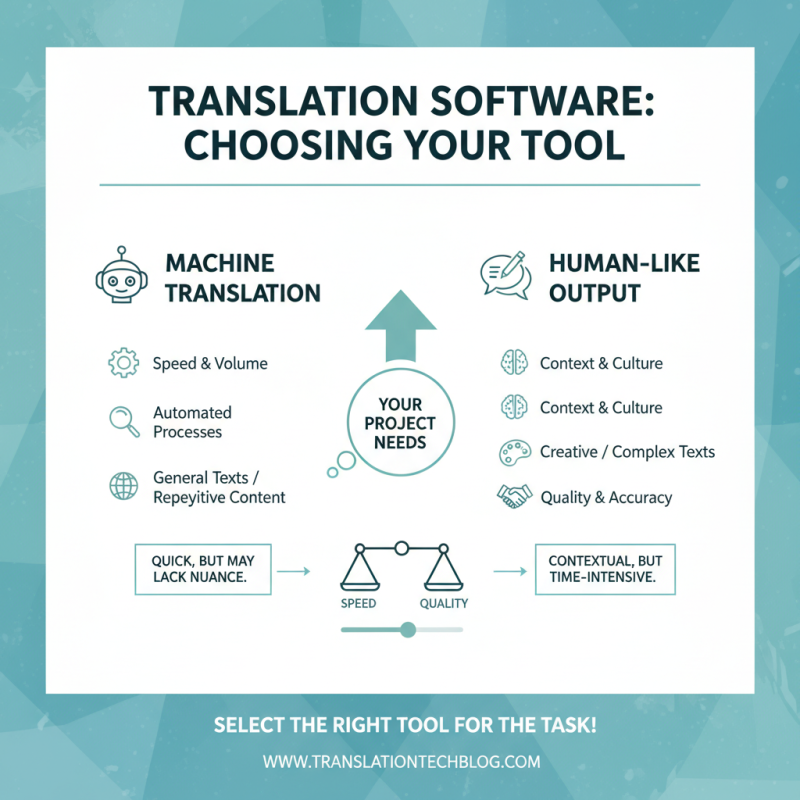
When evaluating different types of translation software, consider the specific needs of your projects. There are various software options available, each with unique features. Some focus on machine translation, while others prioritize human-like outputs. Understanding these differences will help you select the right tool.
Tips: Determine the primary languages you require. Some software excels with specific language pairs. Also, assess the user interface. A user-friendly design can enhance productivity. If you're unsure, trial versions can provide insights without commitment.
Another factor to consider is integration capabilities. Does the software work with other tools you use? Compatibility can streamline your workflow. However, be aware that some programs may not perform well in niche areas, leading to inaccurate translations. Always evaluate the software's limitations and adapt accordingly.
Key Features and Functionality to Consider
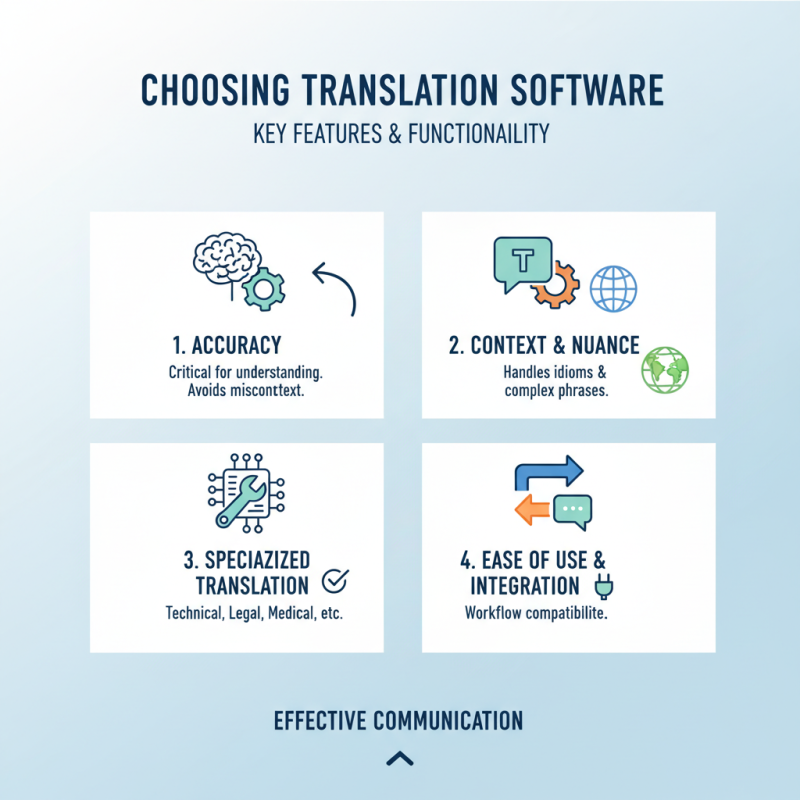
Choosing the right translation software is crucial for effective communication. When evaluating options, consider the core features and functionalities. Accuracy is the most critical element. A software that misinterprets context can lead to misunderstandings. Some tools excel in technical translations, while others may falter with idiomatic expressions.
Another essential aspect is user-friendliness. A complex interface can hinder productivity. Translation software should streamline the process, allowing users to focus on content rather than battling a complicated layout. Look for features like voice input or easy glossary management. These functionalities can significantly enhance the translation experience.
Lastly, integration capabilities matter. Many professionals use multiple tools. If the translation software can connect with other applications seamlessly, it saves time and effort. However, not all platforms offer this flexibility. Assess whether the tools you use will work well together. This factor could ultimately impact your workflow. In the end, balancing all these elements will help you choose a software that truly fits your needs.
Assessing Software Usability and User Experience
When choosing translation software, usability is key. A clean interface helps users navigate easily. Look for features that simplify tasks. Clear menus and straightforward options make a difference. Avoid cluttered designs that confuse users. Every click should bring you closer to your goal.
User experience matters just as much as functionality. Imagine you're in the middle of a project. Suddenly, the software crashes. Frustration grows. It's essential to test for stability before committing. Check reviews for user feedback. Sometimes, even the best software has quirks. Understand where these issues lie.
Don't overlook the importance of customer support. When problems arise, quick assistance is vital. Accessible help can save time and stress. Seek software with robust support options, like chats or tutorials. Ensure they respond promptly. Building a smooth workflow is invaluable. Use trial versions to gauge your comfort level.
Translation Software Usability Comparison
This chart compares the usability scores of various translation software based on user feedback. Scores are rated from 1 to 10, highlighting the differences in user experience among the software options.
Comparing Costs and Licensing Options for Translation Tools
When selecting translation software, understanding costs and licensing options is crucial. Many users overlook this aspect, focusing solely on features. Yet, a 2022 industry survey revealed that 45% of businesses faced budget constraints while acquiring translation tools. This statistic drives home the importance of evaluating cost structures.
Cloud-based solutions generally come with subscription models, which may seem affordable initially. However, annual costs can add up. Some continuous users reported spending thousands annually without realizing it. On the flip side, perpetual licensing might require a hefty upfront payment, but long-term savings could be substantial.
Additionally, different licensing models can affect team scalability. Teams of varying sizes may struggle under rigid licenses. A staggering 38% of users highlighted issues when their software did not support additional licenses seamlessly. Choosing the right model allows flexibility, which is vital in dynamic business environments. Balancing cost and functionality should be a continuous reflection.








.avif)


.png)