Why Choose Electric Resistance Welded Steel for Your Projects?
In today’s construction and manufacturing landscape, the choice of materials plays a crucial role in project success. One option that stands out is Electric Resistance Welded (ERW) steel. This type of steel offers unique advantages that are worth exploring. It is cost-effective, durable, and easy to work with.
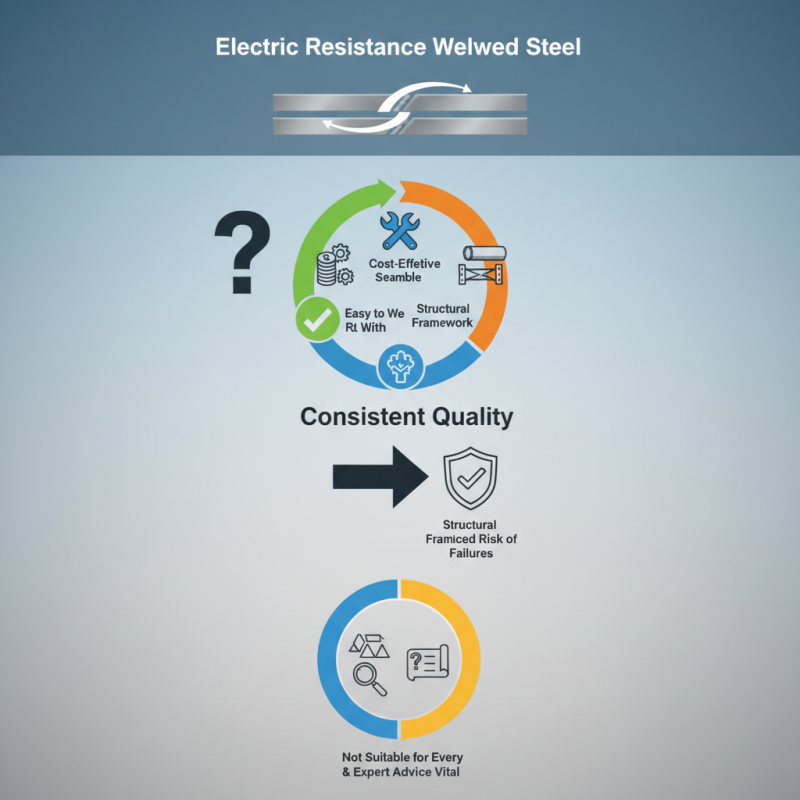
Electric Resistance Welded steel is produced through a process that ensures strong, reliable seams. This makes it ideal for applications ranging from structural framework to pipelines. The precision of ERW technology results in consistent quality. This can significantly reduce the risk of failures in critical projects.
However, it is important to acknowledge some limitations. While ERW steel is versatile, it may not be suitable for every application. Understanding the specific needs of your project is essential. Generalizing about materials can lead to oversights. Therefore, proper research and expert advice are vital when integrating ERW into your plans.
Benefits of Electric Resistance Welded Steel in Construction Projects
Electric Resistance Welded (ERW) steel is increasingly favored in construction projects due to its numerous benefits. This method involves using electrical current to heat the edges of steel sheets, allowing them to bond seamlessly. According to the American Institute of Steel Construction, ERW steel boasts a lower production cost compared to traditional methods. This results in significant savings for large-scale projects.
The weld quality of ERW steel is consistently reliable, which enhances the structural integrity of buildings. Data shows that projects using ERW steel experience up to 20% less failure rates during stress tests compared to other welded methods. This reliability is crucial in ensuring safety and durability in construction. However, it is essential to consider the potential shortcomings, such as the need for skilled labor for proper installation.
Tips: Always ensure that your suppliers follow stringent quality control measures. Engage with technical experts who can guide you through the selection process. Additionally, while planning your project, allocate proper time for inspections and maintenance to avoid long-term issues with welded structures.
Why Choose Electric Resistance Welded Steel for Your Projects? - Benefits of Electric Resistance Welded Steel in Construction Projects
| Benefit | Description | Application Areas |
| Cost-Effectiveness | Lower production costs compared to traditional welding methods. | Residential construction, commercial buildings. |
| Strength and Durability | High tensile strength making it suitable for heavy-duty applications. | Industrial structures, bridges. |
| Versatility | Can be used for a variety of shapes and sizes. | Pipelines, automotive components. |
| Reduced Heat Affected Zone | Minimizes thermal distortion and preserves material integrity. | High-precision parts in machinery. |
| Sustainability | Utilizes recycled materials and offers recyclability. | Green building projects, eco-friendly constructions. |
Applications of Electric Resistance Welded Steel Across Industries
Electric resistance welded (ERW) steel has become a staple in various industries due to its exceptional properties. In the automotive sector, for example, ERW steel is used extensively for manufacturing body structures and components. According to a report by the American Iron and Steel Institute, over 60% of steel used in vehicles is produced through welding processes. This highlights ERW steel’s critical role in ensuring vehicle safety and durability, while also providing cost efficiency.
The construction industry also relies heavily on ERW steel for structural applications. From beams to tubes, this type of steel offers high strength-to-weight ratios, which are essential for modern skyscrapers. A study from the World Steel Association indicates that there is a 20% reduction in material waste when utilizing ERW steel compared to traditional methods. However, the welding process can occasionally lead to inconsistencies in joint strength, raising concerns about long-term performance in extreme conditions.
In addition, the energy sector benefits from ERW steel in pipeline construction. The seamless nature of welded steel makes it suitable for transporting oil and gas over long distances. However, the process must be carefully monitored, as improper welding techniques can lead to leaks or failures. Data from the Pipeline and Hazardous Materials Safety Administration indicates that nearly 40% of pipeline failures can be traced back to welding defects. Therefore, while ERW steel offers many advantages, ongoing quality control measures are crucial.
Comparison of Electric Resistance Welded Steel with Other Welding Methods
Electric Resistance Welded (ERW) steel is increasingly chosen in various projects due to its unique advantages. Compared to other welding methods, such as MIG and TIG, ERW offers a more efficient and precise approach. The welding process involves passing an electric current through steel, creating a bond through heat. This method minimizes distortion in the metal, ensuring a tighter fit and superior strength.
When analyzing the differences in quality, ERW steel often exhibits fewer defects. Techniques like MIG can introduce more impurities into the weld, which might compromise structural integrity over time. ERW's lack of filler materials makes it cleaner and more consistent. However, it’s essential to consider that ERW is not suitable for every application. For instance, it may struggle with thicker gauges or complex geometries.
Cost is another factor when comparing welding methods. While ERW tends to be more cost-effective for mass production, the benefits may diminish on smaller projects. Additionally, its performance in corrosive environments should be assessed. Each welding technique has its strengths and weaknesses, and project requirements govern the best choice. Evaluating these aspects ensures a successful outcome.
Factors to Consider When Choosing Electric Resistance Welded Steel
When selecting electric resistance welded (ERW) steel for your projects, multiple factors warrant consideration. ERW steel offers high-strength properties, making it suitable for various applications, from construction to automotive parts. Industry reports indicate that the strength-to-weight ratio for ERW steel is about 30% higher than that of traditional welded steel. This translates to more efficient designs and overall material savings. However, it’s important to evaluate your specific needs against the available grades of ERW steel.
Cost is another vital aspect. While ERW steel is often more economical than alternative welding methods, hidden costs can emerge. For instance, additional testing might be necessary to ensure quality compliance, affecting overall budgets. A study highlighted that over 25% of projects faced budget overruns due to unexpected material testing requirements. Additionally, the sourcing and supply chain logistics can impact timelines. If your project is time-sensitive, delays due to material procurement can pose significant risks. Understanding these variables can help in making an informed choice.
Sustainability and Environmental Impact of Electric Resistance Welded Steel
Electric resistance welded (ERW) steel has gained popularity due to its sustainability. Unlike traditional manufacturing methods, ERW steel uses less energy and resources. Reports indicate that this process consumes up to 60% less energy than conventional welding methods. This is primarily because ERW relies on electric currents, generating heat without additional materials.
The environmental benefits are significant. For instance, ERW steel generates less waste, contributing to lower carbon emissions. According to industry studies, transitioning to ERW could reduce emissions by approximately 30% over conventional methods. Moreover, the recyclability of steel enhances its sustainability profile. Steel is 100% recyclable, which means it can be reused without degrading its quality.
Tip: Always consider the lifecycle analysis of materials. Evaluating the complete environmental impact aids in making more sustainable choices.
Another aspect to reflect on is the regional availability of resources. In some areas, sourcing raw materials for ERW may be challenging. This could lead to variations in cost and availability. Thus, it’s essential to assess local supply chains when considering ERW for projects.
Tip: Engage with local suppliers to understand resource availability better. This can influence project timelines and costs significantly.



.avif)


.png)