How to Choose the Best AI Translation Software for Your Needs?
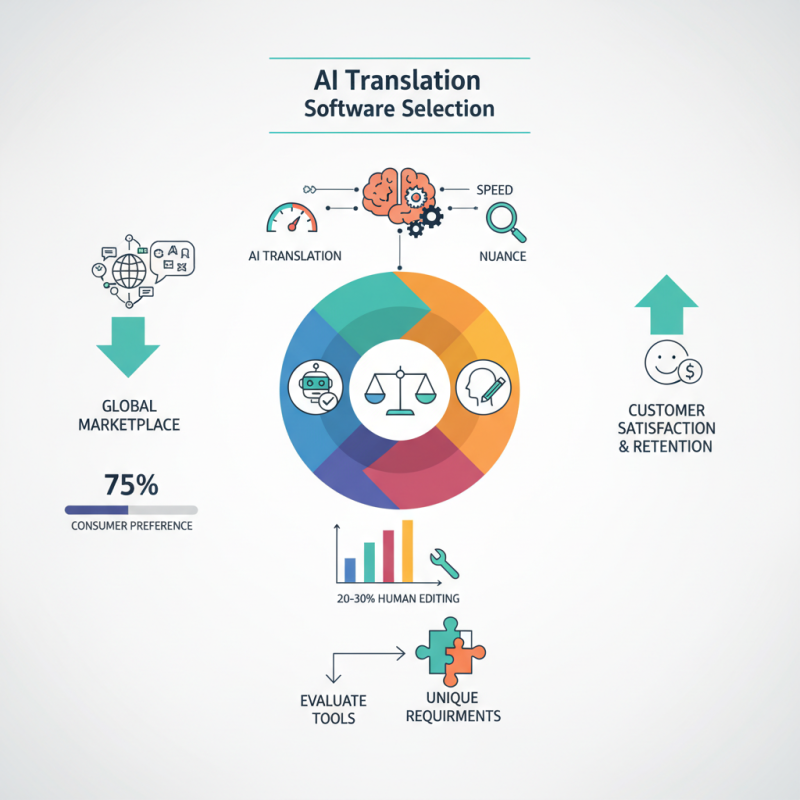
In today's global marketplace, the demand for effective communication is crucial. AI translation software has emerged as a vital tool for businesses. According to a recent report by the Common Sense Advisory, 75% of consumers prefer to buy products in their native language. This shows the importance of accurate translations.
Choosing the right AI translation software is not straightforward. Various options flood the market, each claiming unparalleled accuracy and speed. However, reports indicate that 20-30% of translations may still require human editing. This suggests that while AI tools are impressive, they are not infallible.
Understanding your specific needs is key. Some businesses may prioritize speed, while others may require nuanced translations. The choice greatly impacts customer satisfaction and retention rates. In this landscape, evaluating different tools ensures you find the AI translation software that aligns with your unique requirements.
Understanding Different Types of AI Translation Software Available
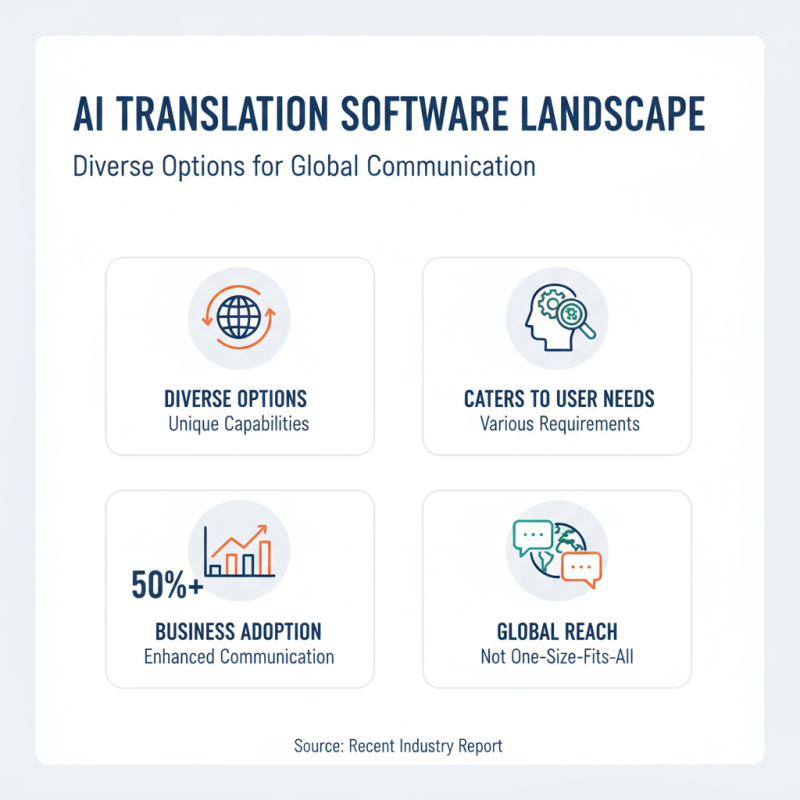
The landscape of AI translation software is diverse. Many options exist, each with unique capabilities. This variety caters to different user needs. According to a recent industry report, over 50% of businesses now utilize AI translation tools. These tools can enhance communication and expand global reach. However, not every software fits every requirement.
There are three main types of AI translation software: rule-based, statistical, and neural machine translation (NMT). Rule-based systems rely on linguistic rules and dictionaries, often struggling with nuanced language. Statistical methods analyze large datasets, but accuracy can vary. NMT offers the best performance, but it also requires significant computational power. Industry studies show that NMT systems can achieve a 60-80% accuracy rate in specialized fields, yet they may falter with idiomatic expressions.
When choosing AI translation software, consider your specific needs. Think about language pairs, context, and intended audience. Some tools excel in technical jargon, while others are more suited for casual dialogue. Experimentation may reveal strengths and weaknesses. Trusting a single solution might lead to unexpected translations. Always review results for context and correctness.
Evaluating Key Features: Accuracy, Speed, and Language Support
When choosing AI translation software, consider accuracy as a top priority. Accurate translations are essential for effective communication. Look for software that specializes in your target languages. Some tools excel in specific language pairs while struggling with others. This can lead to errors or misunderstandings. Always review the output. Humans can catch nuances AI might miss.
Speed is another key factor. In today’s fast-paced world, quick translations can be vital. Some software delivers results almost instantly. However, rapid output should not come at the cost of quality. A translation that is fast but inaccurate may create more problems. Understanding this balance is crucial.
Lastly, evaluate language support. A good translation tool should offer a wide range of languages. Some tools may focus on popular languages but neglect less common ones. If you work with niche languages, this is an important consideration. Keep in mind that even widely spoken languages may have dialects that vary significantly, affecting translation quality. Testing with different languages can provide insights into the software's strengths and weaknesses.
Assessing User Experience: Interface, Accessibility, and Learning Curve
When choosing AI translation software, user experience plays a crucial role. The interface should be intuitive. Poor design can lead to confusion. For example, cluttered menus may overwhelm users. This can result in errors and wasted time. Accessibility is equally vital. Users may have different levels of tech-savviness. A platform that requires extensive guidance might deter some and frustrate others.
Learning curves vary widely among translation tools. Some software is straightforward, while others demand extensive training. Users may feel lost if documentation is insufficient. The lack of clear tutorials can create obstacles. Keep in mind, an ideal software should encourage exploration. It should allow users to learn at their own pace. The best solutions strike a balance between guidance and freedom. A seamless experience often leads to better outcomes. In contrast, complicated features can lead to dissatisfaction.
Comparing Pricing Models: Subscription vs. One-Time Purchase Options
When choosing AI translation software, pricing models significantly impact your decision. Subscription options usually come with regular updates and support. They often appeal to users who prioritize continuous improvements and accessibility. According to a recent industry report, around 55% of businesses favor subscription models for their flexibility and scalability. Monthly fees can help businesses manage their budgets effectively.
One-time purchase options, however, provide a straightforward payment structure. This model suits users who prefer not to commit long-term. A study revealed that approximately 30% of users feel they save more in the long run with one-time purchases, despite the possible absence of future updates. Yet, the upfront cost can be daunting. Users need to weigh the immediate expense against potential future needs for updates and support.
Consider your unique requirements. Do you need ongoing updates? Is your budget limited? Reflect on these questions before making a choice. Experimenting with trial versions could also help clarify your preferences. Balance cost with usability features and support levels for informed decisions. The nuances of your translation needs will guide the path forward.
Real-World Applications: Use Cases in Business and Personal Settings
In today’s globalized world, AI translation software has become essential. Businesses use it to communicate with international clients. Imagine receiving emails in multiple languages. It’s daunting. However, translation tools can bridge this gap. They help create coherent messages. Yet, they often miss cultural nuances, which can lead to misunderstandings.
Personal use is just as significant. Travelers depend on apps to navigate foreign cities. A simple restaurant menu can become a challenge. Users expect instant results. Still, AI may confuse idioms or specific phrases. This can be frustrating. It requires users to double-check translations. Each application has strengths and weaknesses. Understanding these can help users choose the right tool.
In a working environment, mistakes might impact deals. An incorrect translation could cost money. On a personal level, a misinterpreted phrase can spoil interactions. People should reflect on past experiences. Did a translation app help or hinder? Sometimes, the human touch is irreplaceable. Balancing technology with emotional intelligence is vital for effective communication.
How to Choose the Best AI Translation Software for Your Needs? - Real-World Applications: Use Cases in Business and Personal Settings
| Use Case |
Description |
Key Features |
Recommended Software |
| Business Meetings |
Real-time translation to facilitate multilingual meetings. |
Real-time collaboration, voice translation, support for multiple languages. |
Option A, Option B |
| Travel |
On-the-go translation for signs, menus, and conversations. |
Camera translation, speech recognition, offline access. |
Option C, Option D |
| E-commerce |
Translate product descriptions and customer reviews. |
Multi-language support, context-based translation, integration with shopping platforms. |
Option E, Option F |
| Content Creation |
Translating articles, blogs or social media posts. |
SEO friendly translation, style adaptability, plagiarism check. |
Option G, Option H |
| Customer Support |
Help desk support in multiple languages. |
Chatbot integration, instant response, language detection. |
Option I, Option J |



.avif)


.png)