How to Choose the Best Real Time Translator for Your Needs?
In today's globalized world, communication knows no boundaries. The need for effective communication increases, particularly in business and travel. A real time translator is a crucial tool for bridging language gaps. According to a report by Statista, the language service industry is projected to reach $56 billion by 2027. This highlights the growing demand for real time translation services.
Choosing the best real time translator can be challenging. The market offers numerous options, each with unique features. Some translators prioritize accuracy, while others focus on speed. A recent survey indicated that 72% of users value user-friendly interfaces in translation apps. Understandably, complicated tools can lead to frustration.
It's essential to reflect on your specific needs. Will you use the real time translator for casual conversations or professional meetings? Clarity in purpose will guide your decision. Users must weigh factors like language support, connectivity, and customer service. Ultimately, finding the right real time translator can have a significant impact on your communication experience.

Understanding Your Translation Needs and Context
Choosing the right real-time translator starts with understanding your specific needs. Think about the contexts in which you’ll use this tool. Is it for casual chats, business meetings, or learning a new language? Each situation demands different features. For informal exchanges, ease of use is key. A complex interface can be frustrating. In contrast, business settings may require accuracy and professionalism.
Consider the languages involved as well. Some translators perform better with certain languages. If your primary need is for Asian languages, check reviews and forums. People often share their experiences. It’s essential to remember that no tool is perfect. Sometimes, translations may lose nuances or context. This can lead to miscommunication. Reflect on situations where accuracy is critical.
Evaluate how the translation tool integrates with your daily life. Is it accessible on your mobile device? Can it support multiple users in a group discussion? These details significantly affect usability. The best choice varies from person to person, and that’s okay. Prioritize what matters most to you and don’t hesitate to test multiple options before settling down.
Evaluating Different Types of Real-Time Translators
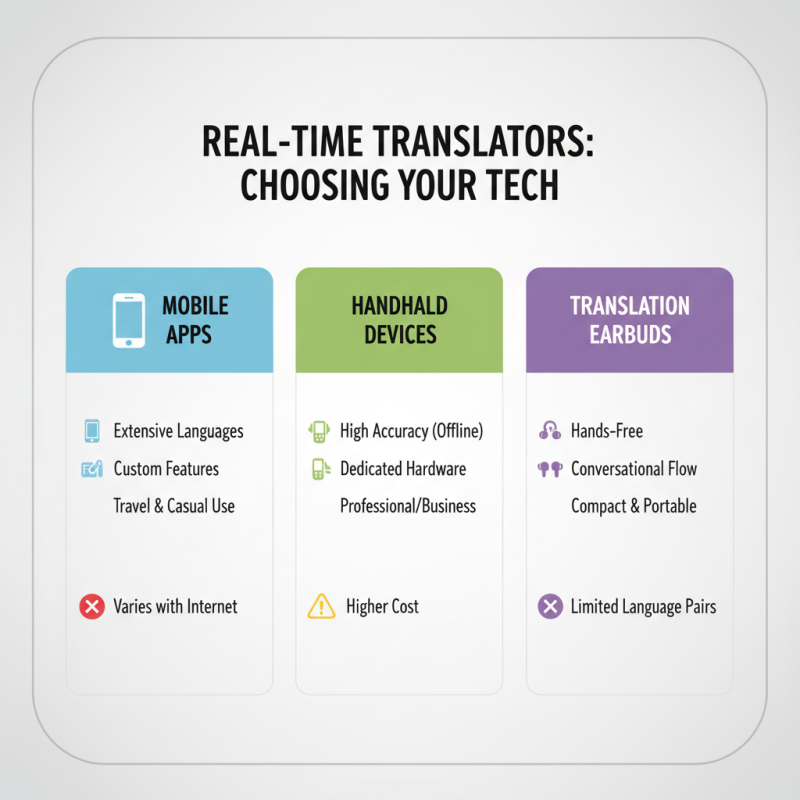
When evaluating different types of real-time translators, several factors come into play. You may choose between mobile apps, handheld devices, or even translation earbuds. Each option has its strengths and weaknesses. Mobile apps often offer extensive language support and customizable features. They are also convenient for casual conversations or travel. However, their accuracy can vary based on internet connectivity.
Handheld devices provide a more robust solution for professionals. They are typically designed for specific contexts, such as business meetings or conferences. These devices can offer better sound quality and faster translations. Yet, they may not be as portable as apps. Consider your situations. Will you be in a loud environment? Earbuds might be your best bet.
When deciding, reflect on your needs. Are you a frequent traveler or a business professional? Do you need instant translation or can you tolerate slight delays? Sometimes, the best choice isn’t the most expensive one. A simpler solution may fit your needs perfectly. Think about ease of use and practicality.
Key Features to Consider in a Real-Time Translator
Choosing a real-time translator involves understanding key features that align with your needs. Accuracy is crucial. An effective translator should recognize various dialects and nuances. Inaccurate translations can lead to misunderstandings. It's important that the translator covers both spoken and written formats. Flexibility in language choices can enhance your communication experience.
Another essential feature is speed. In a fast-paced environment, real-time translation should be instant. Delays can disrupt conversations, making the tool less effective. Users often find themselves waiting too long for responses. This can negatively impact interactions. A seamless user interface also matters. If it’s complicated, even the best tool can become a burden.
Consider compatibility with devices. Some translators work better on smartphones, while others excel on desktops. If daily conversations occur on the go, mobility is vital. However, be cautious. Over-reliance on technology can pose risks. Sometimes, a human touch can ensure clarity that machines might miss. Balancing technology and human insight is essential.
How to Choose the Best Real Time Translator for Your Needs? - Key Features to Consider in a Real-Time Translator
| Feature |
Description |
Importance |
| Language Support |
Check the range of languages and dialects offered. |
High |
| Accuracy |
Assess the translation accuracy for complex phrases. |
High |
| Real-Time Capability |
Ability to translate spoken dialogue in real-time without delays. |
Critical |
| User Interface |
Ease of use and intuitive design for better user experience. |
Medium |
| Cost |
Examine the pricing plans and see if it fits your budget. |
Medium |
| Additional Features |
Consider features like offline use, integration, and customization. |
Variable |
| Customer Support |
Availability of support in case of issues or questions. |
High |
Comparing Popular Real-Time Translation Tools and Apps
Choosing the right real-time translator can be challenging. Many tools and apps promise efficiency. However, it's crucial to evaluate their features against your specific needs. According to a report from Common Sense Advisory, users often overlook the importance of language pairs and context. Not all tools excel in technical jargon or casual conversation. This difference can affect translation accuracy significantly.
Some popular apps focus on conversational contexts. Others aim for specialized fields like medicine or law. For instance, a study observed that 75% of users felt better understood when using a context-aware tool. Yet, many still report frustration with literal translations. The technology is improving, but human nuances are hard to capture fully.
While convenience is a selling point, real-time tools can falter in complex discussions. A recent survey highlighted that 60% of users encountered errors in critical settings. Users need to experiment with different tools. Feedback from peers can aid in making a well-informed choice. Often, users realize that one app alone may not meet all their requirements.
Comparison of Popular Real-Time Translation Tools
Assessing Cost vs. Benefit in Choosing a Translator
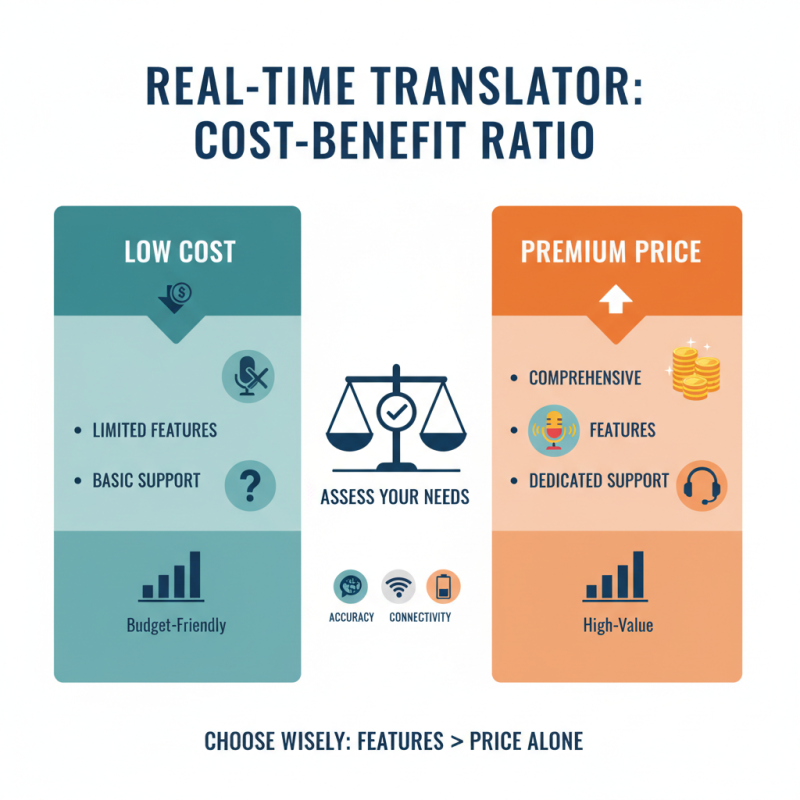
Choosing the right real-time translator hinges on understanding the cost versus benefit ratio. Price is often the first concern. Some translators promise low fees, but that can mean limited features. Others might charge a premium, but offer comprehensive support. It's essential to assess what fits within your budget while considering features that matter most to you.
Now, let’s talk about benefits. A good translator should enhance communication efficiently. For business meetings, accuracy is crucial. If messages get lost in translation, it can lead to misunderstandings. Consider how often you will use the translator. A service that seems expensive may be worthwhile if it saves time and prevents costly errors.
User reviews can shed light on effectiveness. Look for feedback on real-world experiences, not just marketing claims. Sometimes, individuals find that what seems ideal may not work as expected. It's essential to reflect on your own needs carefully. Are fast translations essential? Or is nuanced understanding more important? Balancing these considerations can lead you to a more refined choice.







.avif)


.png)