Choosing localization services for global buyers involves more than translating product pages. It requires careful attention to language, culture, commerce, and customer expectations. A technically accurate translation can still feel unfamiliar when measurements, payment methods, or delivery details remain local to one market.
Experienced teams examine the complete buying journey. They review product names, currency displays, tax explanations, size charts, checkout fields, and customer support messages. For example, a date format can confuse buyers, while an untranslated error message can weaken trust within seconds. Strong providers use native linguists, subject-matter reviewers, and consistent terminology tools. They also test localized pages on real devices, where buttons may wrap or legal notices may become difficult to read.
Reliable localization services should offer clear quality controls and measurable results. Ask how providers manage terminology, protect customer data, review cultural sensitivity, and update content after product changes. Their portfolio matters, but relevant experience matters more. A provider familiar with medical equipment may not understand fashion sizing or software onboarding. No process is flawless. Automated checks can miss humor, regional preferences, or an awkward phrase that only appears in context.
The right choice balances linguistic accuracy, technical performance, market knowledge, and dependable communication. It should also support ongoing improvement, not just a one-time launch. Global buyers notice small details. So do conversion reports. A thoughtful evaluation helps businesses create experiences that feel local, credible, and easier to trust.

Global localization should begin with buyer behavior, not translation volume. CSA Research’s 2020 study surveyed 8,709 consumers across 29 countries. It found that 76% prefer product information in their native language. Even more striking, 40% will not purchase in another language. These figures make localization a commercial requirement, not a decorative website feature.
Map the complete buying journey before choosing a service provider. Product names, specifications, pricing, delivery details, payment instructions, and support messages may need different language treatment. A literal translation can preserve words while damaging trust. I have seen small errors in size units and return instructions create unnecessary hesitation. Quality review should include native-speaking editors, regional terminology checks, and real checkout testing. This process is slower. It is usually safer.
Tips: Start with your highest-value markets. Localize product pages and checkout first. Then test search terms, images, currencies, and customer support replies. Track conversion rates, abandoned carts, and language-related complaints by region. CSA Research’s findings provide a strong starting point, but they should not become a fixed rule. Buyer preferences can vary by age, product category, and digital confidence. A pilot market may reveal gaps that survey data cannot. Review the scope every quarter. Language needs change.

How to Choose Localization Services for Global Buyers?
Map Target Markets, Content Types, and Legal Requirements
Begin with a market map, not a language list. Record buyer location, preferred payment habits, search terms, reading level, and regional dialects. A French page for Canada may need different wording from one for France. Interview local sales teams and review customer questions. These details reveal practical expectations that spreadsheets often miss.
Match each content type with the right localization process. Product instructions need precise terminology and safety review. Landing pages need cultural adaptation, clear calls to action, and local search research. Contracts, privacy notices, and payment information require qualified legal review. Translation alone is not enough. Laws change.
Build a review path with native linguists, subject experts, and legal advisers. Use a shared glossary for measurements, product names, and forbidden claims. Test forms, dates, currencies, and mobile layouts in each target market. During one project, a translated delivery date confused customers because the local date format was overlooked. The language was accurate, but the experience failed. That mistake still matters. Small errors travel.
Ask providers how they protect confidential files, document reviewer qualifications, and measure quality after launch. Check whether they can update content when regulations or products change. A low price may hide repeated corrections, delayed approvals, or weak legal control. Run a limited pilot with real pages and real reviewers. Then compare defects, turnaround time, and customer feedback before expanding.
Global buyers judge language quality before they judge product value. CSA Research reports that 40% of consumers will not buy products in other languages. Its “Can’t Read, Won’t Buy” research also found that 65% prefer content in their own language. These figures turn localization into a revenue safeguard, not a cosmetic service. A translated checkout page may still fail when product terms, measurements, or support instructions feel unfamiliar.
Ask vendors to explain their ISO 17100 processes in practical detail. The standard covers translation, revision, review, and project management responsibilities. Request sample workflows, reviewer qualifications, terminology controls, and correction records. A reliable provider should show how it separates translation from revision. It should also explain how native-language reviewers handle regional expressions. In my experience, polished samples can hide weak production routines. Audit evidence matters more than a beautiful portfolio.
Tips: Ask for an anonymized quality report and a small paid pilot. Test product pages, payment steps, and customer emails together. Check whether terminology stays consistent across screens. Do not accept ISO 17100 as a logo alone; verify the certified scope, current status, and included language services. One practical weakness remains: even careful teams can miss local buying habits. Invite regional reviewers to challenge assumptions before launch. A second review may feel slow, but a failed purchase feels slower.
How to Choose Localization Services for Global Buyers?
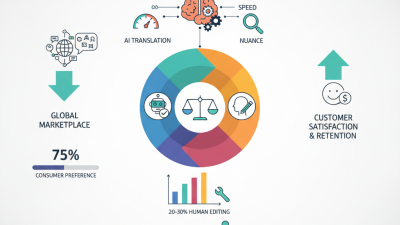
Global buyers judge more than translated words. They notice product terms, payment instructions, tone, and response speed. A localization provider should explain how human reviewers and AI tools work together. AI can process large catalogs quickly. Human reviewers catch cultural meaning, unclear claims, and awkward phrases. Both matter.
Ask for a sample review before signing a contract. Send a product page, checkout message, and support reply. Compare accuracy, terminology, and formatting. A skilled reviewer should use a shared glossary and record important decisions. This creates consistency across markets. It also makes later corrections easier. In practice, small language errors can create expensive support tickets.
Turnaround time needs careful measurement. A promise of 50,000 words overnight may hide limited review. Request separate timelines for translation, editing, and final checks. Then calculate the total localization cost. Include project management, glossary creation, software fees, revisions, and urgent delivery charges. The lowest quote may not be the lowest cost. I once saw a fast draft require three rounds of corrections. The saving was not real.
AI tools can reduce repetitive work, but they should not make final decisions alone. Human review is especially valuable for regulated information, technical details, and sensitive customer messages. Still, human review is not perfect. Reviewers can miss context when instructions are incomplete. Share screenshots, audience details, and regional preferences. A reliable partner welcomes questions, reports uncertainty, and documents quality checks.
Indicative benchmark comparison for 1,000 source words. AI tools generally provide the fastest delivery and lowest direct cost, while human review delivers the highest quality score. A hybrid workflow offers a practical balance for global buyer-facing content.
How to Choose Localization Services for Global Buyers?
Choosing localization services should begin with buyer behavior, not attractive promises. CSA Research reported that 56.2% of consumers considered access to information in their own language more important than price. This finding changes the role of localization. It is not merely polished wording. It affects product understanding, trust, checkout confidence, and post-purchase support. A buyer who cannot understand delivery terms may leave, even when the product is affordable.
Pilot the service before making a large commitment. Select two target markets and a small group of high-traffic pages. Record baseline conversion rates, add-to-cart activity, checkout completion, bounce rates, and support requests. Use the same traffic period when possible. Ask native-speaking reviewers to check terminology, measurements, payment language, and cultural references. Human review still matters.
Numbers can mislead.
A pilot may increase conversions while lowering average order value. Another may fail because traffic was too limited or the offer was weak. That does not automatically prove poor localization. Review the provider’s testing method, revision process, quality controls, and reporting details. A reliable partner should explain what changed and why. The 56.2% finding is a strong signal, not a guarantee. Your own customers must validate it through measurable behavior. Keep the results, including mistakes, for the next iteration.
| Decision Dimension | Pilot KPI | Recommended Measurement | Illustrative Pilot Target | Why It Matters to Global Buyers |
|---|---|---|---|---|
| Language-market coverage | Localized traffic and conversion rate by language | Compare localized landing pages with the source-language control group using the same attribution window. | At least 90% of pilot-market priority pages localized; conversion rate not lower than the control group. | Shows whether language access is reaching the intended buyer segment rather than only increasing page views. |
| Translation quality | Critical-error rate and quality score | Use bilingual review with a documented quality rubric covering accuracy, terminology, fluency, and style. | Zero critical errors in price, safety, legal, product-specification, and checkout content; overall score of at least 90/100. | Incorrect or ambiguous information can create returns, support contacts, compliance risks, and lost trust. |
| Buyer preference validation | Engagement and purchase intent in the buyer’s preferred language | Run a localized-versus-source-language test and collect post-session preference responses. | Localized content achieves at least a 10% relative improvement in add-to-cart rate or purchase intent. | CSA Research reported that 56.2% of online shoppers considered obtaining product information in their own language more important than price. |
| Checkout usability | Checkout completion rate and payment-step abandonment | Track each checkout step by language, currency, delivery destination, and device type. | At least a 5% relative reduction in abandonment at localized checkout steps. | Localized terminology, delivery information, tax wording, and payment instructions reduce uncertainty at the point of purchase. |
| Search discoverability | Non-brand organic impressions and qualified sessions | Measure localized search queries, click-through rate, landing-page engagement, and assisted conversions. | At least a 15% increase in qualified non-brand sessions during the pilot period. | Native-language terminology helps buyers find relevant products using the phrases they actually search. |
| Speed to market | Turnaround time and on-time delivery rate | Record elapsed time from approved source content to reviewed, publish-ready localized content. | At least 95% of agreed deliverables delivered on time; urgent content delivered within the defined service-level window. | Slow localization delays campaigns, product launches, seasonal demand, and revenue capture. |
| Localization cost efficiency | Cost per incremental qualified conversion | Divide total pilot localization cost by incremental conversions attributable to localized experiences. | Positive incremental return after translation, review, technology, and localization-management costs. | The lowest translation price is not necessarily the lowest acquisition cost if quality reduces conversion. |
| Customer-support impact | Language-related contact rate and first-contact resolution | Tag support cases caused by unclear translated content, then compare contact volume per 1,000 orders. | At least a 10% reduction in language-related contacts per 1,000 orders without lowering resolution quality. | Clear product, delivery, returns, and warranty information can reduce avoidable service demand. |
| Governance and scalability | Terminology consistency and revision rate | Audit approved terminology, repeated corrections, glossary adoption, and reuse of translated segments. | At least 95% adherence to the approved glossary and fewer than 5% avoidable revision requests. | Consistent language across product pages, campaigns, policies, and support content improves recognition and reduces rework. |

.avif)