How to Choose the Right Localization Platform for Your Business Needs?
Choosing the right localization platform is crucial for any business aiming for global reach. A good localization platform can streamline the process of adapting your content for different markets. It helps ensure that your brand's message resonates with diverse audiences.
However, the selection process can be tricky. Numerous factors influence which platform fits best for your needs. Consider the scalability of the platform. Is it robust enough to handle multiple languages? Look into the support offered. You may need assistance as you navigate localization challenges.
In addition, think about the integration capabilities. Your localization platform should work seamlessly with your existing systems. Reflect on your budget too. A more expensive platform doesn’t always guarantee superior service. Take time to assess your options, keeping these factors in mind. Making the right choice can elevate your brand’s global presence.
Identifying Your Business Goals for Localization Success
Choosing the right localization platform starts with a clear understanding of your business goals. According to a recent report by Common Sense Advisory, 72% of consumers prefer to buy products in their native language. This statistic underscores the importance of aligning localization efforts with audience needs. Are you aiming to penetrate new markets? Or perhaps deepening ties with existing customers? Defining these goals will guide your choice of platform.
Tips: Identify your target audience first. Are they bilingual or do they prefer a specific language? Assess whether you require basic translation or cultural adaptation. These factors shape your localization strategy.
Localization can be complex. A decent platform might not handle nuances effectively. According to a study, 40% of brands find cultural missteps damaging. Misunderstandings can arise from not considering local customs. Opting for a platform that offers cultural insights can mitigate this risk.
Analytics should not be overlooked. A platform's capacity to provide performance metrics is crucial. Data-driven decisions help in refining strategies. Yet, businesses often underestimate this aspect, leading to missed opportunities. Prioritize tools that help you measure success.
Localization Platform Comparison: Key Features
Evaluating the Features of Localization Platforms: Key Considerations
When selecting a localization platform for your business, several key features should be evaluated. The first consideration is scalability. Can the platform handle growth? A growing business will need robust support for more languages and content. Look for flexible plans that accommodate language changes and user demands.
Another important feature is the user interface. A complicated dashboard can hinder productivity. Aim for a platform that is intuitive and easy to navigate. Usability affects how quickly your team can adapt to the software. Optional training resources can enhance the user experience.
Collaboration tools are also vital. Does the platform allow real-time editing and feedback? Efficient communication among team members can streamline projects. Additionally, consider integration capabilities. Will the platform work with your existing systems? If not, adaptation may require significant resources and time.
How to Choose the Right Localization Platform for Your Business Needs? - Evaluating the Features of Localization Platforms: Key Considerations
| Feature |
Description |
Importance |
| User Interface |
Ease of use for different stakeholders in the localization process. |
High |
| Integration Capabilities |
Ability to integrate with existing tools and platforms (CMS, APIs). |
Critical |
| Language Support |
Range of languages supported for translation and localization. |
High |
| Collaboration Features |
Tools to facilitate collaboration among translators, reviewers, and project managers. |
Moderate |
| Cost Structure |
Understanding the pricing model (subscription, per word, etc.). |
High |
| Reporting and Analytics |
Insights into project progress, costs, and translation quality. |
Moderate |
| Customer Support |
Availability of customer service for troubleshooting and assistance. |
High |
| Security Features |
Measures in place to protect sensitive data during localization. |
Critical |
Understanding the Cost Structure of Different Localization Solutions
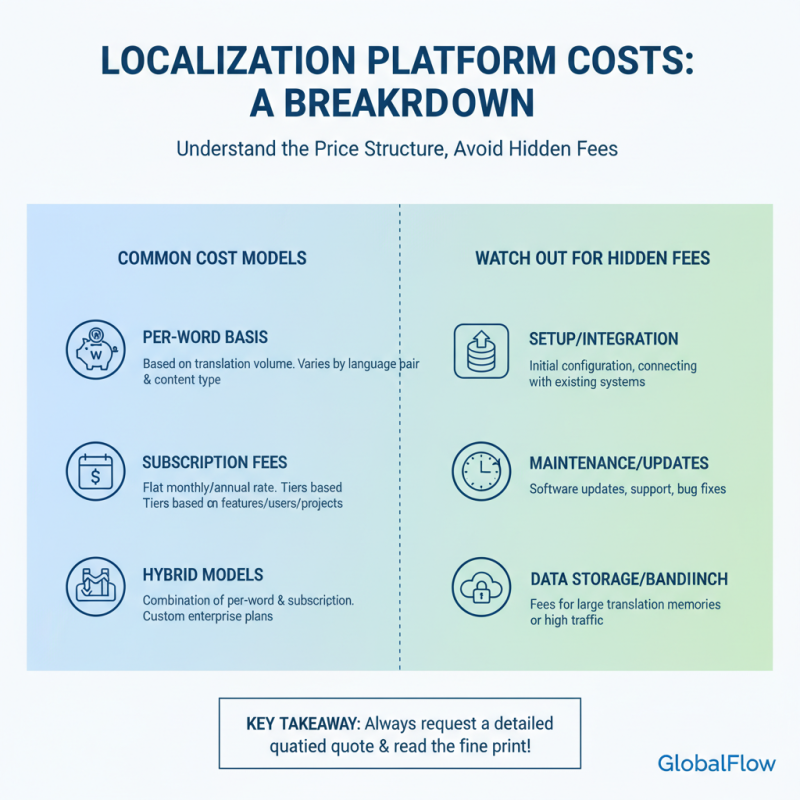
When selecting a localization platform, understanding the cost structure is crucial. Different solutions come with varying price tags. Some platforms charge per word. Others might have subscription fees. Evaluating these costs can feel daunting. Hidden fees often lurk behind attractive initial prices.
Consider the complexity of your project. A niche market may require specialized localization services, which can increase costs. Some providers bill based on team expertise, while others rely on project size. Think about the scope of your content. If your materials are highly technical, expect to pay more for expert translation.
Flexibility also matters. Some platforms offer scalable pricing. You can start small and adjust as needed. This approach can provide more control over the budget. However, is the quality compromised in cheaper options? Always reflect on your choices. A lower price might mean less care in the localization process. Making the right decision often requires balancing cost with quality.
Assessing Integration Capabilities with Existing Tools and Systems
When choosing a localization platform, integration capabilities are crucial. Many businesses rely on diverse tools for project management, content creation, and customer engagement. A 2023 industry report indicates that 45% of companies face integration issues when adopting new technologies. This often results in delays and miscommunication. Ensuring the localization platform can seamlessly connect with existing systems is essential.
Some platforms offer API access, allowing for smoother data exchange. This feature is vital when managing projects across multiple teams. According to an industry survey, organizations that prioritize integration achieve workflow efficiency gains of up to 30%. However, not all platforms support the integrations needed.
Consider your current tools. Does your chosen platform fit well? A mismatch can lead to frustration and wasted resources. Effective localization requires collaboration. If the platform hinders communication, the translation quality may suffer. Invest time in reviewing integration capabilities, as this will greatly impact your project’s success.
Analyzing User Experience and Customer Support for Localization Tools
User experience and customer support are crucial when selecting a localization platform. A survey by the Localization Industry Standards Association found that 75% of users prioritize ease of use. Platforms that offer intuitive interfaces can lead to a smoother workflow. If a tool is complex, it may hinder productivity. Companies can lose valuable time training staff on difficult systems.
Customer support also plays a significant role in user satisfaction. According to reports from the International Association for Business Communicators, 78% of users emphasize quick response times from support teams. Platforms that provide 24/7 assistance often lead to enhanced user confidence. However, not all platforms deliver consistent support. Some companies report long wait times and unresolved issues, which can be frustrating.
Moreover, user feedback indicates that the availability of resources like tutorials and community forums enhances the overall experience. A comprehensive knowledge base can empower users to resolve common issues independently. If a platform lacks adequate resources, it may alienate users. Businesses should reflect on how these factors align with their needs.







.avif)


.png)