Choosing Physiotherapy Tools Equipment is not a shopping exercise alone. The right selection shapes patient safety, treatment consistency, and the details clinicians can observe: a resistance band’s tension, a table’s stability, or a device’s ease of cleaning. Small choices matter.
The World Health Organization’s 2022 rehabilitation fact sheet estimates that 2.4 billion people worldwide live with conditions that may benefit from rehabilitation. This figure signals broad need, not a sales forecast for equipment. The WHO also describes rehabilitation as “an essential part of universal health coverage.” Dr. Alarcos Cieza, the organization’s rehabilitation lead, has emphasized integrating rehabilitation into health systems. That perspective supports a practical rule: choose tools around patient needs and clinical goals, not trends.
This guide outlines how to assess function, durability, usability, maintenance, and total cost before purchasing. It also considers how equipment fits the clinic’s space and the therapist’s workflow. A compact balance pad may suit one room; a larger gait-training setup may demand more space, staff training, and upkeep. There is no perfect checklist. Even a well-researched purchase can disappoint when real patients use it. Compare specifications with hands-on trials, check manufacturer guidance, and document why each item earns its place.
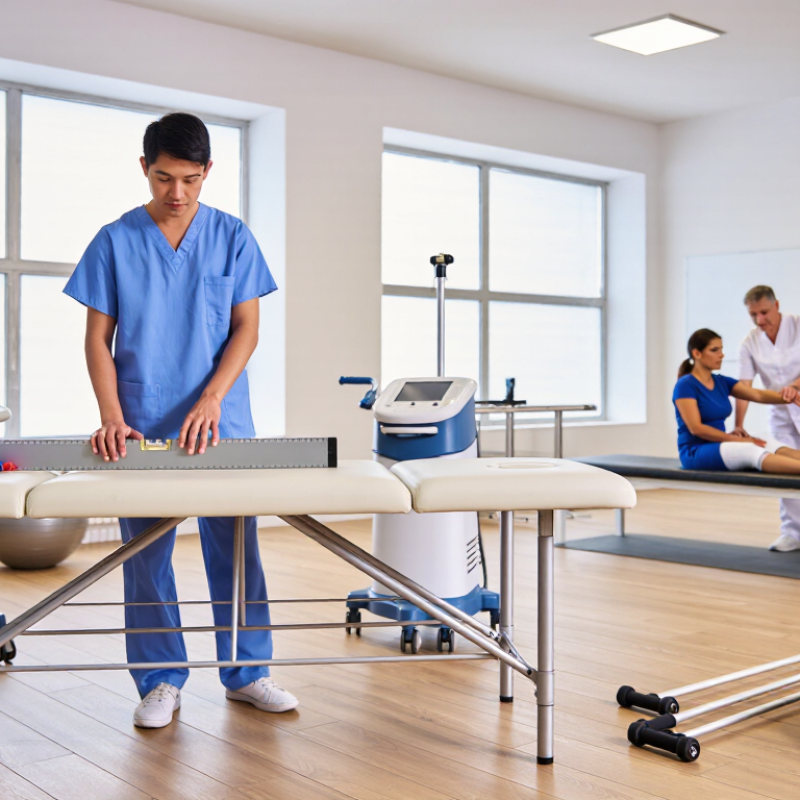
Before selecting physiotherapy tools, define what the person needs to do more easily. Is the goal to climb stairs, regain shoulder reach, or walk with steadier steps? Clear goals help distinguish useful equipment from items that may simply look suitable. Start with the person. Ask about pain, daily routines, confidence, and previous activity levels. A brief walk across the room or a careful sit-to-stand observation can reveal practical needs that a diagnosis alone may not show.
Match tools to the condition and the stage of recovery. Resistance bands may support gradual strengthening, while a balance pad can add a controlled challenge for someone working on stability. For painful or restricted movement, gentle mobility aids may be more appropriate than heavy resistance. Check grip, balance, skin sensitivity, and movement quality before increasing difficulty. Small details matter: a band that is too strong can encourage poor form, and an unstable surface may increase fall risk. The right choice depends on assessment by a qualified physiotherapist, not a general equipment list.
Set a measurable starting point, such as reaching a shelf or standing for two minutes, then review progress regularly. Watch for worsening pain, unusual swelling, or reduced function, and adjust the plan with a clinician. A first plan is rarely perfect. That is worth admitting. Daily function can change, and equipment should change with it.
| Physiotherapy Goal | Conditions or Needs Addressed | Suitable Tools or Equipment | How the Equipment Supports the Goal | Selection Considerations |
|---|---|---|---|---|
| Improve joint range of motion | Joint stiffness, reduced mobility after injury or surgery, and movement limitations associated with some musculoskeletal conditions | Goniometer, exercise cane, and low-resistance elastic bands | A goniometer helps measure joint angles, while a cane or light band can assist with controlled mobility exercises prescribed by a clinician. | Choose tools that allow comfortable, gradual movement. Measurements and exercise progressions should be interpreted by a qualified clinician. |
| Build strength and muscular endurance | Reduced strength following immobilization, deconditioning, or recovery from musculoskeletal injury | Elastic resistance bands, adjustable dumbbells, and cuff weights | Adjustable resistance provides a way to progress strengthening exercises as capacity improves. | Match resistance to the person's current ability. Check bands for wear and ensure weights can be handled safely. |
| Develop balance and postural control | Balance impairment, reduced lower-limb control, and mobility challenges related to aging or neurological conditions | Stable balance pads, step platforms, and parallel bars | These tools can provide graded balance challenges and, where appropriate, a stable support surface during supervised practice. | Begin with a safe, stable setup and close supervision when needed. Progress difficulty only when the person can perform the activity safely. |
| Practice walking and functional mobility | Gait changes, reduced walking confidence, and mobility limitations during recovery or rehabilitation | Walking aids, gait belt, parallel bars, and marked walking paths | Walking aids can provide support during mobility; parallel bars and marked paths can assist with supervised gait practice and movement observation. | Walking aids should be fitted and adjusted for the individual. A gait belt is for trained use and should not be used as a lifting device. |
| Increase cardiovascular capacity | Reduced aerobic fitness, low activity tolerance, or a need for graded conditioning as part of a rehabilitation plan | Stationary bicycle, treadmill, and step platform | These options support controlled, repeatable activity that can be adjusted for duration, speed, or resistance. | Consider balance, joint tolerance, cardiovascular status, and the person's ability to use the equipment safely. Follow clinician guidance on intensity. |
| Improve hand function and dexterity | Reduced grip strength, limited fine motor control, or difficulty with everyday hand tasks | Therapy putty, soft grip devices, and finger exercise bands | Resistance and manipulation tasks can provide practice for grip, finger movement, and coordination. | Choose resistance that permits controlled movement without excessive discomfort. Follow professional advice after hand injury or surgery. |
| Support pain management alongside active rehabilitation | Selected cases of musculoskeletal pain where a clinician considers an adjunctive modality appropriate | Cold packs, heat packs, or a TENS unit | These modalities may offer temporary symptom relief for some people; they do not replace assessment or active rehabilitation when those are indicated. | Use only according to professional guidance and device instructions. Skin sensation, circulation, implanted devices, and other health factors may affect suitability. |
| Monitor posture, movement, and exercise progress | Movement limitations, postural concerns, or the need to track rehabilitation measures over time | Goniometer, measuring tape, mirror, and exercise log | Simple measurement and visual feedback can help document changes and support consistent exercise practice. | Use consistent measurement methods and record results in context. A single measurement should not be used alone to judge recovery. |
Note: Equipment should be selected according to an individual's assessment, goals, environment, and safety needs. A physiotherapist or other qualified healthcare professional can advise on appropriate use and progression.


.avif)


.png)