Why Live Translate is Revolutionizing Communication in the Digital Age?
In today's interconnected world, live translate technology is transforming how we communicate. The global translation industry is projected to reach $56 billion by 2027, according to recent industry reports. This growth highlights a rising demand for real-time communication across borders. Live translate bridges language gaps, enabling seamless interactions in diverse settings.
Many businesses and individuals rely on live translate software to enhance their communication. Users report increased efficiency, with 90% experiencing smoother conversations during international meetings. This breakthrough tool helps reduce misunderstandings and fosters collaboration. However, some may find live translate lacks accuracy in nuanced expressions, prompting reflection on its limitations.
Live translate is not without challenges. While it boosts engagement, some users face obstacles in voice recognition. Misinterpretations can occur, especially in complex discussions. This raises questions about relying on technology for precise communication. Despite these imperfections, live translate remains a pivotal advancement in our digital age, driving the conversation forward.

The Evolution of Communication Technologies: A Historical Overview
Communication has undergone a fascinating evolution throughout history. In ancient times, humans relied on simple gestures and symbols. Cave paintings conveyed messages long before spoken language existed. The invention of writing marked a turning point. It allowed people to share thoughts across time and space. Soon after, the printing press emerged. This device revolutionized information sharing. It made written material accessible to the masses.
As the years progressed, advancements in technology shaped communication further. The telegraph connected distant places in real-time. Then came the telephone, bringing voices closer together. With the rise of the internet, communication transformed yet again. Instant messaging and email became integral parts of daily life. Nowadays, live translation tools are changing how we interact globally. They break language barriers and foster understanding. Yet, despite these advancements, there are challenges. Misinterpretations can still occur, highlighting the need for careful communication. The digital age presents both opportunities and obstacles we must navigate.
Why Live Translate is Revolutionizing Communication in the Digital Age?
| Communication Technology |
Year of Introduction |
Key Features |
Impact on Communication |
| Telegraph |
1840 |
Transmission of messages over wires using Morse code |
Speed up long-distance communication |
| Telephone |
1876 |
Voice communication over distances |
Personal communication made easier and immediate |
| Internet |
1960s (public access in 1990s) |
Global network for information sharing and communication |
Connected the world; revolutionized information access |
| Email |
1971 |
Electronic messaging system |
Faster and more efficient than traditional mail |
| Video Conferencing |
1980s |
Real-time video communication |
Enabled remote meetings and collaboration |
| Live Translate |
2010s |
Real-time translation of spoken or written content |
Breaks language barriers, enhances global communication |
The Rise of Live Translation Technologies and Their Adoption Rates
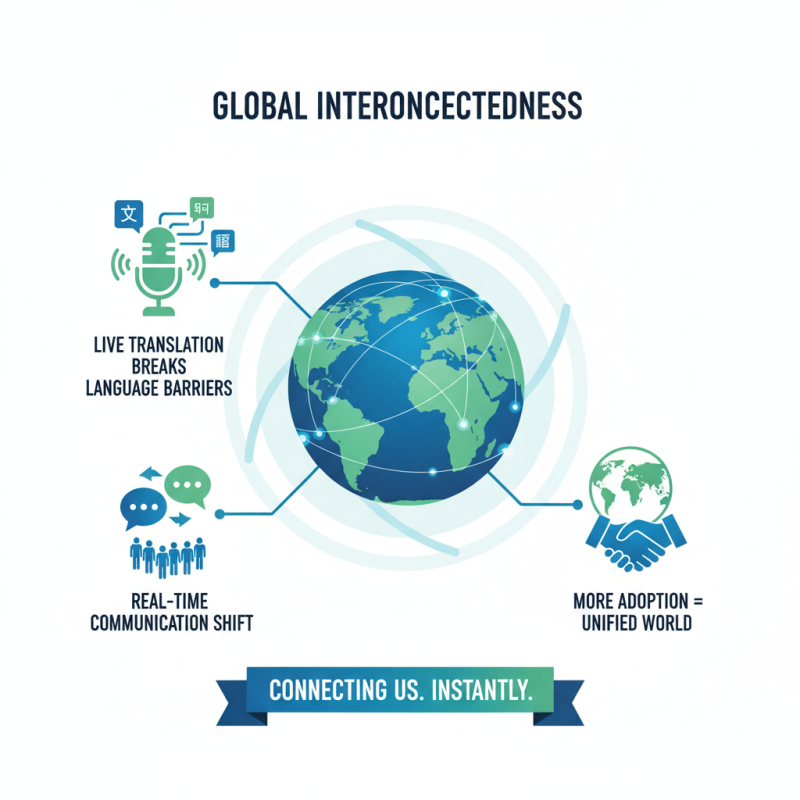
The world is becoming more interconnected than ever. Live translation technologies are breaking down language barriers in real-time. Many people are now adopting these tools, significantly changing how we communicate.
The rise of live translation can be seen in various sectors. Businesses are using it for international meetings. Travelers rely on these technologies for seamless interactions. Even content creators are reaching wider audiences. However, challenges still exist. These tools may misinterpret tones or cultural nuances. Careful consideration is needed when using them in sensitive situations.
Tips: When trying out live translation tools, speak clearly. Context is vital for accurate translation. For critical conversations, consider having a human translator. Always double-check important messages. Embrace this technology, but remain aware of its limits. It can enrich conversations but might miss certain subtleties.
Impact of Live Translate on Global Business Operations and Market Expansion
Live Translate is reshaping communication in global business. This technology bridges language barriers, making it easier for companies to enter new markets. According to a report by the Common Sense Advisory, 75% of consumers prefer to purchase products in their native language. This statistic highlights the necessity of effective communication in expanding market reach.
Real-time translation allows businesses to engage with customers worldwide. Companies can hold meetings without language constraints, fostering collaboration. A 2021 survey revealed that 90% of businesses found live translation helpful in cross-border negotiations. However, many still struggle with the accuracy of machine translations. Misinterpretations can lead to misunderstandings and lost opportunities.
Tips: Always verify the translation accuracy. Machine translation may miss nuances. Consider using human translators for complex communications.
Live Translate can enhance customer service, too. Instant responses can improve customer satisfaction. Yet, companies must remain aware of cultural context. An overlooked cultural reference can hurt business relationships. Be mindful of local customs. This attention to detail is crucial for long-term success.
User Experience and Accessibility: Enhanced Communication Across Languages
In today's interconnected world, communication barriers can hinder personal and professional relationships.
Live translation tools have emerged as vital solutions. They enhance the user experience significantly.
By providing real-time translation, these tools make conversations seamless. Imagine chatting with someone who speaks a different language without the awkward pauses for translation.
It feels more natural and engaging.
Accessibility is another critical aspect. Many people face challenges due to language deficiencies.
Live translation opens doors for these individuals. It empowers them to participate actively in discussions.
However, not all translations are perfect. Sometimes, nuances of a language can be lost. This requires ongoing improvement in translation accuracy.
Users still encounter the occasional misinterpretation.
Yet, the benefits outweigh the challenges. More people can connect across cultures.
It fosters understanding and builds relationships. Enhanced communication leads to collaboration.
People can share ideas without the fear of misunderstandings.
However, constant feedback is essential for refining these tools. Addressing the imperfections is necessary for future advancements.
Future Trends: AI and Machine Learning in Live Translation Services
Live translation services are changing how we communicate today. AI and machine learning are at the forefront of this revolution. According to a recent report by the Global Industry Analysts, the language services market is projected to reach $56 billion by 2027. This growth signifies an increasing demand for seamless communication across cultures.
Machine learning technologies enhance real-time translation accuracy. They analyze vast amounts of language data. This allows services to adapt and improve over time. Yet, concerns remain about cultural nuances and idiomatic expressions. These subtleties can often be lost or misinterpreted by algorithms. A recent survey showed that 40% of users still prefer human translators for sensitive communications.
Another interesting trend is the integration of AI in conferencing tools. These can automatically translate speech during meetings. A report from Markets and Markets reveals that by 2025, the AI-based translation market could reach $27 billion. However, user experience varies widely. Many people report feeling unheard when relying solely on technology. This reflection highlights the importance of a balanced approach, leveraging both technology and human insight.
Live Translate Services Usage by Industry
This bar chart illustrates the percentage of users utilizing live translation services across various industries, showcasing the significant impact of live translation in areas such as healthcare and e-commerce.



.avif)




.png)