What are Smart Ai Glasses and How Do They Work?
Smart Ai Glasses are transforming the way we interact with our environment. These innovative devices blend advanced technology with everyday functionality. They feature built-in cameras, microphones, and augmented reality displays. Users can access information without looking at a phone or computer screen.
This seamless integration of digital information enhances our daily experiences. However, the rapid deployment raises important questions. Concerns about privacy and data security linger in the minds of potential users. How do we balance convenience with personal privacy? Each innovation brings uncertainty and the need for thoughtful evaluation.
As we explore Smart Ai Glasses, it’s essential to consider both their potential and limitations. These glasses can assist with navigation, communication, and even health monitoring. Yet, the adoption of such technology requires trust in its security measures. Understanding how Smart Ai Glasses work is crucial for informed usage in the future.
Definition and Overview of Smart AI Glasses
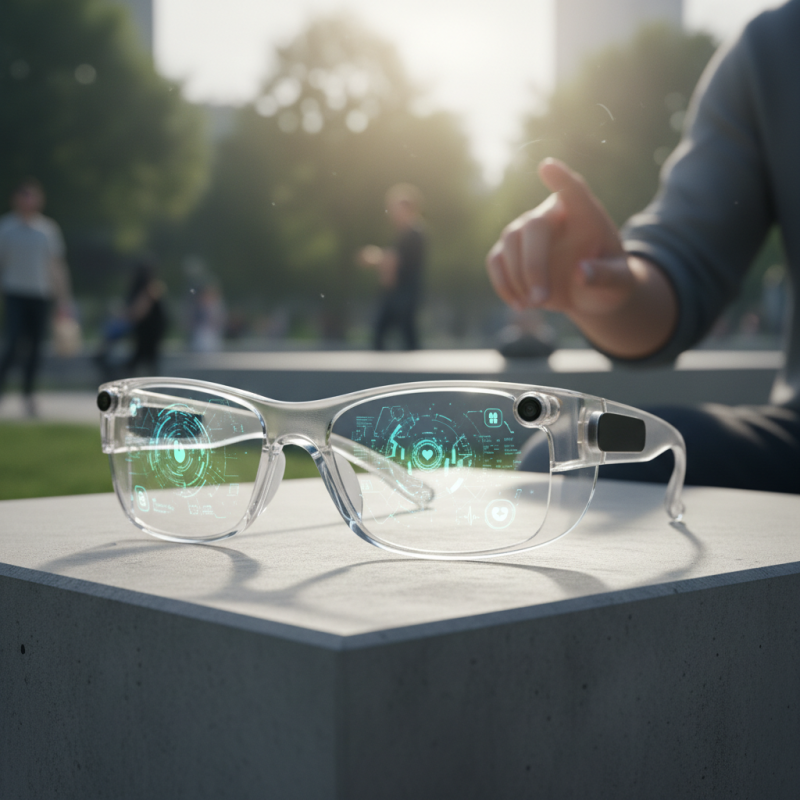
Smart AI glasses represent a revolutionary blend of technology and fashion, merging augmented reality with everyday wearability. These devices are designed to provide users with a hands-free interface to access information and interact with their environment seamlessly. They typically feature a lightweight design that resembles conventional eyewear but incorporates advanced sensors and displays. Users can receive notifications, navigate locations, or even interact with their smart home devices without using their hands.
The functionality of smart AI glasses is driven by sophisticated software. This software allows for voice commands and gesture recognition, enabling users to execute tasks intuitively. For instance, looking at a product can trigger an instant search for reviews or prices. However, it is important to note that the effectiveness of these devices can vary. Battery life and screen visibility may fall short in bright sunlight or during extended use.
Moreover, there are concerns about privacy and data security. Users must remain aware of how data is collected and used. As these glasses become more integrated into daily life, the need for responsible usage and ethical standards grows. The evolution of smart AI glasses calls for continuous reflection on their impact on human interaction and societal norms.
Key Features and Functionalities of Smart AI Glasses
Smart AI glasses are a revolutionary technology combining augmented reality (AR) with artificial intelligence (AI). These glasses offer various functionalities, enhancing everyday experiences. They can display notifications, provide direction, and even translate languages in real-time. Users can interact with the environment better, accessing information hands-free.
Key features include built-in cameras, voice recognition, and cloud connectivity. The cameras allow users to capture moments without pulling out a phone. Voice commands make it easier to navigate applications. Cloud features enable updates and access to vast databases. These elements work together to provide a seamless experience.
Tips: When using smart AI glasses, always prioritize safety. Ensure you stay aware of your surroundings. Focus on essential tasks, and avoid distractions. Experiment with different features but be mindful of potential privacy concerns. Review smart glasses regularly to ensure you are comfortable with the technology. Adjust settings as needed to maximize their potential.
Key Features and Functionalities of Smart AI Glasses
Technology Behind the Operation of Smart AI Glasses
Smart AI glasses represent a fascinating intersection of augmented reality and wearable technology. At their core, these devices rely on advanced sensors and processors to deliver real-time information to users. A report by Statista indicates that the global smart glasses market is projected to grow from $2.49 billion in 2021 to $18.60 billion by 2028, underlining the increasing relevance of this technology.
The operation of smart AI glasses largely hinges on integrated components like cameras, microphones, and processors. These instruments collect data from the user's environment. Artificial intelligence algorithms process this data, enabling functionalities such as navigation assistance and facial recognition. However, the real challenge lies in the effectiveness of these algorithms. A 2022 study found that nearly 30% of AI-driven applications struggle with accuracy, indicating that the technology still requires refinement.
Battery life remains another critical concern. Users often report dissatisfaction with the longevity of smart glasses. Some models only last three to four hours on a single charge. Additionally, the comfort and usability of these devices can fall short, especially during prolonged use. Incorporating user feedback into the design process could significantly improve the overall experience. The technology behind smart AI glasses continues to evolve, but substantial improvements are necessary to enhance practicality and user comfort.
What are Smart Ai Glasses and How Do They Work? - Technology Behind the Operation of Smart AI Glasses
| Feature | Description | Functionality |
| Display Technology | Augmented Reality (AR) lenses that overlay digital information onto the real world. | Provides a hands-free display for notifications and information. |
| Voice Control | Integrated microphones for voice command recognition. | Allows users to control the device without using hands. |
| Camera | Built-in camera for capturing images and video. | Enables real-time content creation and sharing. |
| Sensors | Includes motion sensors and environmental sensors. | Enhances interaction and contextual awareness. |
| Connectivity | Bluetooth and Wi-Fi capabilities for internet access and device pairing. | Facilitates data transfer and communication with other devices. |
| Battery Life | Long-lasting battery with quick charge capabilities. | Supports extended use throughout the day. |
Applications and Use Cases of Smart AI Glasses
Smart AI glasses are revolutionizing the way we interact with technology. These innovative devices, equipped with augmented reality features, offer practical applications across various fields. In healthcare, doctors can use them for real-time data access during surgeries. This efficiency can enhance decision-making and improve patient outcomes. Education also benefits; students can visualize complex concepts with interactive 3D models, making learning more engaging.
In retail, smart AI glasses help staff by displaying information about products. They can guide customers to find specific items based on their preferences. This can increase sales and improve customer experience. However, there are challenges to consider. Connectivity issues might arise in crowded stores, affecting functionality. Not all user interfaces are intuitive, which can frustrate some users.
Tips: When using smart AI glasses, ensure they are charged and that software is updated regularly. Periodically check compatibility with other devices. Remember to take breaks; constant usage can lead to eye strain or discomfort. Balancing technology use with traditional methods can enhance effectiveness and user satisfaction.
Future Trends and Developments in Smart AI Glasses Technology
The market for smart AI glasses is evolving rapidly. According to a report by MarketsandMarkets, the global smart eyewear market is projected to grow from $10.08 billion in 2023 to $32.13 billion by 2028, at a CAGR of 25.2%. This growth is driven by advances in augmented reality (AR) and artificial intelligence (AI) technologies. These glasses can overlay digital information onto the real world, enhancing the user's experience in various applications like navigation, training, and social interactions.
Future trends indicate significant innovations in user interface design and functionality. Companies are investing heavily in lightweight materials and longer battery life. A recent study by PwC emphasized the need for improved privacy and user data protection, as these are crucial for consumer adoption. Moreover, while optical quality is improving, challenges remain in producing seamless integration with existing devices. Concerns about eye strain and device dependency warrant careful consideration. As developers create more engaging content, user behavior and comfort levels will continue to shape the technology's direction.
As the technology matures, the integration of AI to personalize user experiences grows. Analysts suggest that by 2025, more than 80% of smart glasses could incorporate AI-driven personalization features. However, there is still a risk of users becoming overly reliant on these devices for everyday tasks. This ongoing evolution will be pivotal in determining the market's trajectory, balancing innovation with user well-being.



.avif)


.png)