What are Swarm Drones and How Do They Work?
Swarm Drones represent a revolutionary shift in aerial technology. These are fleets of drones that work together, mimicking the behavior of natural swarms. According to a recent market analysis by Research and Markets, the swarm drone market is projected to reach $8.5 billion by 2026, growing rapidly each year. This growth reflects a rising interest in their applications across various sectors, including military, agriculture, and logistics.
The capabilities of Swarm Drones are impressive yet still evolving. They can cover large areas, coordinate tasks, and improve efficiency. For example, a swarm could monitor vast agricultural fields, identifying pests or diseases in real time. However, challenges remain. Issues such as communication failure within the swarm can hinder performance. Some experts warn that reliance on these systems could lead to vulnerabilities in operations.
Innovations continue as researchers push the boundaries of what Swarm Drones can achieve. Yet, ethical considerations and regulatory hurdles complicate their widespread deployment. Awareness and understanding of these factors are crucial as this technology advances. The future of Swarm Drones holds great promise, but it requires careful examination and responsible integration into society.
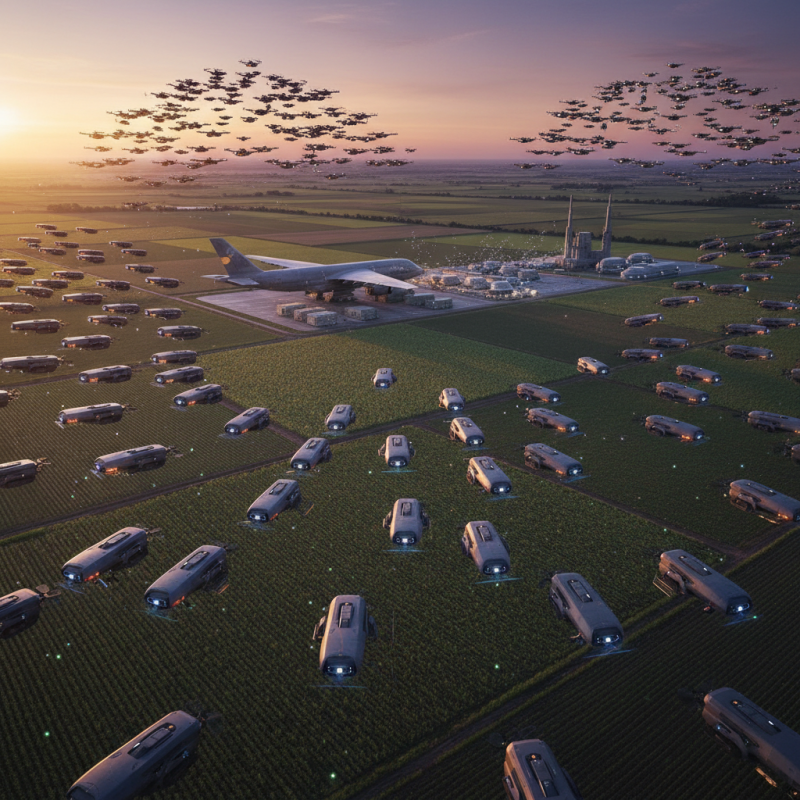
What are Swarm Drones? An Overview of Their Definition and Purpose
Swarm drones are a fascinating innovation in technology. They are groups of drones that work together to perform tasks. These drones communicate with each other to coordinate their actions effectively. The idea is inspired by nature, such as how bees or birds operate in flocks. They can share information quickly, adapting to changes in their environment.
The purpose of swarm drones extends across various fields. In agriculture, they can monitor crops and optimize resources. For search and rescue, they cover vast areas in less time. However, there are challenges to consider. Communication failures can lead to disarray among the drones. Sometimes, complex algorithms may not function as intended in real-world scenarios. The balance between autonomy and control requires careful thought.
Swarm Drones: Operational Effectiveness by Year
The Technological Foundations of Swarm Drones: AI and Communication Systems
Swarm drones represent a revolutionary advancement in aerial technology. These drones rely heavily on artificial intelligence (AI) and advanced communication systems. AI enables them to make swift decisions based on real-time data. They can navigate complex environments and perform various tasks. Communication systems facilitate seamless interaction among drones. This ensures coordinated actions without human intervention.
A key aspect of swarm drones is their decentralized nature. Each drone operates independently while still contributing to a larger mission. This can lead to unexpected challenges. For instance, a failure in one unit can disrupt the entire swarm’s function. Furthermore, the reliance on AI raises questions about decision-making ethics. How much autonomy do we want to grant these machines?
The technology behind these systems is impressive yet imperfect. AI algorithms can misinterpret data, leading to errors. Communication can face interference, causing misalignment in the swarm's actions. As we explore new heights with swarm drones, we must remain vigilant. Striking a balance between innovation and caution is essential to harness their full potential.
Applications of Swarm Drones in Industry: Agriculture, Defense, and More
Swarm drones are revolutionizing industries like agriculture and defense. In agriculture, these drones can cover vast fields efficiently. According to a recent report, using swarm technology can increase crop yields by up to 30%. They can monitor crop health, assess soil conditions, and even assist in planting seeds more accurately. Such advancements change the way farmers work daily.
In defense, swarm drones enhance surveillance and reconnaissance. A study noted that in military applications, swarm drones can operate in unison, providing a strategic advantage. They can tackle complex missions that single drones struggle with. However, reliance on technology raises concerns. For instance, issues like data security and potential hacking could jeopardize missions.
The versatility of swarm drones isn't without challenges. Ensuring reliable communication among drones is crucial. Research indicates that up to 20% of drones in a swarm can experience communication failures. This creates vulnerability. Balancing innovation with caution is essential as industries adopt these technologies.
Swarm Intelligence: How Drones Collaborate and Make Decisions Together
Swarm intelligence is a fascinating concept. It refers to how groups of simple entities, like drones, collaborate to fulfill complex tasks. Drones equipped with swarm intelligence can communicate in real-time. They adjust their behavior based on the actions of others. This dynamic interaction leads to effective decision-making. A report from the Association for Unmanned Vehicle Systems International indicates that swarm technology could increase productivity in various sectors, including agriculture and surveillance.
The actual operation of swarm drones is intriguing. Each drone acts as an individual unit but works towards a common goal. They can form patterns and change formations on the fly. For instance, if one drone identifies an obstacle, it transmits that data immediately. Other drones receive the information, allowing them to navigate away in unison. This coordinated movement mimics natural swarming behavior found in birds or fish. However, challenges exist in ensuring smooth communication and coordination. Issues like signal interference can disrupt operations, leading to errors.
Despite their effectiveness, swarm drones are not without limitations. The algorithms used in decision-making can become complex. This complexity sometimes leads to unexpected behaviors. A study by the Institute of Electrical and Electronics Engineers noted that unpredictability increases when drones operate in large swarms. It highlights the need for better algorithms. There is much to learn about optimizing these systems for reliable outcomes.
Challenges and Future Trends in Swarm Drone Technology and Regulation
Swarm drone technology is rapidly advancing, but several challenges remain. According to a recent industry report by ResearchAndMarkets, the global market for drone swarming is expected to reach $5.3 billion by 2025. This growth underscores the potential applications, yet there are significant hurdles. Key concerns include communication reliability among numerous drones and the complexity of collaborative algorithms. The need for real-time data exchange is crucial, yet it raises security issues.
Furthermore, regulatory frameworks are lagging behind technological advancements. In many regions, regulations for drone swarming are either nonexistent or outdated. This discrepancy can hinder innovation. The FAA has put forth proposals, but many unanswered questions remain. What happens in scenarios with multiple airspace users? How do we ensure public safety?
As the technology evolves, ethical concerns grow. The prospect of autonomous decision-making in swarm scenarios can lead to unintended consequences. A Navy study highlighted concerns over accidental civilian engagement during military operations. Developing stringent guidelines is essential. Industry experts advocate for a balanced approach, ensuring public trust while fostering innovation. As the swarm drone landscape matures, collaboration between regulators and technologists is vital to navigate this complex terrain.
What are Swarm Drones and How Do They Work? - Challenges and Future Trends in Swarm Drone Technology and Regulation
| Dimension | Description |
| Autonomy Level | High - Capable of collaborative decision-making without constant human input. |
| Communication Protocols | Utilizes decentralized protocols for real-time data sharing and coordination. |
| Applications | Search and rescue, agricultural monitoring, military surveillance, and delivery services. |
| Challenges | Regulatory compliance, cybersecurity threats, and technological limitations in coordination. |
| Future Trends | Integration with AI, improved battery technologies, and enhanced collision avoidance systems. |
| Regulatory Aspects | Development of new regulations regarding airspace management and safety protocols. |



.avif)


.png)