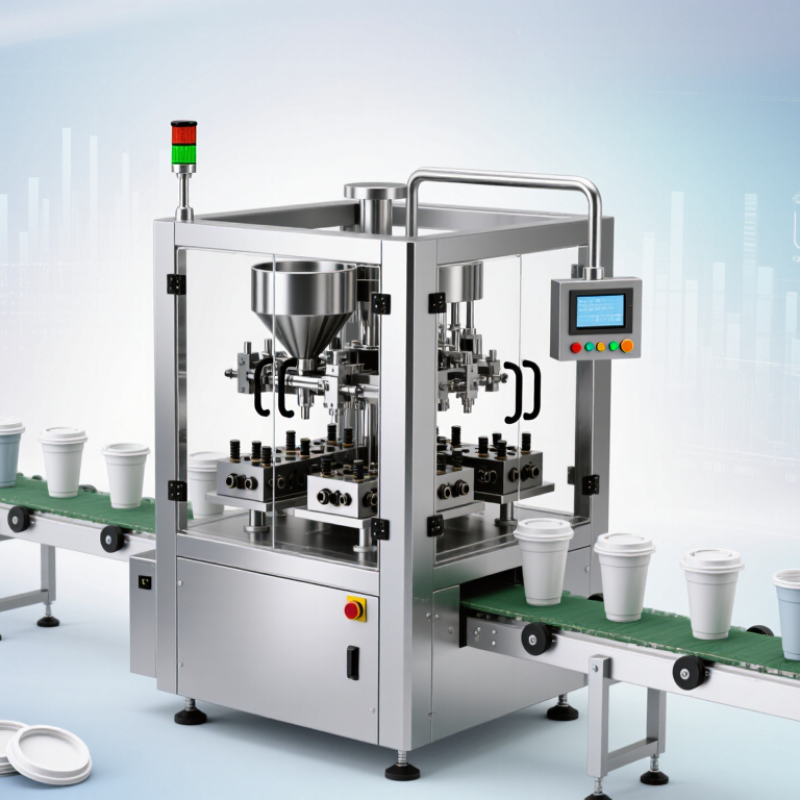
Selecting a Plastic Cup Lids Making Machine is a production decision, not merely an equipment purchase. Lid quality affects sealing, stacking, material use, and customer confidence. A lid that curls beside a hot forming station can create waste quickly.
Industry data shows why careful selection matters. PMMI’s 2024 State of the Industry report valued North American packaging machinery shipments at approximately $10.2 billion in 2023. The report also highlights rising demand for automation, efficiency, and flexible production. Smithers’ packaging research points to continued growth in foodservice packaging, while sustainability expectations are pushing manufacturers toward lighter structures and improved recyclability.
Patrick Krieger, Vice President of Sustainability at the Plastics Industry Association, has emphasized, “Designing for performance and end-of-life must happen together.” His point applies directly to cup-lid production. A machine should handle the required resin, thickness, mold design, and recycling goals without sacrificing output stability.
This guide examines seven practical selection tips. They include forming speed, mold accuracy, heating control, automation, maintenance access, energy consumption, and supplier support. Pay attention to details. A clean trim edge matters. So does a stable temperature across every heating zone.
Numbers can mislead.
A machine rated for high output may perform poorly with thin lids or frequent product changes. Buyers should test their actual material and mold before signing. That step feels slower, but it can expose hidden losses in scrap, labor, and downtime. No machine is perfect. The strongest choice is the one that matches today’s requirements while leaving room for tomorrow’s packaging changes.
Understand the lid before selecting the machine. Flat lids suit cold drinks, takeaway cups, and simple stacking. Dome lids provide space for whipped cream, fruit, or thick toppings. Sip-through lids improve convenience for coffee and milk tea. Straw-slot lids support drinks served with wide or narrow straws. Some sealed lids reduce spills during delivery, but they may require tighter forming control. Each design needs accurate dimensions, suitable plastic, and stable heat or pressure.
Tip 1: Match the machine with your main lid type. A thermoforming machine may suit thin, lightweight lids, while injection molding can produce stronger shapes and sharper details.
Tip 2: Check cup diameter and mold flexibility. A machine with adjustable tooling can handle several sizes, but frequent changes may slow production. Small details matter. In practice, operators often underestimate setup time.
Tip 3: Examine sealing performance around the rim. A lid can look perfect yet leak after transportation. Request samples filled with liquid and test them after shaking and stacking.
Tip 4: Review the material range, including common food-contact plastics and recycled-content options where appropriate.
Tip 5: Inspect the trimming, counting, and stacking systems. Clean edges and organized stacks reduce manual handling.
Tip 6: Confirm temperature control and cycle consistency. Uneven heating can create weak corners or cloudy surfaces.
Tip 7: Choose safety guards, accessible controls, and clear maintenance points. I would also leave room for improvement; the fastest machine is not always the most reliable one.
Before choosing a plastic cup lids making machine, define what your factory must produce each day. Record lid diameter, material, thickness, shape, and sealing method. A 90 mm flat lid needs different forming pressure from a domed lid with a straw opening. Also measure your floor space, power supply, cooling water, and operator skills. These details prevent an expensive mismatch.
Estimate output from confirmed orders, not optimistic sales forecasts. If customers need 30,000 lids daily, calculate the hourly rate after breaks, cleaning, and setup. A machine rated at 5,000 pieces per hour may deliver less in real production. Material changes, mold adjustments, and rejected pieces reduce usable capacity. Leave some margin. A practical target might be 70 to 85 percent of the advertised maximum, depending on the process and tooling. Check cycle time through a sample run, and request production records or acceptance-test data.
Your plan should include future demand, but avoid buying capacity that remains idle. Compare one-shift and two-shift operation before selecting machine size. A smaller machine may suit seasonal orders and reduce labor pressure. However, limited mold space can restrict product variety later. I have seen capacity plans fail because cleaning time was ignored. That mistake is easy to repeat. Review scrap rates, maintenance access, and changeover time with the technical team. Clear records make the final decision more reliable.
| Tip | Requirement Dimension | Recommended Target | Why It Matters | Key Specification to Check | Priority |
|---|---|---|---|---|---|
| 1 | Required Output | Choose a machine capacity that covers normal demand plus approximately 15–25% growth. | A small capacity gap can create delivery delays, while excessive capacity increases equipment and operating costs. | Rated cycles per minute, cavities per mold, operating hours per day, and expected utilization rate. | High |
| 2 | Cup Lid Diameter and Geometry | Define the lid diameter range, stacking profile, sealing edge, drinking opening, and any custom features before selecting the forming area. | Tooling and forming stations must match the lid design. Small dimensional differences can affect cup compatibility and sealing performance. | Maximum forming area, mold dimensions, product height, trim tolerance, and changeover requirements. | High |
| 3 | Material Compatibility | Select equipment compatible with the intended sheet or roll material, such as PP, PET, PS, PLA, or other approved thermoforming materials. | Different polymers require different heating profiles, forming conditions, and cooling times. | Material range, sheet thickness range, heater control zones, forming method, and recycled-content compatibility. | High |
| 4 | Production Method | Match the machine type to the required process: thermoforming, injection molding, or compression forming. | The process affects tooling cost, cycle time, material usage, product consistency, and the range of possible lid designs. | Process sequence, mold structure, trimming system, cooling method, automation level, and scrap handling. | Medium |
| 5 | Automation and Labor | Use automatic stacking, counting, conveying, and scrap collection when continuous production and low manual handling are required. | Automation can improve repeatability, reduce handling errors, and support stable output during long production runs. | Automatic feeding, product counting, stack height control, conveyor layout, sensor systems, and operator requirements. | Medium |
| 6 | Utilities and Factory Space | Confirm electrical supply, compressed air, cooling water, ventilation, floor loading, and access space before purchase. | Insufficient utilities or restricted installation space can reduce machine performance and increase commissioning time. | Installed power, voltage and frequency, air pressure, cooling capacity, machine footprint, and maintenance clearance. | Medium |
| 7 | Quality, Safety, and Maintenance | Prioritize stable temperature control, reliable sensors, guarding, accessible maintenance points, and documented operating procedures. | Consistent process control helps maintain lid dimensions, sealing performance, appearance, and production uptime. | Temperature accuracy, alarm functions, emergency stops, guarding, spare-parts availability, maintenance intervals, and training support. | High |
Planning reference: Actual output depends on lid size, mold cavities, material thickness, cycle time, operating schedule, product changeovers, and machine utilization.
Choosing a Plastic Cup Lids Making Machine requires more than comparing price and output speed. Inspect the machine frame, forming station, heating system, and cutting unit closely. Stainless steel surfaces resist corrosion and simplify cleaning, especially around material feeding areas. Food-contact components should have clear material documentation and traceable supplier records.
Check how the machine handles thin and thick plastic sheets. Stable temperature control prevents cloudy edges, weak sealing areas, and uneven lid shapes. Servo-driven feeding can improve positioning, but only when sensors and software respond consistently. Ask for a live production test using your intended lid size and material. Watch the sheet movement. Small vibrations matter.
Manufacturing quality often appears in simple details. Examine welds, electrical cabinets, cable routing, safety guards, and access doors. Clean welds suggest better fabrication control, but they do not prove everything. Request inspection records, maintenance instructions, spare-parts lists, and operator training materials. A reliable supplier should explain calibration intervals and acceptable production tolerances. Do not trust impressive samples alone. I have seen machines produce excellent trial pieces, then struggle during long shifts because cooling was poorly designed. That risk deserves attention.
Leave room for doubt. Ask how quickly common wear parts can be replaced and whether technicians can diagnose faults remotely. Confirm that emergency stops, protective covers, and temperature alarms work during testing. A practical machine should be easy to clean, adjust, and inspect, not merely powerful. Productivity without stable quality becomes expensive waste.
Recommended evaluation weight for machine materials, features, and manufacturing quality
The chart uses a practical 100-point evaluation framework. Manufacturing quality and production stability receive the highest weighting because they directly affect uptime, product consistency, maintenance requirements, and long-term operating costs.
Automation should match your actual production rhythm, not an impressive brochure number. Check whether feeding, forming, trimming, stacking, and quality checks work continuously. A partly automated line may reduce labor, but it can create more handling errors. Ask operators to test the controls during a real shift. Simple screens matter when alarms appear at 2 a.m.
Measure energy per thousand lids, not only the machine’s rated power. Electric heating zones can provide tighter temperature control, while efficient drives may reduce idle consumption. Request data from similar materials and cycle speeds. I once trusted a low power figure that excluded warm-up time. That assumption was wrong. Also inspect insulation, standby settings, and heat recovery options. Small losses become expensive during long production runs.
Operating cost includes molds, compressed air, cooling water, spare parts, training, and cleaning time. Compare changeover minutes because downtime can exceed electricity savings. Check whether common wear parts are easy to replace and locally available. Review the expected rejection rate at the target speed. Faster output is not cheaper if warped lids fill the scrap bin. Ask for maintenance records, safety documentation, and a clear warranty process. Leave room for uncertainty; factory estimates often look better than daily production.
7 Tips for Choosing a Plastic Cup Lids Making Machine
Supplier support should be tested before the machine arrives. Ask for installation plans, operator training, electrical drawings, and a clear response-time promise. A practical check is a factory acceptance test using your actual lid material. Watch cycle stability, trimming accuracy, and changeover time. Fast quotations are useful, but they prove little. PlasticsEurope reported 413.8 million tonnes of global plastic production in 2023, increasing pressure for efficient and controlled manufacturing. Suppliers should explain scrap reduction, energy use, and maintenance intervals with measurable records.
Safety documentation must be specific, not decorative. Confirm risk assessment under ISO 12100, control-system principles under ISO 13849-1, and electrical practices under IEC 60204-1. Guards, interlocks, emergency stops, and transparent inspection panels should be checked during a live demonstration. The International Federation of Robotics recorded 541,302 industrial robots installed worldwide in 2023. Automation is expanding, yet poorly integrated safety controls can create new risks. I would still question any supplier promising completely maintenance-free operation.
After-sales service often decides the machine’s real value. Request a spare-parts list, warranty terms, remote diagnostic process, and preventive-maintenance schedule. Check whether technicians can support your language and time zone. Ask for references from plants running similar lid sizes and production speeds. Some suppliers overlook mould wear and heater replacement costs. That omission matters. A reliable supplier admits limitations, documents corrective actions, and updates software carefully. Keep every promise in the contract, including uptime targets, training hours, and replacement-part availability.

.avif)