Top Localization Companies in China for Global Sourcing Needs?
In the ever-evolving landscape of global sourcing, localization companies play a pivotal role. As businesses expand across borders, the need for effective communication becomes crucial. Renowned expert in localization, Dr. Emma Chen, emphasizes, "Localization is not just about translation; it's about culture." This statement highlights the essence of localization in adapting messages for diverse markets.
China has emerged as a hub for these localization companies, offering a range of services tailored to international businesses. From translating marketing materials to localizing software, these companies ensure brand messages resonate with local audiences. Choosing the right partner can make a significant difference in a company's global outreach.
However, the field is not without its challenges. Many companies struggle to find localization companies that truly understand regional nuances. It’s important to reflect on how well a partner aligns with specific needs. The best localization companies not only provide translation but also cultural insight. Balancing quality and cost can also be a delicate task.

Overview of Localization Industry in China: Current Landscape and Growth
The localization industry in China is rapidly evolving. With more businesses looking to expand globally, localization services are in high demand. Companies are seeking ways to adapt their products and messages effectively for different cultures. This trend is fostering strong growth within China's localization sector.
Many localization companies are leveraging advanced technologies. AI and machine learning are being used to enhance translation accuracy and efficiency. However, reliance on technology presents challenges. Not every nuance in language or culture can be captured by machines. Human expertise remains crucial for effective localization. This highlights the need for skilled professionals who understand local contexts.
**Tip:** When selecting a localization partner, prioritize experience in your industry. Review their past projects to assess their capabilities.
Cultural sensitivity is vital in this field. Some businesses underestimate the importance of local customs and preferences. Poor localization can lead to misunderstandings or even damage a brand's reputation. It's essential to consult with cultural experts to ensure accuracy.
**Tip:** Always seek feedback from local audiences during the localization process. This can help refine messaging and improve outcomes.
Localization Industry Growth in China (2020-2023)
Key Factors Driving Demand for Localization Services in Global Sourcing
Localization services are increasingly essential for businesses seeking global reach. A study by Common Sense Advisory indicates that 72.4% of consumers prefer to purchase products in their native language. This deep-rooted preference drives companies to seek professional localization for successful global sourcing. The growing demand for culturally relevant content has made localization an integral part of international marketing strategies.
Rapid technological advancements also fuel the need for effective localization. Businesses face challenges adapting content for diverse cultures and languages. According to the latest report from Deloitte, 60% of companies have witnessed heightened competition in global markets due to improved digital communication. Failing to localize can mean losing potential customers. Companies must prioritize understanding the cultural nuances of their target markets.
Tip: Invest in a localization partner with expertise in your industry. This ensures accurate translations that resonate with local audiences.
Additionally, as e-commerce expands, the emphasis on localized user experiences grows. A report from Statista projects that the e-commerce market size will exceed $6 trillion by 2024. This means even small businesses must adapt. Ignoring localization can result in low engagement rates and poor customer satisfaction. Understand your audience to tailor your offerings effectively.
Tip: Regularly revise your localization strategies based on market feedback to remain competitive.
Top Localization Companies in China: A Comparative Analysis of Services
Localization is essential for businesses seeking to tap into global markets. Companies in China play a critical role in this process. They offer a range of services, from translation to cultural adaptation. Understanding these services helps businesses make informed choices.
Some localization firms focus on specific industries. They may excel in technical translations for software or marketing content for consumer goods. This specialization can lead to higher quality outcomes. However, not all firms have equal expertise. It’s vital to research previous work and client feedback for reliability. A firm's portfolio often reflects its strengths and weaknesses.
Choosing the right localization partner is challenging. Some companies might promise quick turnaround times but compromise accuracy. This trade-off can affect brand reputation. Others may have robust quality assurance processes but lack flexibility. Evaluating each firm's approach to project management reveals much about their reliability. Balancing speed, quality, and cultural relevance is crucial for success.
Top Localization Companies in China for Global Sourcing Needs
| Service Type |
Languages Supported |
Years in Business |
Industry Focus |
Client Reviews (Out of 5) |
| Translation |
English, Chinese, Spanish, French |
10 |
Technology, Legal, Medical |
4.8 |
| Localization |
Chinese, Japanese, Korean |
8 |
Gaming, E-commerce |
4.5 |
| Transcription |
Chinese, English |
5 |
Media, Education |
4.7 |
| Subtitling |
Chinese, German, French |
12 |
Film, TV |
4.6 |
| Content Writing |
English, Chinese, Portuguese |
7 |
Marketing, E-commerce |
4.9 |
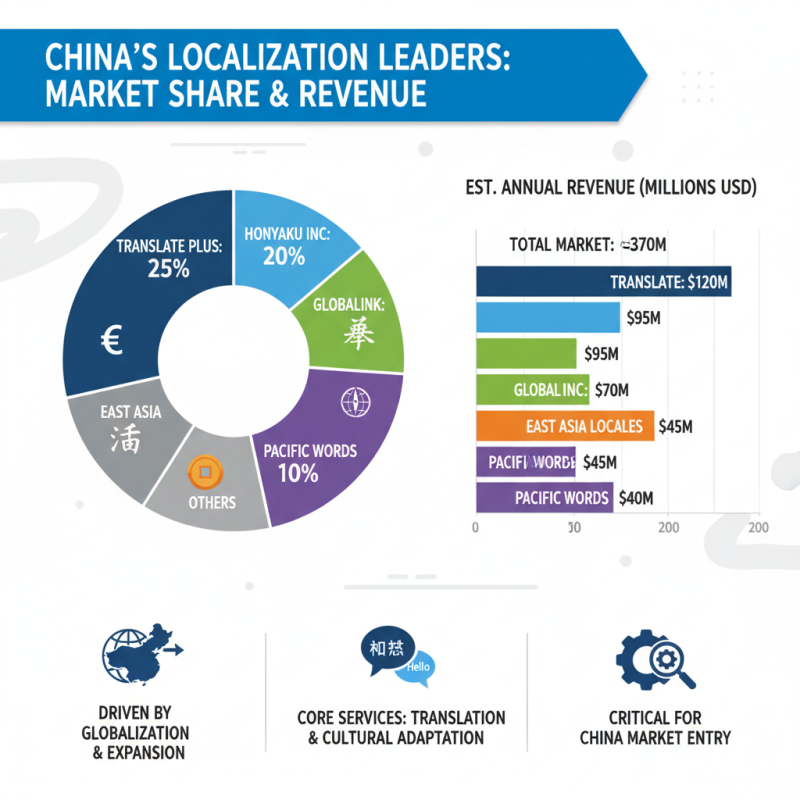
Market Share and Revenue of Leading Localization Firms in China
Localization is vital for companies aiming to enter the Chinese market. Understanding the market share and revenue of leading localization firms helps in making informed decisions. The localization industry in China has seen significant growth. This expansion is driven by globalization and increasing demand for tailored content. Many firms specialize in translation, cultural adaptation, and market entry strategies.
Examining the revenue figures of these leading companies gives insights into their impact. Some companies have reported consistent double-digit growth. This reflects their ability to adapt services to a diverse client base. However, challenges like fluctuating regulations and competition remain. Companies must refine their strategies and embrace new technologies to maintain relevance.
Moreover, the market landscape often reflects inconsistencies. Despite strong revenue, not all firms succeed in maintaining client trust. Some fail to deliver high-quality translations or timely responses. Businesses must assess track records and client reviews carefully. The localization sector requires a balance between expertise and reliability, which continues to evolve.
Challenges in Localization: Navigating Language and Cultural Barriers in China
Navigating language and cultural barriers in China presents unique challenges for global sourcing companies. Many organizations underestimate the complexities of localization. Effective communication goes beyond mere translation. It requires understanding local dialects, idioms, and cultural references. This misunderstanding can lead to significant misinterpretations of products or brand messaging.
Cultural nuances play a pivotal role in how messages resonate. Colors, symbols, and traditions might carry different meanings. Missteps can alienate potential customers. For instance, a marketing campaign that works in one context may fail miserably in another due to cultural sensitivities. Awareness and adaptability are essential.
Additionally, reliance on automated translation tools can exacerbate issues. These systems sometimes fail to capture emotional subtleties. Relying solely on technology without human oversight can lead to errors. Real-life feedback from local experts is invaluable. Engaging with native speakers can illuminate the cultural layers that technology might miss. Understanding the local market is not just advantageous; it is crucial for success in China's diverse landscape.









.avif)


.png)