2026 Top Real Time Translator Innovations You Should Know?
As we approach 2026, the growth in real time translator innovations promises to change our communication in profound ways. According to Dr. Emily Zhao, a leading expert in language technology, "Real time translators will not just bridge language barriers; they will create new opportunities for global collaboration." This evolution is especially crucial in dynamic environments like trade fairs.
The forthcoming Canton Fair in 2026 showcases advanced technologies, including AI-driven features that enhance buyer-supplier communication. With real time translators, participants can communicate effectively in a bustling 155,000 square meter venue. While innovations abound, the potential for miscommunication remains a concern. Even the most advanced systems can falter, leading to misunderstandings.
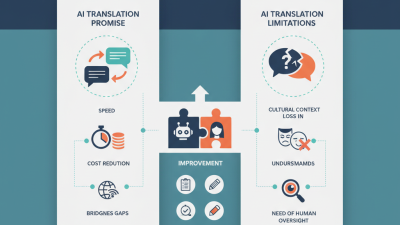
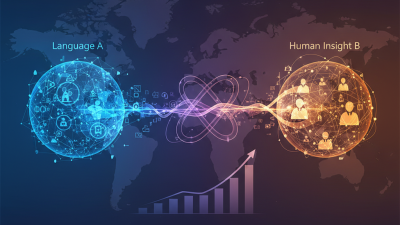
Authentic engagement relies on the nuances of human interaction. Advanced real time translators may not capture every cultural context or emotion. Therefore, while technology accelerates efficiency, it still requires mindful human oversight. The balance between innovation and human insight will define our future communication landscapes.

2026 Innovations in Real-Time Translation Technology: An Overview
The world of real-time translation technology is evolving rapidly. By 2026, advancements in artificial intelligence are set to reshape how we communicate across languages. According to a recent report by the Global Language Industry, the market for translation technology is projected to reach $56 billion by 2027. This increase emphasizes the importance of effective communication in our interconnected society.
One notable innovation involves neural machine translation systems. These systems analyze context better than their predecessors and improve fluency in translations. However, challenges remain. Many users still find inconsistencies in translations, especially with idiomatic expressions. Furthermore, reliance on technology sometimes leads to misunderstandings, highlighting the need for human oversight.
Voice recognition is another area showing promise. Real-time voice translators are becoming more accurate, with some achieving up to 90% accuracy rates. Yet, background noise and accents can disrupt this accuracy. These factors pose significant hurdles. As we advance, the goal should be to blend human intuition with machine efficiency. Development in this direction will enhance user experience and bridge communication gaps significantly.
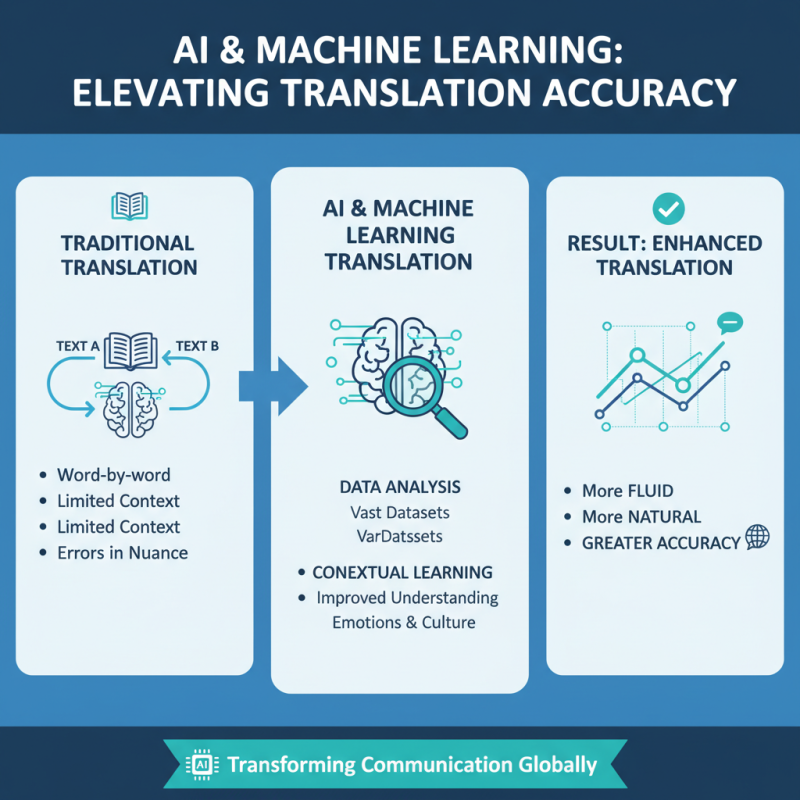
The Role of AI and Machine Learning in Enhancing Translation Accuracy
AI and machine learning are transforming translation accuracy. These technologies analyze vast amounts of data. They learn from context, improving understanding. For example, nuances in emotions or cultural references can be captured better. This leads to more fluid and natural translations.
However, challenges remain. Machine learning may misinterpret certain phrases. In complex languages, meanings might get lost. Moreover, cultural subtleties are not always captured. This highlights the need for human oversight. Relying solely on AI could lead to misunderstandings. It's crucial to find a balance between technology and human touch.
Innovations in real-time translation tools continue to evolve. But the quest for perfect accuracy is far from over. Each advancement opens new possibilities and raises questions. Is there a limit to what AI can achieve in translation? Only time will tell as we navigate this dynamic landscape.
Market Trends: Growth Projections for Real-Time Translation Tools by 2026
The landscape of real-time translation tools is rapidly evolving. By 2026, the market is projected to grow at a remarkable rate. Recent industry reports suggest a CAGR of over 20%. This growth reflects an increasing demand for seamless communication across language barriers. Businesses, travelers, and educators are driving this trend.
In practical terms, organizations are investing in real-time translation solutions to enhance collaboration. For instance, virtual meetings often face language hurdles. Reports indicate that more than 70% of companies witness improved productivity when using translation tools. However, accuracy and context still pose challenges. Misinterpretations can happen, leading to misunderstandings.
User experience is paramount in this growth. Simple interfaces attract users, but the technology needs to improve further. Many tools still struggle with nuance and regional dialects. Feedback from users highlights issues with tone and humor in translated content. As the market grows, addressing these shortcomings becomes essential for future innovations.
2026 Real-Time Translation Tools Growth Projections
The above chart illustrates the projected growth of the real-time translation tools market from 2022 to 2026, showing a significant increase in market size as technology and demand evolve.
User Experience Innovations: Improving Interactivity in Translation Apps
The world of translation apps is rapidly evolving, focusing on enhancing user experience. Innovations in real-time translation emphasize interactivity, making communication seamless. Users often seek more than just text translation; they crave engagement. Apps that allow voice input, for instance, provide a dynamic interface, making conversations feel more natural. Real-time feedback mechanisms also play a critical role.
However, not all features hit the mark. Some users find the interface overwhelming, causing frustration. Simplicity is often key, yet developers sometimes overlook this aspect. Users benefit from intuitive designs that prioritize ease of use. Chat-like functionalities, where users can see translations live, create an interactive vibe. Yet, ensuring the accuracy of translations in these formats can be challenging.
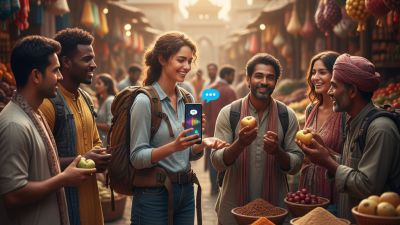
Incorporating augmented reality in translation apps offers exciting possibilities. Imagine pointing your device at street signs or menus and getting instant translations. Yet, these technologies are not foolproof. Users encounter limitations, such as misinterpretations of context. This inconsistency can lead to confusion. Striking a balance between cutting-edge technology and user-friendly design remains essential for the future of translation apps.
Challenges and Solutions in Developing Multilingual Real-Time Translators
Real-time translation technology is advancing, yet many challenges persist. One significant issue is language nuances. Words can have different meanings based on context. According to a recent study, 70% of translation errors arise from cultural misunderstandings. This highlights the need for systems that can grasp context better.
Another challenge lies in data processing speed. Real-time translation demands quick responses to maintain conversation flow. Yet, current models face latency issues. A report from the International Organization for Standardization notes that even minor delays can disrupt user experience. Developers must work on optimizing algorithms for faster processing.
**Tip:** Test your translations in real-life situations. This provides invaluable feedback.
User privacy also poses concerns. Many systems require access to conversations, risking data exposure. Solutions like on-device processing can help mitigate these risks. Developers may consider decentralized options that enhance security.
**Tip:** Always choose technologies that prioritize user data protection.
As these challenges are tackled, innovations will continue to emerge. The field is evolving, but reflection on these challenges is necessary for meaningful progress.
2026 Top Real Time Translator Innovations You Should Know
| Innovation |
Description |
Challenges |
Solutions |
| AI-Powered Contextual Translation |
Utilizes machine learning to understand context and provide more accurate translations. |
High computational resources required; may misinterpret idiomatic expressions. |
Improved algorithms and larger training datasets for better context understanding. |
| Real-Time Speech Translation |
Translates spoken language instantly, ideal for meetings and conferences. |
Latency issues; background noise interference. |
Advanced noise cancellation and low-latency transmission technologies. |
| Augmented Reality Translation |
Integrates translations into live AR environments for immersive experiences. |
Technical limitations in displaying real-time overlaid text accurately. |
Improving AR rendering engines and real-time data processing capabilities. |
| Emotional Tone Recognition |
Translates not just words but also the emotions behind them, enhancing communication. |
Challenging to accurately detect and interpret emotional nuances across cultures. |
Developing better emotional AI models based on diverse cultural datasets. |
| Multilingual Chatbots |
Automatically translate chat interactions in multiple languages, enhancing customer service. |
Difficulty in maintaining context during multi-turn conversations. |
Integrating memory features to track conversation context over time. |





.avif)


.png)