Top Translation AI Tools Transforming Language Services Today?
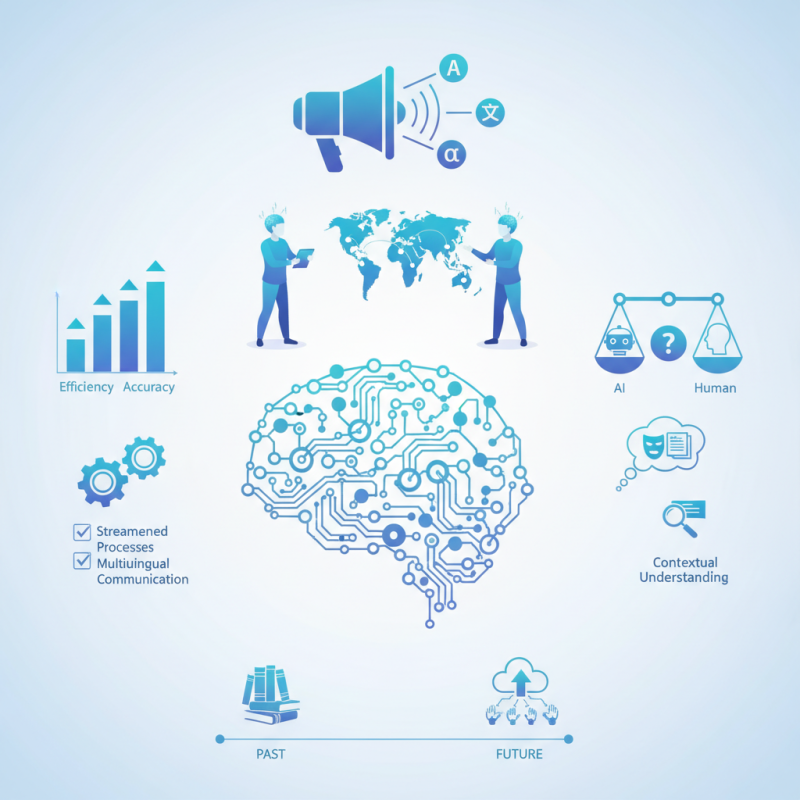
In a rapidly evolving world, the role of translation AI tools has never been more critical. Industry expert Dr. Emily Chen once stated, “The future of language services lies in how we harness AI technology.” This sentiment reflects the transformative impact such tools have on the translation landscape. Businesses leverage these technologies to improve efficiency and accuracy in multilingual communication.
Translation AI tools do more than replace human translators; they augment their capabilities. They streamline processes while ensuring cultural nuances are respected. However, this integration raises questions. Are we overly reliant on technology? Can it truly capture the essence of human language? These challenges remind us that technology is an aid, not a replacement.
As we explore the key players and innovations in this sector, it’s essential to recognize both the strengths and limitations of translation AI tools. They promise efficiency but can falter in understanding context. Reflecting on these nuances is vital for anyone involved in language services today.
Emergence of AI in Language Translation Services
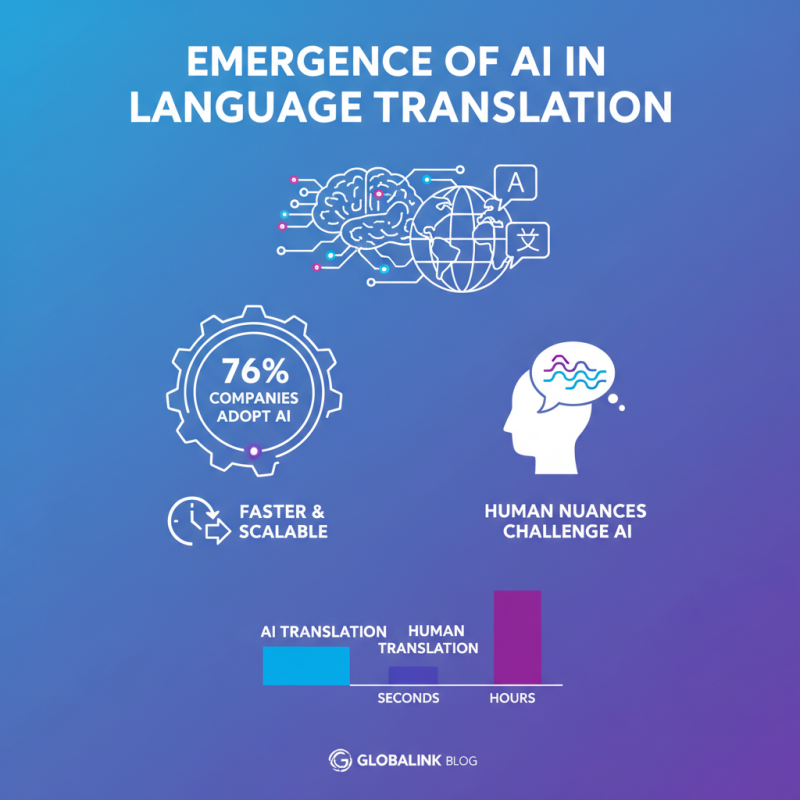
The emergence of AI in language translation services has significantly altered the landscape of communication. According to a report by CSA Research, 76% of companies are adopting AI tools for translation. This shift highlights a growing reliance on technology to meet the demands for speed and scalability in global communications. AI-powered tools can translate content in a fraction of the time it takes human translators. Yet, the nuances of human languages often escape these systems.
Data from the Global Industry Analysts suggests that the language services market, valued at nearly $50 billion, is projected to grow rapidly. AI applications are crucial in this growth. However, challenges remain. Automated translations might lack cultural context, leading to misinterpretations. Additionally, there is a risk of over-reliance on AI, where companies may cut corners on quality. It's essential for businesses to strike a balance between leveraging technology and ensuring linguistic accuracy.
Innovative machine learning models are continuously improving. They can analyze vast datasets and learn from human behavior. Yet, feedback loops are critical. Regular assessments of AI translations are necessary to refine systems. Ultimately, while AI offers impressive capabilities, the human touch remains irreplaceable in delivering meaning and emotional resonance in language translation.
Key Features of Top Translation AI Tools
In recent years, translation AI tools have revolutionized language services. These tools offer remarkable features that enhance the translation process. Key among these features is machine learning, which allows AI to adapt and improve over time. This means translations become more contextually accurate as more data is processed. However, there are instances where the lack of human nuance can create awkward translations.
Another critical feature is real-time translation. This allows users to communicate seamlessly across languages. Businesses can now engage with global clients in minutes. Yet, this immediacy occasionally leads to misinterpretations, if the AI does not grasp the subtleties of certain phrases. Human oversight is still crucial, as some language constructs are complex and culturally specific.
Collaboration tools are also essential. They enable teams to work together on translations, ensuring consistency. Features such as glossaries help maintain terminology throughout projects. Nevertheless, some users find these tools overwhelming. As they navigate various options, it’s easy to miss key functions. The balance between automation and human input remains an ongoing discussion in the translation industry.
Comparison of Leading AI Translation Platforms
The landscape of translation services is rapidly evolving. Leading AI translation platforms are making waves within the industry. These tools leverage advanced algorithms and neural networks to enhance accuracy and efficiency. Businesses can now communicate seamlessly across languages. This shift is crucial in our globalized world.
When comparing these platforms, several factors come into play. Speed is essential; some tools deliver results in seconds. However, not all offerings maintain high-quality translations. Accuracy can suffer with overly simple phrases or complex texts. Users should consider their specific needs before selecting a platform.
User experience also varies widely among tools. Some interfaces are intuitive, while others can be cumbersome. Feedback is essential for continuous improvement. Many users report frustration with mismatched contexts in translations. As these tools evolve, so do user expectations. Balancing speed, accuracy, and usability remains a challenge. Exploring various options can help find the best fit for diverse needs.
Top Translation AI Tools Transforming Language Services Today
| Feature |
Tool A |
Tool B |
Tool C |
| Languages Supported |
50+ |
100+ |
80+ |
| Translation Accuracy |
High |
Very High |
Moderate |
| API Availability |
Yes |
Yes |
No |
| Pricing Model |
Subscription |
Pay-as-you-go |
One-time purchase |
| Integration Options |
Extensive |
Moderate |
Limited |
Impact of AI Translation on Global Communication
AI-powered translation tools are significantly reshaping global communication. They bridge language gaps, making information accessible to diverse audiences. These tools can convert text and speech in real-time, enhancing conversations between people from different cultures. For instance, businesses can now connect with clients worldwide, breaking down language barriers that once hindered expansion.
Despite these advancements, challenges remain. AI translations sometimes miss cultural nuances, leading to misunderstandings. Machine learning algorithms can struggle with idiomatic expressions, often translating them literally. This can create awkward phrasing or unintended meanings. Users must approach AI translations critically and supplement them with human insight.
The impact of AI on language services goes beyond mere convenience. It democratizes access to information. However, reliance on these tools presents risks. Users should recognize the limitations of AI translations and complement them with professional expertise. This balanced approach will ensure clear communication amidst the intricacies of human language.
Challenges and Limitations of AI in Language Services
The integration of AI in language services brings significant advancements. However, it also presents notable challenges. Many AI tools struggle with context. They often fail to capture nuances or idiomatic expressions that vary across cultures. This can lead to inaccuracies in translation. Specific phrases may lose their intended meaning, affecting overall quality.
Furthermore, the reliance on AI raises concerns about human oversight. While machines can process data quickly, they may overlook subtleties that a skilled translator would catch. Some languages have complex grammatical structures that AI may not fully understand. This limitation can result in awkward phrasing or confusion in meanings.
Ethical implications also emerge from AI use. The potential for bias in training data can skew translations. Developers must ensure diverse datasets to avoid reinforcing stereotypes. Language services cannot solely depend on AI. Balancing technology and human expertise is crucial to uphold quality and trust in translations. The road ahead will require careful navigation through these complexities.








.avif)


.png)