What is a Voice Language Translator and How Does It Work?
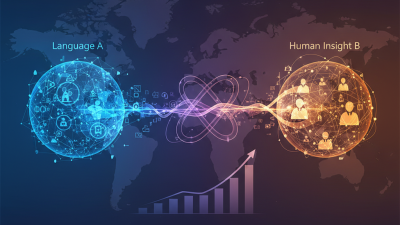
In today's globalized world, communication across languages is more crucial than ever. A voice language translator offers a solution to this challenge. It transforms spoken words from one language to another in real-time. This technology plays a pivotal role in bridging language barriers.
Such devices are becoming more accessible and efficient. Many people rely on voice language translators for travel, business, and everyday interactions. They enhance understanding and foster connections among diverse cultures. However, these tools are not foolproof. Misinterpretations can occur, highlighting the need for human oversight. Still, the potential for improved communication is significant, making voice language translators invaluable in modern society.
As we embrace this technology, ongoing refinement is necessary. Users should remain aware of its limitations. While it simplifies many interactions, relying solely on it can lead to misunderstandings. Continuous learning about these tools will help users maximize their benefits and navigate any challenges they encounter.
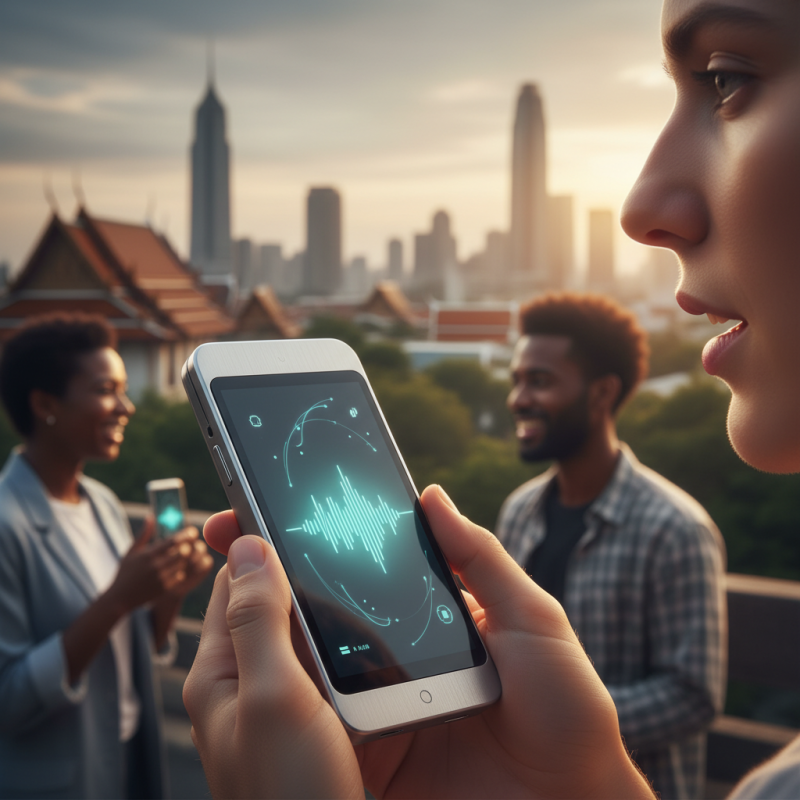
What is a Voice Language Translator?
Voice language translators are innovative tools that convert spoken language from one tongue to another in real-time. Their technology relies on advanced algorithms and machine learning models. This allows immediate translation, making communication seamless. According to a report by Grand View Research, the global language translation market is expected to reach $56 billion by 2027, a clear indication of the increasing demand for such services.
These translation devices often utilize a combination of automatic speech recognition (ASR) and natural language processing (NLP). ASR captures the verbal input while NLP processes the meaning. Despite their potential, these tools are not perfect. Translations can sometimes miss cultural nuances and idiomatic expressions. A study by CSA Research highlights that 60% of users still prefer human interpreters for critical conversations, suggesting that trust and accuracy remain central concerns.
Even with technological improvements, voice language translators may struggle in noisy environments or with accents. The data reveals that only 70% of users find voice translators reliable in casual settings. As this technology evolves, its effectiveness will likely improve. However, the human touch in language remains irreplaceable for many interactions.
Voice Language Translator Usage Statistics
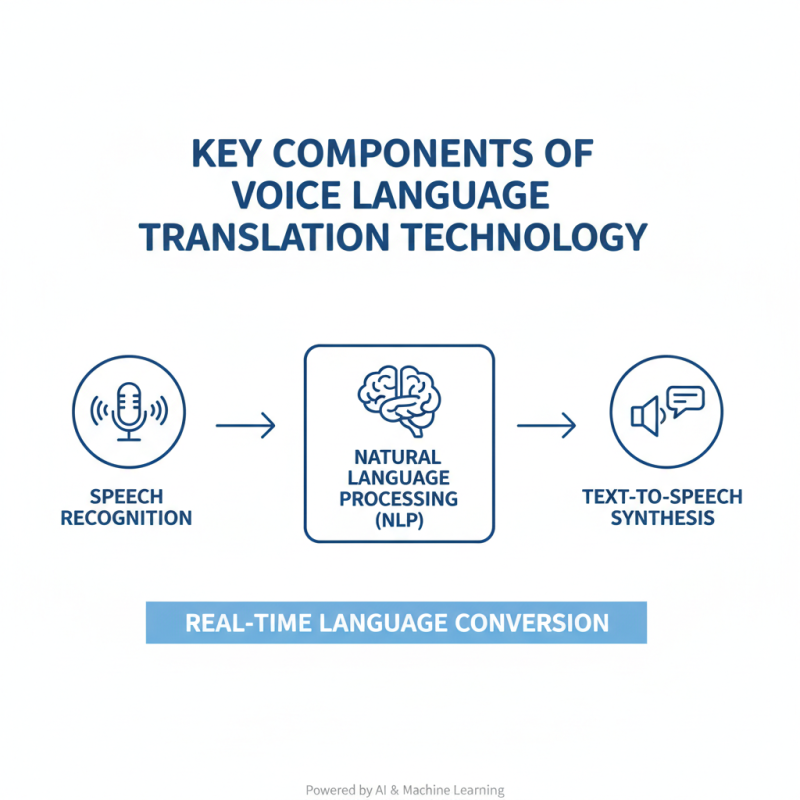
Key Components of Voice Language Translation Technology
Voice language translation technology has evolved significantly, driven by advancements in artificial intelligence and machine learning. The core components of this technology include speech recognition, natural language processing (NLP), and text-to-speech synthesis. Each plays a vital role in transforming spoken language into another language in real-time.
Speech recognition systems capture spoken words and convert them into text. These systems often struggle with accents and dialects, highlighting the need for continuous improvement. Once the speech is transcribed, NLP algorithms analyze the text. They parse the meanings, idioms, and context. This step is crucial, as languages often contain nuances that can lead to misunderstandings if not handled correctly.
Finally, text-to-speech synthesis converts translated text back into fluent speech. This component aims to produce natural-sounding voices, but achieving perfect intonation remains a challenge. While the technology is impressive, it still encounters difficulties with sarcasm and emotion. Users sometimes notice odd translations, prompting reflection on the reliability of these systems. Continuous feedback from users is essential for refining and enhancing voice language translators.
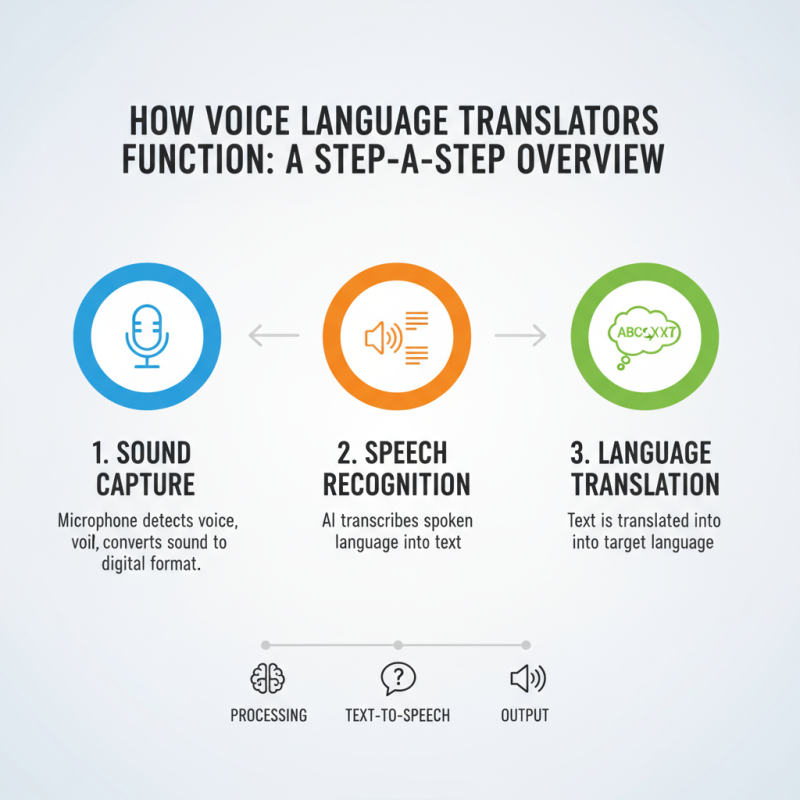
How Voice Language Translators Function: A Step-by-Step Overview
Voice language translators are innovative tools that transform spoken words from one language to another in real-time. The process begins with sound capture. A microphone detects the speaker's voice and converts the sound waves into digital format. Next, advanced speech recognition technology transcribes the spoken language into text.
Then, the text undergoes translation using artificial intelligence algorithms. These algorithms analyze the meaning and context of the words. This step is crucial to ensure that the translation retains the intended message. Following translation, the system generates speech output. A voice synthesizer converts the translated text back into spoken language, enabling seamless communication.
**Tip:** When using a voice translator, speak clearly and at a moderate pace. This enhances accuracy and reduces misunderstanding.
Not all translations are perfect. Some idiomatic expressions may lose meaning. It is important to be aware of these nuances. Always double-check critical information, especially in professional settings.
**Tip:** Consider the cultural context of the languages involved. Some phrases may not translate directly. Being mindful of this can prevent confusion.
Applications of Voice Language Translators in Daily Life
Voice language translators are becoming essential tools in our globalized world. According to a report by Grand View Research, the market for voice translation technology is projected to reach $19.5 billion by 2028. This growth is driven by the increasing need for effective communication across diverse languages in everyday scenarios.
In daily life, voice language translators facilitate seamless interactions. Travelers use them to navigate new cities, order food, and ask for directions. In business meetings, they help teams break language barriers, enabling smoother discussions. A study from the Common Sense Advisory found that 80% of consumers prefer content in their native language. Translators can address this demand effectively. However, there are challenges. Accuracy can vary, leading to potential misunderstandings. Users often need to clarify meanings, especially with slang or regional dialects.
Moreover, voice translation apps rely heavily on internet connectivity. In areas with poor service, their effectiveness diminishes. It's vital for users to remain aware of these limitations. Despite the advancements, context is sometimes lost in translation, prompting users to rethink their communication strategies. As technology evolves, addressing these imperfections will enhance the reliability of voice language translators.
Future Trends and Advancements in Voice Language Translation Technology
Voice language translation technology is evolving rapidly. Recent studies suggest that the market for this technology may reach $11.5 billion by 2025, fueled by globalization and communication needs. The push for real-time translation has never been stronger. More professionals and travelers seek instant solutions. They want to break language barriers seamlessly.
Machine learning and artificial intelligence play pivotal roles here. Advanced algorithms enhance accuracy. Voice recognition systems must adapt to various accents and dialects. Some challenges remain in context comprehension. Emotional nuances in speech are not always perfectly translated. Industry professionals note the risk of misunderstandings.
Future advancements may include real-time emotional analysis. This could improve the quality of translations significantly. Integration with augmented reality (AR) might also revolutionize interactions. Imagine translating dialogue in virtual meetings instantly. Research indicates that user-friendly interfaces will become a priority. This can ensure accessibility across diverse user groups. While the technology is promising, continuous refinement is necessary to meet user demands effectively.





.avif)


.png)