Top Localization Services for Global Businesses
Expanding into new markets requires more than translating words. It requires understanding how people speak, buy, work, and build trust. That is where localization services become essential for global businesses.
A localized product should feel familiar, not merely accurate. A payment screen may need different date formats, currencies, and address fields. Product images may require cultural review. Support teams must understand local expressions, customer expectations, and regional communication styles.
Choosing the right provider demands careful evaluation. Look for experienced linguists, subject-matter specialists, quality assurance processes, and secure technology. Strong providers combine human judgment with translation management systems and terminology databases. They also measure quality through reviews, testing, and customer feedback.
Real experience matters. A provider that has supported software launches may handle interface constraints better than a general translation agency. A company serving healthcare, finance, or technology clients should demonstrate relevant expertise. Certifications and transparent workflows can strengthen credibility, but they are not everything.
No provider is perfect. Even careful teams can miss a subtle joke or overlook a regional preference. That is why pilot projects, native review, and clear revision procedures remain valuable. Small tests reveal practical weaknesses early.
This guide explores top localization services for global businesses. It compares capabilities, industry experience, technology, security practices, pricing factors, and customer support. The goal is not to promote one universal answer. Each business has different markets, risks, timelines, and internal resources.
Choose carefully. Local relevance earns lasting trust.

Definition and Role of Localization Services in Global Business
Top Localization Services for Global Businesses
Definition and Role of Localization Services in Global Business
Localization services adapt content, products, and user experiences for a specific market. Translation changes words. Localization also considers culture, currency, measurements, images, tone, and local buying habits. A payment page may need different date formats, tax labels, and address fields. Small details matter.
75%
of consumers prefer products in their own language.
40%
would not buy from websites in other languages.
The business case is measurable. CSA Research found that 75% of consumers prefer products in their own language. Its global study also reported that 40% would not buy from websites in other languages. These findings show why localization supports trust, usability, and conversion. Professional teams combine linguists, subject experts, and in-country reviewers. They also use terminology databases and screenshot-based quality checks.
However, localization is not simply a clean technical process. A phrase can be grammatically correct yet sound distant in a real conversation. A red symbol may suggest urgency in one market and danger in another. Even experienced teams miss context when source content is vague. That weakness deserves attention. Strong services therefore test localized pages with local users, review feedback, and update terminology continuously. Global businesses should measure more than translated word counts. They should examine search visibility, support requests, task completion, and customer hesitation. Data helps, but local experience still challenges assumptions.
Types of Localization Services for International Markets
Top Localization Services for Global Businesses
International growth needs more than direct translation. CSA Research found that 75% of consumers prefer products in their own language, while 40% will not buy products offered only in another language. These figures explain why localization services must match each market’s habits, expectations, and technical requirements.
Website and software localization adapts menus, payment flows, dates, currencies, and mobile layouts. Quality assurance specialists then test buttons, text expansion, and broken interfaces on real devices. Multimedia localization covers subtitles, voice-over, captions, and cultural references. For campaigns, transcreation reshapes humor, slogans, and emotional meaning rather than translating every word. Search localization also adjusts keywords to local search behavior, which often differs from literal translations.
Human review remains essential.
Professional workflows commonly follow ISO 17100 principles, including qualified translators, editing, proofreading, and project review. In practice, terminology management prevents “cart” from becoming “basket” across the same store. It also keeps product names and safety instructions consistent. A machine translation system may reduce turnaround time, but it can miss regional politeness, humor, or sensitive imagery. That weakness deserves honest attention. A 2023 industry survey by Nimdzi estimated the global language services market at more than 26 billion dollars, showing the scale of demand for specialized support. Yet market size does not guarantee quality. Businesses should measure linguistic accuracy, user completion rates, search visibility, and customer feedback in each target market.
Top Localization Services for Global Businesses
Website, software, multimedia, e-commerce, and legal-document localization can be prioritized by language reach. The chart shows the number of countries and territories where selected languages have official-language status.
Data represents commonly reported official-language counts for selected languages and is intended as a market-planning reference. Service priorities should also consider audience size, regulations, purchasing power, and regional language variation.
How Businesses Evaluate and Select a Localization Partner
Selecting a localization partner requires more than comparing language rates. It requires testing how well a provider understands customers, products, and local expectations. CSA Research reported that 76% of online shoppers prefer product information in their own language. Its research also found that 40% will not purchase from websites written in other languages. These figures make localization a commercial decision, not merely a translation task.
Experienced teams should examine sample work, terminology controls, reviewer qualifications, and escalation procedures. Ask the provider to localize a real product page, support article, or mobile screen. Then check dates, measurements, payment language, and cultural references. ISO 17100 can provide a useful process benchmark, but certification alone does not guarantee natural writing. That is an uncomfortable limitation.
Operational evidence matters too. Nimdzi’s 2023 industry analysis estimated the global language services market at approximately 26.6 billion dollars in 2022. A growing market can still contain uneven delivery. Buyers should request measurable service levels, revision rates, turnaround data, and examples from similar content. Security practices deserve equal attention, especially when files include unreleased products or customer information.
The strongest evaluation includes local reviewers and internal stakeholders. Cost remains important, but the cheapest quote may create expensive rework. Start with a limited pilot. Track quality, speed, and communication. Then decide.
Emerging Trends Shaping the Global Localization Industry
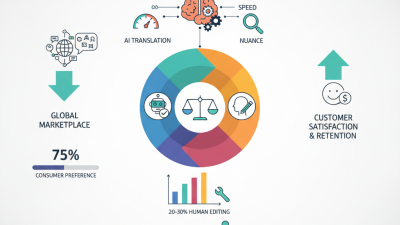
Global localization is shifting from translation projects to continuous market adaptation. CSA Research’s 2020 study found that 76% of online consumers prefer products in their native language. It also reported that 40% would not purchase in another language. These figures make multilingual content a commercial requirement, not a decorative feature.
AI-assisted translation is accelerating delivery, especially for product updates, support articles, and large catalogs. Human linguists still protect tone, cultural meaning, and sensitive terminology. This balance matters because literal accuracy can sound cold or confusing. Nimdzi’s industry analysis identifies artificial intelligence, multimedia localization, and interpreting as major growth areas. Speech, subtitles, and visual interfaces now need equal attention. Small details matter. A translated button may still break on a narrow mobile screen.
Leading localization services are adding in-country review, terminology management, and ISO 17100-aligned quality processes. They also support continuous localization through content platforms and automated workflows. However, speed can hide weak decisions. CSA Research’s consumer findings describe online respondents, not every regional audience. That limitation deserves attention. Businesses should test localized pages with real users, measure conversion by market, and revise awkward wording. Machine output may pass a dashboard while failing in a customer’s hands.








.avif)


.png)