China’s AI translation market offers global buyers several options, including Baidu Translate, Tencent TranSmart, Alibaba’s translation services, and iFlytek. Each platform approaches translation differently. Some focus on text and document workflows; others also support speech, meetings, or image-based content. Features and language coverage can change, so buyers should verify current specifications before making a shortlist.
The right choice depends on the work at hand. A sourcing team reviewing product catalogs may prioritize terminology control and batch processing. A sales representative preparing for a video call may care more about speech recognition, captions, and response speed. For cross-border teams, ai for translation should fit existing tools and protect practical details, such as product names, measurements, and technical terms. Test real samples, not just polished demonstrations.
Small details matter. Compare output quality with human-reviewed reference translations, and check how each service handles your file types, privacy needs, and support requests. No tool is perfect. Even a fluent sentence can distort a warranty condition or miss a subtle product distinction. This guide examines useful selection criteria and notable tools for global buyers. It does not treat one platform as universally best. A brief pilot with representative content can reveal more than a feature list—and sometimes reveal inconvenient gaps.

AI translation tools turn written text, speech, or photographed words into another language. Many use neural machine translation, which learns patterns from large collections of translated sentences. Newer systems can also use surrounding context to choose between meanings. A shipping term, for example, may need different wording in a customs form than in a product page. The output is fast. Accuracy still depends on context.
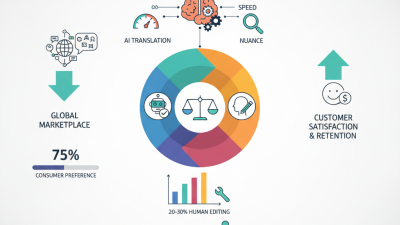
CSA Research’s 2020 survey of 8,709 consumers in 29 countries found that 76% preferred product information in their own language. The same study reported that 40% would not buy from websites in other languages. These figures show why translation affects the buying experience, not just readability. They do not prove that machine translation alone improves sales.
For global buyers, a useful workflow combines automatic translation with terminology lists and human review. A reviewer can check measurements, warranty wording, and a product’s exact features before publication. Even a fluent sentence can change a technical meaning. This step takes time, and it can be tempting to skip it. That risk deserves attention.
China’s AI translation tool landscape is broader than text conversion alone. Buyers may find systems combining document translation, speech recognition, subtitles, and image-text extraction. The practical differences often appear in ordinary tasks: reading a scanned product manual, translating a supplier’s voice message, or keeping technical terms consistent across a catalog. Small errors travel.
Global buyers should test tools with their own materials, not only polished sample sentences. Compare translations of product specifications, shipping instructions, and customer-service replies. Check whether measurements, model numbers, and warnings remain unchanged. Ask how the tool handles regional accents and less common language pairs. A fluent result can still distort a critical detail.
Data handling also deserves direct questions. Clarify where submitted files are processed, how long they are retained, and whether access controls suit your workflow. For high-stakes documents, use qualified human review rather than treating machine output as final. That adds time and cost. It is still sensible. No single tool fits every buyer; performance can shift with domain, language direction, and source quality. A faint scan or hurried recording may expose limits that a clean demo hides.
| Tool Category | Typical Inputs and Outputs | Common Buyer Use Cases | Evaluation Criteria | Practical Considerations |
|---|---|---|---|---|
| Text machine translation | Text translated between Chinese and supported languages; some services also provide multilingual translation. | Product listings, customer support drafts, internal communications, and website content. | Test terminology, fluency, consistency, supported language pairs, API limits, and processing speed using representative content. | Quality varies by language pair, subject matter, and text style. Review high-impact or customer-facing translations before publication. |
| Document translation | Files such as office documents, PDFs, and presentations, with varying degrees of layout preservation. | Business proposals, manuals, reports, and procurement documents. | Check supported file formats, formatting retention, file-size limits, editable output, and handling of tables and embedded text. | Scanned or complex PDFs may require OCR and can lose layout or text accuracy. Confirm whether document content is retained after processing. |
| Speech translation and transcription | Spoken audio converted to text, translated text, or—in some products—spoken translated output. | Meetings, interviews, customer calls, and multilingual events. | Assess transcription accuracy, latency, speaker handling, supported accents, noise performance, and language availability for live use. | Results can be affected by background noise, overlapping speakers, specialist vocabulary, and regional accents. Confirm which functions work in real time. |
| Image and OCR translation | Text in images or scanned pages extracted with optical character recognition and translated. | Packaging, signs, menus, screenshots, and scanned documents. | Test text detection, reading order, image quality requirements, script support, and whether translated text can be placed back into the image. | Small text, stylized fonts, low resolution, and mixed layouts can reduce recognition quality. OCR accuracy and translation accuracy are separate checks. |
| Translation workflow and human review | Machine-generated translations managed with terminology lists, editable drafts, reviewer steps, or translation memory features. | Repeated product content, localization projects, and material requiring controlled review. | Review collaboration tools, version history, glossary controls, access permissions, export formats, and integration with existing workflows. | Availability and depth of workflow features differ. Human review remains important for legal, medical, safety, and other high-risk content. |
| API and software integration | Translation functions accessed programmatically through an application programming interface or software development kit, where offered. | Websites, apps, commerce systems, and customer-service platforms. | Check documentation, authentication, supported formats, throughput limits, service availability, error handling, pricing units, and technical support. | Confirm regional accessibility, network requirements, data-processing terms, and whether the service meets the buyer’s security and compliance requirements. |
| Private or on-premises deployment | Translation models or services deployed in a buyer-controlled environment, where available. | Organizations with strict data-governance, network, or deployment requirements. | Verify deployment options, hardware needs, update process, model languages, administration tools, support scope, and total operating cost. | Private deployment is not offered for every service or model. Buyers should confirm data flows and contractual terms rather than assume a deployment type guarantees compliance. |
Buyer note: Language coverage, features, deployment options, and translation quality vary by provider and change over time. Compare shortlisted tools with the same real-world samples, language pairs, and security requirements.
For global buyers, translation quality affects quotes, product specifications, and support conversations. CSA Research’s 2020 report, Can’t Read, Won’t Buy, found that 76% of surveyed online shoppers preferred product information in their own language. Forty percent said they would not buy from websites in other languages. These findings make multilingual communication a practical business need, not just a courtesy.
Useful AI translation tools should handle email, chat, product documents, and spoken conversations. Look for terminology controls that preserve technical terms, such as “load capacity” or “lead time,” across repeated messages. Context awareness matters, too: a short shipping update should not sound like a legal notice. Data handling and access controls deserve equal attention when teams translate quotes or customer records. Small details matter. Yet machine output can still miss tone, regional phrasing, or an ambiguous unit. I would not trust it blindly for a high-value proposal; that is a limitation worth acknowledging.
Tips: Test the tool with real product descriptions and buyer emails. Compare its output against a fluent reviewer’s version, then build a glossary from recurring corrections. Keep human review for sensitive specifications and unclear source text.
For global buyers, translation accuracy should be tested with the material your teams actually use. Build a sample set of product descriptions, support tickets, and technical documents. Include measurements, model numbers, names, and sentences with negations. Ask qualified bilingual reviewers to check meaning, terminology, and tone. Test again after updating a glossary. Small changes can shift results.
A polished demo can hide rough edges. It happens. Record errors by type, not just with one overall score. Check how the tool handles unclear source text, mixed languages, and formatting in tables or spreadsheets. For security, ask where text is processed, how long it is retained, who can access it, and whether it is used to improve services. Verify answers in written documentation; a confident sales response is not enough.
Integration deserves a hands-on trial. Connect the tool to a test workflow and check supported file types, API limits, response times, and glossary controls. Confirm that staff can review or correct translations before they reach customers. Keep a human review step for high-impact content. That adds effort, and it may slow delivery. Still, removing that step too early can create costly misunderstandings.
What this shows: Estimated total speakers (first- and second-language speakers) for the ten most spoken languages. These figures can help global buyers prioritize language coverage when evaluating translation tools. Speaker counts do not measure translation accuracy; assess accuracy with representative test content, and review each tool’s security controls and integration options separately.
Source: Ethnologue, 27th edition (2024); speaker estimates shown in millions.
Across global buying and supply chains, AI translation helps teams act on information while it is still useful. Buyers can translate requests for quotation, product specifications, and supplier replies before comparing lead times or material details. In a sourcing team, that may mean understanding a revised delivery date before approving a purchase order. CSA Research’s 2020 “Can’t Read, Won’t Buy” study surveyed 8,709 consumers across 29 countries: 76% preferred product information in their own language, and 40% said they would not buy from websites in other languages. The findings concern consumers, not procurement teams, but they underline how language affects confidence.
Translation tools also support factory audits, shipment updates, and after-sales discussions. A logistics coordinator can translate a message about a delayed container, then share a clear update with colleagues in another region. Small errors matter. A mistranslated unit, tolerance, or delivery term can trigger costly rework. Teams should keep approved glossaries for technical terms and review high-impact messages with a fluent specialist. AI may smooth awkward wording while quietly changing meaning; that risk deserves attention. Context still wins. For sensitive specifications or contract language, machine output should support—not replace—qualified human review. Companies can test translations against real documents, track recurring corrections, and update terminology as products and suppliers change.

.avif)