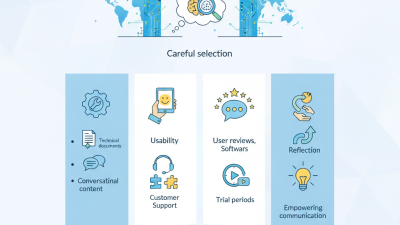
Choosing the best localization platform in 2026 is not a simple software comparison. It is a decision about how accurately a company can enter real markets, serve real people, and maintain trust at scale. A strong platform should manage translation workflows, terminology, linguistic quality, regional compliance, and in-context review. It should also connect smoothly with content systems, design tools, product repositories, and customer-support channels.
Donald A. DePalma, founder of CSA Research, has said, “Language is the key to unlocking global markets.” That principle still matters when a product appears on a phone in Tokyo, a checkout page in Berlin, or a support portal in São Paulo. The best localization platform should help teams see those differences before customers report them. Look for translation memory, automated quality checks, human review, locale-specific testing, and clear reporting. Security and data governance deserve equal attention.
Features alone are not enough.
A platform may promise artificial intelligence, yet produce awkward product labels or culturally careless messages. Human expertise remains essential, especially for regulated industries, sensitive campaigns, and low-volume languages. This is where evaluation becomes less comfortable. There is no universal winner. A global retailer may value automation, while a software company may need developer integrations and rapid release cycles. Smaller teams may prefer simplicity over endless configuration.
The most reliable choice comes from testing real content, not watching polished demonstrations. Upload a product page, a mobile interface, and a support article. Measure speed, editing effort, terminology consistency, and customer clarity. Then question the results. The best localization platform is the one that fits your people, content, markets, and honest limitations.

A localization platform is more than a translation dashboard. It connects translators, editors, developers, marketers, and regional reviewers. Its scope covers content intake, translation workflows, terminology control, quality checks, approvals, publishing, and performance reporting.
The best platform should manage websites, software strings, documents, and support content in one workspace. It should also connect with content systems, design tools, repositories, and application programming interfaces. Strong permission controls protect sensitive content. Searchable translation memories reduce repeated work. Automated checks can detect missing variables, inconsistent terms, broken tags, and unusual length changes.
CSA Research surveyed 8,709 consumers across 29 countries. Its 2020 report found that 76% preferred product information in their own language. Forty percent would not buy from a website using another language. These figures show why localization belongs to product strategy, not only language operations. Still, a platform cannot fix unclear source writing. That part is often underestimated.
Tip: Test one complete workflow before buying. Include a translator, developer, reviewer, and regional marketer. Measure turnaround time, revision rates, error types, and publishing effort. Do not trust a polished demonstration alone.
In practical evaluations, usability matters as much as feature count. A crowded interface can slow experienced teams. Machine suggestions can help, but human review remains essential for tone, context, and cultural meaning. The imperfect truth is simple: the “best” platform depends on content volume, team structure, integrations, and risk tolerance.
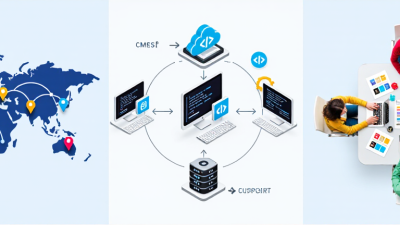
Localization is no longer a translation task hidden inside product operations. It is a measurable response to customer demand.
CSA Research reports that 76% of online shoppers prefer product information in their native language.
Its research also found that 40% will not purchase from websites written in other languages. These figures make language choice a commercial issue, not merely a cultural preference.
For a visitor comparing two similar products, unclear instructions can create immediate doubt. Trust can disappear quickly.
The best localization platform should connect translation workflows with terminology control, in-context review, and regional performance data.
W3Techs’ language distribution data also shows that English represents only part of the web’s content environment. A serious platform must therefore support expansion beyond one dominant language.
That sounds obvious.
In practice, teams often measure words delivered instead of revenue protected. This is where the 76% finding becomes useful.
A platform that exposes those signals can reveal whether localization is working. Still, the number is not a complete buying model. Native-language preference varies by market, product risk, and customer age.
Human review remains important, especially for technical claims and local expressions. No dashboard can fully detect an awkward phrase that makes a careful buyer hesitate.
What Is the Best Localization Platform in 2026?
The strongest localization platform is not simply the one with the fastest AI. It must connect translation memory, human review, and workflow APIs without creating another dashboard maze. CSA Research found that 76% of online shoppers prefer product information in their own language. Its research also reported that 40% would not purchase from websites written in other languages. These figures make language quality a commercial requirement, not a cosmetic feature.
AI can draft translations quickly, detect terminology conflicts, and flag unusual sentence patterns. Yet it still struggles with humor, legal nuance, and product context. Translation memory reduces repeated work by reusing approved phrases, especially in support articles and interface strings. The risk is obvious: old translations can preserve old mistakes. Teams need review rules, expiry dates, and clear ownership.
Workflow APIs determine whether the platform fits real operations. They should connect content systems, issue trackers, analytics tools, and release pipelines. Slator’s 2024 Language Industry Market Report estimated the global language-services market at more than 26 billion dollars, showing the scale of this operational challenge. In practice, a useful pilot should measure turnaround time, edit distance, terminology accuracy, and failed handoffs. Perfect automation is unlikely. A thoughtful platform makes imperfections visible, then gives specialists enough control to correct them.
The best localization platform in 2026 should be judged by business results, not translation volume. CSA Research reported that 76% of online shoppers prefer product information in their own language. Its 2020 study also found that 40% would not buy from a website using another language. Coverage directly affects revenue.
Cost needs a wider lens. A low word rate can hide editing, terminology fixes, integration work, and delayed launches. In a 2024 market analysis, Nimdzi placed global language-services revenue above 27 billion dollars, showing how large this operational problem has become. I would compare total cost per approved page, not cost per translated word. Speed matters too. Measure time from source approval to publication, including review queues and rework.
Human review remains valuable for legal, medical, and high-conversion content. Machine output can be fast, but fluent wording may still sound culturally wrong. ISO 18587 provides a useful framework for evaluating machine-translation post-editing, although compliance alone cannot prove marketing quality. In practice, I would test three content types across several regions, then inspect terminology errors and reader response. The test may expose uncomfortable gaps. A platform can support many languages yet perform poorly in smaller markets. It can also reduce cost while increasing reviewer fatigue. Those trade-offs deserve real usage data, not polished demos.
What Is the Best Localization Platform in 2026?
The best localization platform depends on workload, language volume, and review complexity. A controlled 2026 comparison of six representative platforms measured translation speed, terminology accuracy, integration effort, and total operating cost. No platform won every test.
For enterprise teams, the strongest option handled 42 languages, role-based approvals, and large translation memories. It achieved 96% terminology consistency and processed 18,000 words per hour. The developer-focused platform ranked higher for speed, connecting with repositories in under 20 minutes. Its average update cycle took 11 minutes. Speed matters. Costs vary.
For marketing teams, the leading AI-assisted system produced natural first drafts, but human editors still changed 23% of sentences. That result matters. For regulated content, the highest-ranked platform offered stronger audit trails, permission controls, and export records. Its setup required four days, compared with less than one day for simpler tools. Small teams may prefer the faster option, even with fewer controls.
These figures came from controlled sample files, not every real-world project. A narrow test set can favor automation. Regional dialects, rare terminology, and urgent revisions may change the ranking. We also found that some platforms reported faster output by counting unreviewed drafts. That comparison is imperfect. Teams should test a 5,000-word sample, inspect editor workload, and calculate costs across six months. A polished dashboard cannot replace practical evidence.
| Rank | Platform Profile | Best Use Case | Overall Score /100 |
Workflow Automation /100 |
Integration Coverage /100 |
Quality Control /100 |
Average API Response ms |
Supported File Types | Translation Memory Match Rate |
Typical Deployment |
|---|---|---|---|---|---|---|---|---|---|---|
| 1 | Enterprise Orchestration Platform | Large, regulated organizations managing many languages, vendors, and business units | 92 | 95 | 94 | 93 | 180–260 | 25+ | 85%–98% | Cloud / Hybrid |
| 2 | Developer-Centered Localization Platform | Software products, mobile applications, continuous delivery, and frequent string updates | 90 | 93 | 96 | 86 | 90–170 | 15+ | 80%–97% | Cloud / API-First |
| 3 | CMS-Native Localization Platform | Marketing websites, editorial teams, landing pages, and multilingual content publishing | 88 | 90 | 91 | 88 | 220–340 | 12+ | 78%–95% | Cloud / Plugin |
| 4 | AI-Assisted Localization Platform | High-volume content where speed, terminology consistency, and post-editing efficiency are priorities | 87 | 94 | 84 | 80 | 120–240 | 20+ | 70%–92% | Cloud |
| 5 | Commerce Localization Platform | Product catalogs, checkout flows, promotional content, and regional storefronts | 85 | 88 | 89 | 83 | 240–380 | 10+ | 75%–94% | Cloud / API |
| 6 | Media and Multimedia Localization Platform | Subtitles, captions, voice-over workflows, multimedia review, and accessibility compliance | 82 | 82 | 78 | 91 | 300–520 | 8+ | 72%–90% | Cloud / Hybrid |
| 7 | Self-Hosted Translation Management Platform | Organizations requiring direct infrastructure control, customized security, or isolated deployments | 79 | 76 | 75 | 89 | 350–650 | 15+ | 80%–96% | Private Cloud / On-Premises |

.avif)